Saving Seafood

  • Home
  • News
    • Alerts
    • Conservation & Environment
    • Council Actions
    • Economic Impact
    • Enforcement
    • International & Trade
    • Law
    • Management & Regulation
    • Regulations
    • Nutrition
    • Opinion
    • Other News
    • Safety
    • Science
    • State and Local
  • News by Region
    • New England
    • Mid-Atlantic
    • South Atlantic
    • Gulf of Mexico
    • Pacific
    • North Pacific
    • Western Pacific
  • About
    • Contact Us
    • Fishing Terms Glossary

Shark Fin Ban Is Misguided, Would Undermine Sustainable U.S. Shark Fisheries, Say Experts

WASHINGTON (Saving Seafood) – September 14, 2017 – A ban on shark fin sales in the United States would undermine some of the planet’s most sustainable shark fisheries while harming global shark conservation efforts, according to two prominent shark scientists.

In a paper published this month in Marine Policy, Dr. David Shiffman, a Liber Ero Postdoctoral Research Fellow at Simon Fraser University in Vancouver, B.C., and Dr. Robert Hueter, Director of the Center for Shark Research at Mote Marine Laboratory in Sarasota, Fla., call proposed Congressional legislation banning the sale or purchase of shark fins in the United States “misguided.” Environmental group Oceana is pushing the legislation, known as the Shark Fin Trade Elimination Act.

In an interview with Saving Seafood, Dr. Shiffman said the legislation was “well-intentioned” but “overly simplistic.” By withdrawing from the global shark fin market, the United States would remove incentives for its trading partners to build sustainable shark fisheries, and would eliminate an important example of sustainable shark fisheries management, he said.

“We’re a relatively small percentage of the overall trade in shark fins, so banning the trade of shark fins within the U.S. will not have that much of a direct impact on shark mortality,” Dr. Shiffman told Saving Seafood. “But we’re a really high percentage of the sustainably caught, well-managed shark fishery. So removing us from the global marketplace for fins doesn’t help save that many sharks, but it removes this sustainable fishery from the marketplace as a template that can be copied.”
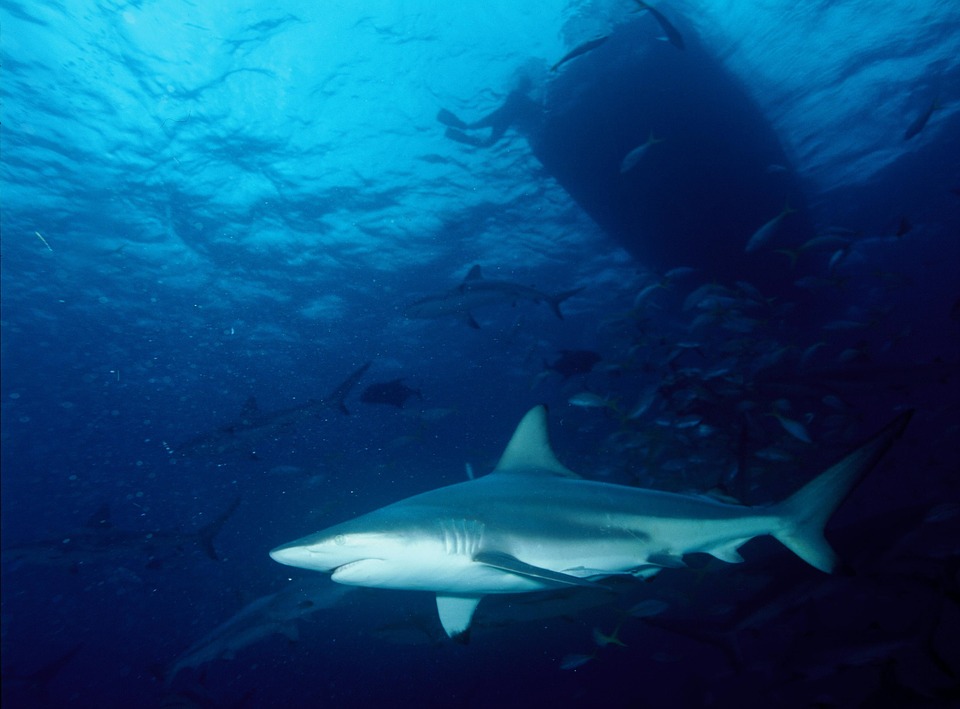
According to Dr. Shiffman, U.S. shark fisheries are built on a strong mix of “scientific research infrastructure” and “management and enforcement infrastructure,” which has helped make them some of the most sustainable in the world. His coauthor, Dr. Hueter, told Saving Seafood that enacting a shark fin ban would undermine decades of progress that went into building those sustainable fisheries.

“We have done a great job working together to rebuild the fish, and at least make the fisheries sustainable and profitable,” Dr. Hueter said. “And that is why this fin ban, in our opinion, is so misguided. Because after all these decades of work to get us to a great point with a bright future, this sort of ban would just cut the legs out from underneath the fishery. It would cause waste, put people out of business who are doing things right, and reward the folks in other nations who are not doing things well.”

Much of the public remains unaware of the sustainable status of most U.S. shark fisheries, a phenomenon the authors attribute to confusion over key issues related to shark conservation. In particular, many do not understand the difference between “shark finning” – the inhumane and illegal practice of removing a shark’s fins at sea – and sustainable landings of whole sharks required by U.S. law. Finning is “just this boogeyman of shark conservation activists,” Dr. Shiffman said. “People don’t understand what shark finning means in many cases.”

“We have sounded the alarm now for 20 years or more about this thing called finning to the point where we’ve gotten people so upset about it that they no longer listen to the subtle difference between finning and fishing,” Dr. Hueter said. “And they think that all sharks that are caught by commercial fishermen are finned animals.”

Should a total fin ban be enacted, rule-following U.S. fishermen would be economically harmed, the authors write in their paper, noting that nearly a quarter of the total value of shark meat sales comes from shark fins. Forcing fishermen to throw out fins from sustainably caught sharks would be wasteful, contradicting a United Nations plan of action to create “full use” in global shark fisheries, they write.

Instead of a fin ban, Dr. Shiffman and Dr. Hueter support policies focused on sustainable shark fisheries management. Dr. Hueter recommended five ways fishery managers could pursue this goal: increase penalties for those caught finning sharks, which Florida did earlier this year; stop imports of shark products from countries that don’t practice sustainable shark fishing; incentivize the domestic industry to process shark fins within the U.S. and provide for the domestic demand; closely monitor U.S. shark populations and support strict measures for sustainability; and increase public education about the problems facing global shark populations.

“Banning is always the easiest thing,” Dr. Hueter said. “Making the fishery so it’s regulated and sustainable and smart, that’s hard. But we shouldn’t be choosing things based on what sounds good or what feels good. We should be doing things based on what works.”

There is broad support in the scientific community for sustainable shark fisheries. In a recent survey of over 100 members of scientific research societies focusing on sharks and rays, Dr. Shiffman and Dr. Neil Hammerschlag, a marine ecologist at the University of Miami, found that 90 percent preferred sustainable management to a total ban on the sale of shark products. Dr. Shiffman believes that sustainable fisheries can go hand in hand with shark conservation.

“I am glad to see that the best available data, over and over again, is showing that we can have healthy shark populations while still having sustainable, well-managed fisheries that employ fishermen and provide protein to the global marketplace,” said Dr. Shiffman, who also writes for the marine science blog Southern Fried Science and frequently comments on shark conservation issues on Twitter. “We don’t need to choose between the environment and jobs in this case if we do it correctly.”

Researchers and fishing companies form coalition for sustainable seas

August 16, 2017 — A new paper by Henrik Österblom, Jean-Baptiste Jouffray, Carl Folke and Johan Rockström describes how the authors engaged with large seafood producers to coproduce a global science–business initiative for ocean stewardship. They suggest that this initiative is improving the prospects for transformative change by providing novel links between science and business, between wild-capture fisheries and aquaculture, and across geographical space. They argue that scientists can play an important role in facilitating change by connecting knowledge to action among global actors, while recognizing risks associated with such engagement.

The authors argue that the methods developed through this case study contribute to identifying key competences in sustainability science and hold promises for other sectors as well.

The following is taken from the abstract of “Emergence of a global science-business initiative for ocean stewardship,” published in Proceedings of the National Academy of Sciences:

The ocean represents a fundamental source of micronutrients and protein for a growing world population. Seafood is a highly traded and sought after commodity on international markets, and is critically dependent on healthy marine ecosystems. A global trend of wild stocks being overfished and in decline, as well as multiple sustainability challenges associated with a rapid growth of aquaculture, represent key concerns in relation to the United Nations Sustainable Development Goals. Existing efforts aimed to improve the sustainability of seafood production have generated important progress, primarily at the local and national levels, but have yet to effectively address the global challenges associated with the ocean.

This study highlights the importance of transnational corporations in enabling transformative change, and thereby contributes to advancing the limited understanding of large-scale private actors within the sustainability science literature.

Read the full paper here

Too Big To Ignore explores challenges to sustainable development of local fisheries

August 10, 2017 — Two years after FAO member states agreed to adopt a human rights-based approach to governing the small-scale fisheries in their countries, researchers invested in the development of small-scale fisheries have released a book outlining progress made in implementing those reforms and the challenges in doing so.

The book, “Small-Scale Fisheries Guidelines: Global Implementation,”  reviews countries’ efforts thus far to implement the human rights-based principles, otherwise known as  Voluntary Guidelines for Securing Sustainable Small-Scale Fisheries, at the local level. Comprising essays and case studies by more than 90 authors from academia, the FAO, and civil society, it also considers the need to contextualize the guidelines to fit local circumstances.

Edited by researchers associated with Too Big To Ignore, a research network and global partnership dedicated to the promotion and support of small-scale fisheries, the book considers case studies in 34 countries, including the Pacific, Africa, Asia, and the Caribbean.

Read the full story at Seafood Source

SIMBA Seafood Traceability System Improves Productivity with Real Time Production and Inventory Updates for Management, Operations and Accounting

July 27, 2017 — REDMOND, Wash. — The following was released by Dynamic Systems, Inc.:

Dynamic Systems, Inc., a leader in Automated Seafood Solutions has updated SIMBA to now track production minute to minute as it happens on the plant floor for real-time data.

Most Seafood Processors record plant production and inventory manually using paper and pen or spreadsheets. Although the system works it is time consuming and error-prone.

The SIMBA System now provides real-time information to Management for timely business decision-making. Operations can monitor each production line in real-time and identify bottlenecks or issues as they happen. And Finance can have inventory and shipping data automatically uploaded to their accounting or ERP system for immediate billing.

Plant floor data entry is accomplished seamlessly using touch screens which can be formatted to show each user only what they will need to select. Employees are able to quickly enter multiple attributes per production run, such as species, grade, color, area, etc., and print unique labels for each carton.

SIMBA’s traceability function offers granular data with depth of traceability unmatched.  Track lots through processing, commingling and re-packing. Print audit reports with the punch of a button as soon as the items are packed.

The accuracy and speed of barcode scanning allows SIMBA’s inventory and shipping information to upload in real-time for sales and invoicing. Warehouse personnel use mobile barcode scanners to record carton and pallet locations and to ship against sales orders, work orders or log cartons into specific vans.

SIMBA Solves 3 Huge Problems: “SIMBA has been a great tool for our company. It solved three huge problems: Production Tracking, Traceability, and Shipping Accuracy. We would like to expand the system in the near future.”

Americans Need to Know U.S. Fisheries are Sustainable: Former Senior NOAA Official

July 24, 2017 — Earlier this month, Saving Seafood unveiled our campaign to tell the public that American Seafood is Sustainable Seafood™. A recent paper by Mark Helvey, former NOAA Assistant Regional Administrator for Sustainable Fisheries for the Pacific Region, confirms that purchasing U.S.-caught seafood is one of the most sustainable choices consumers can make, and notes that, “Most Americans remain unaware of the high environmental standards by which U.S. federal marine fisheries – and many state fisheries – are managed, in compliance with multiple state and federal laws.”

According to the paper, the standards under which U.S. fishermen operate “conform to or exceed internationally accepted guidelines for sustainable fisheries adopted by the Food and Agriculture Organization of the United Nations.”

The first recommendation made in the peer-reviewed paper is to “increase awareness…of the high environmental standards by which U.S. federal marine fisheries – and many state fisheries – are managed.”

The paper makes the case that, “Sea Grant Extension Programs in U.S. coastal states and territories have conducted education and out-reach, with NOAA Fishwatch and a number of nongovernmental organizations also helping to bridge this gap. However, further efforts to address this lack of understanding are needed.”

This is precisely the goal of our American Seafood is Sustainable Seafood™ campaign.

Mr. Helvey provided the following summary of his paper to Saving Seafood:

  • The United States is recognized for its robust seafood appetite and strong commitment to environmental conservation. However, efforts to close or restrict its own domestic fisheries in pursuit of environmental protection are often not considered within the context of seafood consumption.
  • Restricting U.S. fisheries comes at the cost of displaced negative environmental impacts associated with the fishing activities of less-regulated, foreign fisheries.
  • The authors provide six solutions for addressing this issue beginning with the need for U.S. consumers becoming more aware of the exceedingly high environmental standards by which U.S. marine fisheries are managed relative to many foreign ones.
  • While efforts by NOAA’s Sea Grant Extension Program, FishWatch, and a number of nongovernmental organizations are bridging the information gap, the authors stress that more is required for increasing awareness that U.S fisheries are sustainable fisheries.

The paper, “Can the United States have its fish and eat it too?,” was published in the January 2017 volume of Marine Policy and is co-authored by Caroline Pomeroy, Naresh C. Pradhan, Dale Squires, and Stephen Stohs.

Read the full paper at ScienceDirect

Global ocean health relatively stable over past five years

July 5, 2017 — While global ocean health has remained relatively stable over the past five years, individual countries have seen changes, according to a study published July 5, 2017 in the open-access journal PLOS ONE by Benjamin Halpern from University of California Santa Barbara, USA and colleagues.

The Ocean Health Index has been used to assess ocean health on the local and regional scale, measuring factors such as biodiversity, coastal protection, and clean waters to help inform regional policies. In this study, Halpern and colleagues analyzed five years’ worth of Ocean Health Index data for 220 countries, seeking potential drivers and implications for the changes that they observed.

As expected, global ocean health has been fairly stable over the past five years, since the health of the world’s oceans cannot change rapidly over a relatively short time period. However, there were notable changes in individual countries. For example, the authors found declines in overall ocean health in many Arctic and sub-Arctic countries, possibly because the rapid loss of sea ice has resulted in reduced coastal protection. The researchers suggest that improvements in wild-caught fishery management, the creation of marine protected areas, and decreases in harvesting of fish and other natural products may have stabilized ocean health scores in other regions.

While the Ocean Health Index was capable of predicting short term changes in global ocean health, the authors suggest that investment in additional resources for measuring changes on a global scale would greatly help with management and protection of ocean health now and in the future.

Read the full story at Science Daily

Can Sustainability Commitments Get Slavery Out of Seafood?

June 30, 2017 — In 2015, more than 2,000 enslaved fishermen were rescued from brutal conditions in the seas around Indonesia. Some had been savagely beaten while others had been kept in cages. Slave labor was found off these fishing boats as well: In one scenario, seafood workers were forced to peel frozen shrimp for 16 hours a day.

Wracked by these and other stories in the Pulitzer Prize-winning series from the Associated Press chronicling slavery, abysmal working conditions, and restricted freedoms, the extent of the abuse was shocking given the seafood industry’s recent global focus on environmental sustainability. However, existing seafood labels—most notably, the blue Marine Steward Council label—focus almost exclusively on the management and environmental impact of fisheries. These traceability standards largely neglect workforce concerns.

Early actions from the complex web of seafood suppliers, distributors, and retailers to address human rights abuses were fragmented and ineffective at best. For example, a European Union threat to ban seafood imports from Thailand led Thai authorities to enact legislation to combat illegal fishing and prevent underage labor, and arrest more than 100 people on human rights violations. But watchdog groups continued to find abuses months later.

Over the last year, members of social responsibility and environmental non-governmental organizations met with leading academics and business leaders to hash out key elements necessary to achieve socially responsible seafood. The primary objectives—protecting human rights, ensuring equitable production, and improving food security for resource-dependent communities—were detailed at the beginning of June in the journal Science.

“It’s not enough to be slavery-free,” said Jack Kittinger, senior director of the Global Fisheries and Aquaculture Program at Conservation International and co-author of the paper. “There are other social issues—notably gender equity and livelihood security—that need to be tackled as well,” he added.

Read the full story at Civil Eats

New Launch: Sustainable Seafood Platform for Businesses

June 16, 2017 — The following was released by FishChoice, Inc:

FishChoice.com, one of the largest sustainable seafood platforms designed for businesses, has launched its new My FishChoice Sustainable Seafood Platform. The new platform allows registered members the ability track content from the website in personalized dashboards with the key feature being a new seafood sustainability assessment tool enabling businesses to better address sustainable seafood on their own.

“As part of our Smart Catch pilot program, we are using this tool to help chefs better understand the fish and seafood they are serving,” says Katherine Miller, Senior Director, Food Policy Advocacy for the James Beard Foundation. “This new tool manages and updates the sustainable seafood information for chefs and makes it easy for them to get additional information and make changes to their menus. Using this tool, chefs are empowered to make a greater positive impact on our seafood supply.”

The new assessment tool is the key feature of the new My FishChoice Sustainable Seafood platform that is now available at no-charge for interested businesses. The sustainability assessment’s online dashboard provides businesses with an up-to-date item-by-item sustainability analysis of their seafood products, several charts that show total and segmented sustainability details, and tracks changes in sustainability over time. According to Justin Boevers, Director of Operations at FishChoice, “Sustainable seafood information is becoming more complex and changing more frequently. Last year alone, we saw over 300 updates on sustainable seafood assessments. We want to increase the ability for businesses to address seafood sustainability on their own, and our new platform is a big step in that direction.”

Additional features of the My FishChoice Sustainable Seafood Platform include ‘My Suppliers,’ ‘My Products,’ and ‘My Sources’ dashboards that pull content from FishChoice.com’s 500+ Supplier Members, 4,400+ product listings, and 2,500+ sources of sustainable seafood assessments respectively. Future plans for the My FishChoice Sustainable Seafood Platform include business guidance on implementing sustainable seafood, development of sustainable seafood transparency reports, and the inclusion of opportunities to support seafood improvement projects and programs.   

About FishChoice

FishChoice, Inc. (FCI) is a registered 501(c)(3) founded in 2008 that is dedicated to helping businesses advance their seafood sustainability efforts on their own. FishChoice creates tools and provides resources that make it easier for businesses to buy and sell sustainable seafood. By collaborating with both the leading sustainable seafood programs and leaders in the seafood industry, FishChoice advances sustainability in the global seafood industry. For more information please visit http://www.fishchoice.com. 

U.S. Gulf and Atlantic Menhaden Fisheries Enter MSC Sustainability Assessment

June 15, 2017 — The following was released by the Marine Stewardship Council:

The Marine Stewardship Council (MSC) has announced that the U.S. Atlantic menhaden and U.S. Gulf of Mexico menhaden fisheries have entered the evaluation process in order to acquire the respected blue ecolabel for sustainable fishing. The assessments are being conducted by third-party independent auditors SAI Global at the request of Omega Protein.

Menhaden are caught commercially via the modern purse seine reduction method.  They are used in fishmeal and fish oil for human and animal nutrition, due to their high natural concentration of healthy omega-3 fatty acids. Menhaden are also valuable as bait for fishers targeting other commercially valuable species, such as lobster.

Atlantic menhaden (Brevoortia tyrannus) appear in estuaries and coastal waters from northern Florida to Nova Scotia. 

Gulf menhaden (Brevoortia patronus) have a similar biology to Atlantic menhaden. They have a Gulf-wide range, from the Yucatan Peninsula in Mexico, across the western and northern Gulf to eastern Florida. Adults are found in nearshore waters and lower bays, while juveniles are found in fresh and brackish estuaries and rivers.

The second largest US fishery

Between the Atlantic and Gulf Coasts, the U.S. menhaden fishery is the second largest in the country by weight, trailing only Alaska pollock.

Commercial landings of Atlantic menhaden peaked in the 1950s, while commercial landings of Gulf menhaden peaked in the early 1980s.

“The MSC blue ecolabel is the gold standard for sustainable fishing worldwide. We are extremely proud of the work we’ve done to conduct our fishing operations sustainably, and we’re excited to share this work with the auditors as they undertake this assessment to the MSC Standard,” said Ben Landry, the Director of Public Affairs for Omega Protein. “We are confident that the menhaden fishery will meet the MSC Standard, recognizing its advances in responsible harvesting methods as we continue to pursue the most sustainable fishing practices available.”

Eric Critchlow, MSC U.S. program director, said, “We welcome the U.S. Gulf of Mexico and Atlantic menhaden purse seine fisheries’ decision to enter MSC assessment. This is an important milestone for the MSC and for fishing in the United States.”

MSC’s Standard for Sustainable Fishing

The MSC Fisheries Standard is designed to assess the sustainability of fishery practices and management methods. The standards used to evaluate fisheries have been developed in deliberation with scientists, industry, and conservation groups, and reflect the most up-to-date fisheries science and management practices.

The MSC Standard is based on three core principles that every fishery must meet in order to be MSC certified:

  1. Sustainable fish stocks: Fishing activity must be at a level which ensures it can continue indefinitely.
  2. Minimizing environmental impact: Fishing operations must be managed to maintain the structure, productivity, function, and diversity of the ecosystem.
  3. Effective Management: The fishery must comply with relevant laws and have a management system that is responsive to changing circumstances.

The assessment is being carried out by the certification body SAI Global Assurance Services and has an expected completion date of December 2017. The MSC assessment process is open for public input. Those interested in the menhaden fishery can participate by contacting Jean Ragg at Jean.Ragg@saiglobal.com.

About Omega Protein

Omega Protein Corporation (NYSE: OME) a century old nutritional product company that develops, produces and delivers healthy products throughout the world to improve the nutritional integrity of foods, dietary supplements and animal feeds. Omega Protein’s mission is to help people lead healthier lives with better nutrition through sustainably sourced ingredients such as highly-refined specialty oils, specialty proteins products and nutraceuticals. 

The Company operates seven manufacturing facilities located in the United States, Canada and Europe. The Company also uses over 30 vessels to harvest menhaden, a fish abundantly found off of the coasts of the Atlantic Ocean and Gulf of Mexico. Its website is www.omegaprotein.com.

About the Marine Stewardship Council (MSC) 

The Marine Stewardship Council (MSC) is an international non-profit organization. Its vision is for the world’s oceans to be teeming with life, and seafood supplies safeguarded for this and future generations. The MSC certification program recognizes and rewards sustainable fishing practices and is helping create a more sustainable seafood market.

The blue MSC label on a seafood product means that:

  • It comes from a wild-catch fishery which has been independently certified to the MSC’s science-based standard for environmentally sustainable fishing.
  • It’s fully traceable to a sustainable source.

More than 300 fisheries in over 35 countries are certified to the MSC’s Standard. These fisheries have a combined annual seafood production of almost 10 million metric tons, representing close to 12% of annual global marine harvest. More than 25,000 seafood products worldwide carry the blue MSC label. msc.org

JUSTIN FOX: Maine Is Drowning in Lobsters

May 26, 2017 — In his famous 1968 essay “The Tragedy of the Commons,” biologist Garrett Hardin singled out ocean fishing as a prime example of self-interested individuals short-sightedly depleting shared resources: “Professing to believe in the inexhaustible resources of the oceans,’ they bring species after species of fish and whales closer to extinction.”

The whales have actually been doing a lot better lately. Fish in general, not so much.

Then there’s the Maine lobster. As University of Maine anthropologist James M. Acheson put it in his 2003 book “Capturing the Commons: Devising Institutions to Manage the Maine Lobster Industry”:

“Since the late 1980s, catches have been at record-high levels despite decades of intense exploitation. We have never produced so many lobsters. Even more interesting to managers is the fact that catch levels remained relatively stable from 1947 to the late 1980s. While scientists do not agree on the reason for these high catches, there is a growing consensus that they are due, in some measure, to the long history of effective regulations that the lobster industry has played a key role in developing.”

Two of the most prominent and straightforward regulations are that lobsters must be thrown back in the water not only if they are too small but also if they are too big (because mature lobsters produce the most offspring), and that egg-bearing females must not only be thrown back but also marked (by notches cut in their tails) as off-limits for life. Acheson calls this “parametric management” — the rules “control ‘how’ fishing is done,” not how many lobsters are caught — and concludes that “Although this approach is not supported by fisheries scientists in general, it appears to work well in the lobster fishery.”

Read the full opinion piece at Bloomberg

  • « Previous Page
  • 1
  • …
  • 19
  • 20
  • 21
  • 22
  • 23
  • …
  • 27
  • Next Page »

Recent Headlines

  • Respected Recreational Fishing Blogger Blasts Deceitful Forage Fish Campaign
  • ALASKA: Haines fishermen say the salmon runs aren’t great this year, but the prices are
  • Health experts agree — eat more fish. The harder question: Wild-caught or farm-raised?
  • USDA announces nearly USD 20 million in catfish awards
  • Opinion on The Maine Lobstermen Decision and Recent Federal Fisheries Actions
  • ALASKA: Commercial red king crab fishery to open in Southeast Alaska for second year in a row
  • US research buoys are caught in currents of change
  • NOAA Fisheries issues several fishery disaster determinations

Most Popular Topics

Alaska Aquaculture ASMFC Atlantic States Marine Fisheries Commission BOEM California China Climate change Coronavirus COVID-19 Donald Trump groundfish Gulf of Maine Gulf of Mexico Hawaii IUU fishing Lobster Maine Massachusetts Mid-Atlantic National Marine Fisheries Service National Oceanic and Atmospheric Administration NEFMC New Bedford New England New England Fishery Management Council New Jersey New York NMFS NOAA NOAA Fisheries North Atlantic right whales North Carolina North Pacific offshore energy Offshore wind Pacific right whales Salmon South Atlantic Virginia Western Pacific Whales wind energy Wind Farms
Tweets by @savingseafood

Copyright © 2026 Saving Seafood · WordPress Web Design by Jessee Productions