Saving Seafood

  • Home
  • News
    • Alerts
    • Conservation & Environment
    • Council Actions
    • Economic Impact
    • Enforcement
    • International & Trade
    • Law
    • Management & Regulation
    • Regulations
    • Nutrition
    • Opinion
    • Other News
    • Safety
    • Science
    • State and Local
  • News by Region
    • New England
    • Mid-Atlantic
    • South Atlantic
    • Gulf of Mexico
    • Pacific
    • North Pacific
    • Western Pacific
  • About
    • Contact Us
    • Fishing Terms Glossary

SSC to Review Fisheries Data and Management Strategies

December 11, 2024 — The following was released by the Western Pacific Regional Fishery Management Council:

The Western Pacific Regional Fishery Management Council’s Scientific and Statistical Committee (SSC) will meet Dec. 12-13, 2024, to address key issues affecting fisheries management in the Pacific Islands.

Electronic Monitoring Program Development for Western Pacific Fisheries:Electronic monitoring (EM) is a voluntary program in Western Pacific longline fisheries for the purpose of research and development. The SSC will discuss decision points the Council may take to transition EM to required monitoring. The Council is considering options for EM implementation, including whether it should be implemented as a phased-in and optional or fully mandatory program, its scope across fisheries, and how it will supplement existing logbook and human observer programs. The SSC may advise the Council on EM authorization and provide guidance on processing EM data to improve the estimation of protected species interactions in fisheries.

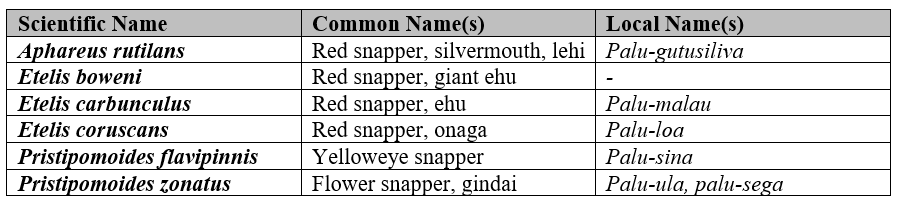
American Samoa Bottomfish Revision: In June 2023, the SSC recommended the Council revise the American Samoa Archipelago Fishery Ecosystem Plan to update the bottomfish management unit species list and explore a “rate-based” approach to annual catch limits for data-limited fisheries. The SSC may advise whether this flexible “Tier 6” method should apply solely to American Samoa bottomfish or be expanded to other regional fisheries.

Main Hawaiian Islands Uku Update: The Pacific Islands Fisheries Science Center (PIFSC) will present a 2024 update to the 2020 benchmark stock assessment for main Hawaiian Islands (MHI) uku, incorporating five additional years of catch, catch per unit effort and size data, along with corrections for recreational catch estimates. The updated assessment shows the fishery is healthy—not overfished and overfishing is not occurring. The SSC will review and potentially endorse recommendations from a stock assessment review panel that the assessment is the best available science for management.

Strategic Planning: The SSC will discuss progress on its strategic planning exercise, launched at the 153rd meeting in September, to shape its work and membership for the coming years. The initiative aims to address evolving fishery management challenges while enhancing the recruitment and retention of top scientists. 

False Killer Whale Interaction Analysis: The SSC will discuss its review of an analysis aimed at estimating foreign fleet fishing effort and associated false killer whale bycatch in an area that overlaps with the fishing area of the Hawai‘i deep-set longline fishery. The analysis was conducted by PIFSC, with input from SSC members, earlier in 2024. The SSC will discuss the uncertainties associated with data used in the analysis, along with implications for the recovery factor used to determine allowable removals and Hawai‘i longline fishery impacts.

Noncommercial Fisheries Data Updates: The SSC will review updates to the MRIP Pacific Islands Regional Implementation Plan for 2025-2029, which prioritizes projects to improve noncommercial data collection. The SSC will discuss an alternative method for estimating noncommercial data for the MHI bottomfish fishery and evaluate its potential inclusion in the plan. The Committee will also assess the method’s utility and may recommend modifications to support the Plan Team in developing a noncommercial module for annual reports.

The SSC meeting is open for in-person or remote participation via web conference. The full agenda, background documents and instructions for connecting to the meeting and providing public comments are available at www.wpcouncil.org/event/154ssc-meeting.


Scientific and Statistical Committee: James Lynch (chair); Jason Biggs (Guam Div. of Aquatic & Wildlife Resources); Debra Cabrera (University of Guam); Frank Camacho (University of Guam); Milani Chaloupka (University of Queensland); Erik Franklin (University of Hawai‘i, School of Ocean and Earth Science and Technology); Shelton Harley (Fisheries Consultant); Jason Helyer (Hawai‘i Div. of Aquatic Resources); Ray Hilborn (University of Washington); Justin Hospital (National Marine Fisheries Service Pacific Islands Fisheries Science Center, NMFS PIFSC); Dave Itano (Fisheries Consultant); Donald Kobayashi (NMFS PIFSC); Steve Martell (Sea State Inc.); Domingo Ochavillo (American Samoa Dept. of Marine & Wildlife Resources); Graham Pilling (The Pacific Community); Craig Severance (University of Hawai‘i at Hilo, retired); Keena Leon Guerrero (Commonwealth of the Northern Mariana Islands Div. of Fish & Wildlife); Charles Littnan (ex-officio) (NMFS PIFSC).

Western Pacific Regional Fishery Management Council: Secretary of Commerce appointees from nominees selected by American Samoa, the CNMI, Guam and Hawai‘i governors: Will Sword, noncommercial fisherman/engineer (American Samoa) (chair); Roger Dang, Fresh Island Fish Co. (Hawai‘i) (vice chair); Judith Guthertz, University of Guam (Guam) (vice chair); Pete Itibus, noncommercial fisher (CNMI); Shaelene Kamaka‘ala, Hawaiian Islands Land Trust (Hawai‘i); Frank Perez, AC Sales and Service, (Guam); Matt Ramsey, Conservation International (Hawai‘i); and Gene Weaver, Tasi to Table (CNMI). Designated state officials: Dawn Chang, Hawai‘i Dept. of Land & Natural Resources; Sylvan Igisomar, CNMI Dept. of Lands & Natural Resources (vice chair); Chelsa Muña, Guam Dept. of Agriculture; and Archie Soliai, American Samoa Dept. of Marine & Wildlife Resources (vice chair). Designated federal officials (voting): Sarah Malloy (acting), NMFS Pacific Islands Regional Office. Designated federal officials (nonvoting): Colin Brinkman, U.S. State Dept.; Brian Peck, U.S. Fish & Wildlife Service; and RADM Sean Regan, U.S. Coast Guard 14th District.

US Western Pacific council fighting push to name giant clams under Endangered Species Act

December 10, 2024 — The Western Pacific Regional Fishery Management Council (WPRFMC), which has authority over the stewardship of fisheries in the state and territorial waters of Hawaii and the U.S. Pacific Islands, is pushing back against a proposal to list giant clams in the U.S. Endangered Species Act (ESA).

“I feel NMFS is just ramming this through the system,” said WPRFMC Council Member Sylvian Igisomar, who is also the chair of the Northern Mariana Islands Department of Lands and Natural Resources.

Read the full story at Seafood Source

American Samoa legislators voice concern over proposal to expand Marine Sanctuary

December 4, 2024 — American Samoa’s Senate President and Speaker of the House wrote in late November on behalf of the Legislature to express to President Joseph R. Biden their concern and opposition to the proposed expansion of the National Marine Sanctuary within the Pacific Remote Islands.

“As you consider potential actions during the concluding months of your administration, we urge you to resist all proposals to create or expand any Marine National Monument within the U.S. Exclusive Economic Zone (EEZ) in the Western Pacific,” they wrote.

They believe that as ocean ecosystems face increasingly rapid changes, the U.S. fisheries management system — particularly through the oversight of the Western Pacific Regional Fishery Management Council — provides a stronger and more enduring framework for sustainable, science-based conservation measures than does the Antiquities Act.

“The Council has effectively managed these natural resources for our region, balancing ecological priorities with the economic needs of the local communities that depend on fishing for survival.”

Read the full story at Samoa News

Media Reports of Mercury in Fish Don’t Tell the Whole Story

November 8, 2024 — The following was released by the Western Pacific Regional Fishery Management Council:

Recent media reports are wrongfully perpetuating the claims that eating tuna has negative health effects because of mercury.

What the media reports fail to disclose is the fact that tuna also contains selenium, a mineral with many health benefits that plays a key role in the body’s metabolism. Selenium is an antioxidant that protects cells from damage caused by aging, pollution and lifestyle choices.

 Ocean fish, especially tuna, provide a rich source of nutrients essential for health, such as omega-3 fatty acids, selenium and vitamins. Selenium, in particular, is known to counteract mercury toxicity, making these fish safe to consume. 

 Dr. John Kaneko, a Seafood Safety Specialist in Honolulu, HI, penned an article in Spring 2024 to address this important topic called, “Seeing Through the Haze: Understanding Tuna, Mercury and Health.” He notes “it is the ratio of selenium to mercury that determines if a food is likely to promote or protect against mercury’s toxic effects.” Kaneko cites several recent studies, including a 2023 issue of Neurotoxicology, that emphasizes maternal fish consumption during pregnancy positively impacts child neurodevelopment, with benefits outweighing any mercury concerns.

 There has never been an incident of mercury poisoning linked to tuna consumption in the public. The well-documented health benefits of eating ocean fish, which include improved heart health and cognitive function, support regular seafood consumption as part of a balanced diet.

 We encourage consumers to continue enjoying seafood and remind the public to consider the evidence-based nutritional and health benefits of tuna and other ocean fish. Let’s focus on encouraging healthier diets and not allow myths to deter us from one of nature’s healthiest food sources.

Request for Proposals: Climate Change and Communities Program

October 29, 2024 — The following was released by the Western Pacific Regional Fishery Management Council:

The Western Pacific Regional Fishery Management Council is soliciting services to support its Climate Change and Communities Program (CCCP). Contractors and services are required to carry out projects as supported through NOAA’s Inflation Reduction Act funding. Contract services will support the Contractual Service Items below (See full Request for Proposals for additional details):

1. American Samoa CCCP coordinator to provide oversight and coordination of all Council CCCP projects and activities occurring in American Samoa in support of the four priority areas.

2. Mariana Islands CCCP coordinator to provide oversight and coordination of all Council CCCP projects and activities occurring in the Mariana Islands in support of the four priority areas.

3. Scenario Planning coordinator(s) and facilitator(s) for:

  • S. Pacific large vessel (Hawaii Longline and American Samoa Longline) fisheries;
  • American Samoa, Mariana Islands and Hawaii small-boat fisheries.

4. Contractor(s) to conduct regulatory reviews of the Council’s Fishery Ecosystem Plans (FEPs) and management regimes for U.S. Pacific Island fishery resources – American Samoa Archipelago FEP; Mariana Archipelago FEP; Hawaii Archipelago FEP; Pelagic FEP and Pacific Pelagic Remote Island Areas FEP.

5. Contractor(s) to review and update protected species-related fishery management processes to ensure flexibility and adaptability to climate impacts and ecosystem drivers. Contract services are sought to:

  • Incorporate climate effects and population trends in predicting and managing protected species interactions in U.S. Pacific pelagic fisheries – Hawai‘i longline (HILL) fishery case study;
  • Develop adaptive strategies and framework for managing climate change effects on protected species interactions in U.S. Pacific pelagic fisheries;
  • Develop plans for incorporating workshop outcomes into the management regime.

6. Community Engagement and Capacity-Building coordinator(s) to oversee efforts to engage Pacific Island communities to identify emerging impacts of climate change on fishing and underserved communities and to oversee capacity-building efforts as supported through the CCCP.

  • Coordinate and convene two rounds of public meetings per year throughout the Council’s jurisdiction to understand impacts and issues communities face resulting from changing climates.
  • Develop, coordinate and host pilot training/vocational program for Pacific Island underserved fishing communities to provide for new opportunities and build capacity in U.S. Pacific Island fisheries.

Interested persons or entities should submit one (1) proposal clearly identifying to which of the Contractual Service Items above they are applying. Proposals may target any single service item or combination thereof on a time and materials basis. Applicants shall include a timeline for completion of each service item project included in the proposal, with a maximum of two years to provide all contract deliverables. 

CONTRACT PERIOD: The contract is expected to begin in January 2025 and end in December 2026.

HOW TO APPLY: Proposal submissions should include the following items (maximum 10 pages; 8.5x11inch paper; 12 point font; single space): (a) Project Principal Name, Co-principals, Affiliation and Contact information (email address, phone, mailing address); (b) Statement clearly identifying which Contractual Service Item(s) is/are being applied for; (c) Statement addressing the qualifications and requirements as stated above and in the attached Appendices for Contractual Service Items 3-6; (d) Compensation rate on a time and materials basis, inclusive of all taxes and fees, for principals, co-principles and subcontractors; (e) list of sub-contractors and services to be provided; (f) travel matrix including cost for airfare, lodging, ground transportation and per diem; (g) a curriculum vitae or resume for project principals, co-principals and sub-contractors; and (h) list of other participants as appropriate.

Interested persons or entities should submit one (1) proposal clearly identifying to which of the six (6) Contractual Service Items above they are applying. Proposals may target any single service item or combination thereof on a time and materials basis. Applicants shall include a timeline for completion of each service item project included in the proposal, with a maximum of two years to provide all contract deliverables. 

SUBMISSION DEADLINE: Proposals will be accepted until 5:00 p.m. November 22, 2024 (HST), or until a contractor is engaged, whichever occurs first. Proposals may be submitted by e-mail (attach materials in PDF) to info@wpcouncil.org or via regular mail to: Western Pacific Regional Fishery Management Council, 1164 Bishop Street, Suite 1400, Honolulu, HI 96813. 


Territory not included in NOAA’s “Fisheries of the United States” annual report

October 8, 2024 — The director of the Department of Marine & Wildlife Resources, Taotasi Archie Soliai has written to the Deputy Ass’t Administrator for Regulatory Programs of NOAA, Samuel Rauch III on his concerns about American Samoa not being included in NOAA’s “Fisheries of the United States” Annual Report, pointing to “a longstanding pattern of marginalization for our community.”

DMWR director’s concerns comes on the heels of the 200th Meeting of the Western Pacific Regional Fishery Management Council held in Honolulu, last month, where an Indigenous Committee to provide recommendations to federal authorities on cultural fishing rights and related issues was established.

Read the full article at Samoa News

Council forms Indigenous Committee for Pacific Islander fishing rights

October 4, 2024 — After wrapping up their 200th meeting, the Western Pacific Regional Fishery Management Council (WPRFMC) established an Indigenous Committee to recommend to federal authorities on cultural fishing rights and related issues.

WPRFMC represents fisheries in Hawaii, American Samoa, Guam, the Northern Mariana Islands, and the Pacific Remote Islands and has authority over all fisheries in state and territorial waters. Their decisions are based on science and informed decisions by traditional knowledge and practices of the local users for the benefit of the island communities and the nation. WPRFMC was established by Congress in 1976 under the Magnuson-Stevens Fishery Conservation and Management Act as one of the eight regional fishery management councils.

Read the full article at the National Fisherman

Council Creates Indigenous Committee to Strengthen Traditional Voices in Pacific Fisheries

September 27, 2024 — The following was released by the Western Pacific Regional Fishery Management Council:

Concluding its 200th meeting, the Western Pacific Regional Fishery Management Council established an Indigenous Committee to provide recommendations to federal authorities on cultural fishing rights and related issues.

Sub-panels for Hawai‘i, American Samoa, Guam and the CNMI will include members with expertise in traditional fishing practices and community ocean activities in their respective regions. The new committee will augment the Council’s Fishery Rights of Indigenous People Standing Committee, which was established in the mid-1980s.

Throughout its 48-year history, the Council has addressed indigenous issues and sought to modify the impact of federal fishery management on Native Hawaiians, Samoans, Chamorros and Carolinians, who have fished in the Western Pacific for centuries. 

With the growing emphasis on ecosystem-based management, traditional ecological knowledge, equity, and environmental justice, the Council created the new Indigenous Committee to ensure culturally relevant recommendations that include indigenous perspectives in the region’s decision-making process.

The Council requested a presentation on how the recognition process for indigenous peoples could work and the benefits an existing system now provides to Native American Tribes. Currently, the United States does not recognize the indigenous peoples of the Western Pacific Region—Kānaka Maoli, Samoans, CHamoru and Refaluwasch—in the same way it does federal Native American Tribes. This difference puts the Pacific groups at a disadvantage in federal relations.

The Endangered Species Act, for example, allows subsistence use of endangered species as a food source for Native American Tribes, but such exceptions were not considered for regional indigenous peoples when the U.S. entered international agreements to protect green sea turtles, a traditional food in the Pacific. Expanded recognition could address existing and future issues affecting Pacific Islanders.

National Marine Sanctuaries in the Pacific

The Council reviewed a NOAA status update on the proposed national marine sanctuaries in the Northwestern Hawaiian Islands (NWHI) and Pacific Remote Islands (PRI). Since March 2024, public hearings have been held across the Hawaiian islands on the draft Environmental Impact Statement (EIS) for the NWHI sanctuary, with no action yet reported on a draft EIS for the PRI sanctuary.

The Council expressed concerns over the process for establishing fishing regulations under the National Marine Sanctuaries Act, section 304(a)(5), contending it fails to provide a clear rationale for why such regulations are necessary. The Council stressed the need for assessing potential threats to sanctuary resources—including fishing—before determining regulations to address those concerns.

The Council bid a fond farewell to Manny Dueñas from Guam whose 3-year term ended in August 2024. He was a Member of the Council for a total of 12 years, having previously served between 2003 and 2012, including as Chair from 2011-2012. Dueñas has led the Guam Fishermen’s Cooperative Association for nearly 40 years, and has been a passionate champion of his culture and fishing rights. During his tenure, the Council provided funds supporting projects for indigenous fishing practices throughout the Western Pacific Region. Seabird, sea turtle and oceanic whitetip shark bycatch mitigation measures were established for the Hawai‘i longline fishery. A major restructuring of managing fisheries was adopted by the Council–instead of species-based, four archipelago ecosystem plans were developed for American Samoa, the CNMI, Guam and Hawai‘i.

The Council’s 201st meeting will be held virtually Dec. 16-18, 2024. Major agenda items will include actions on the Guam bottomfish rebuilding plan, striped marlin stock sustainability, uku stock assessment and catch limits in Hawai‘i, longline vessel crew training and electronic monitoring. Information will be posted on our website at www.wpcouncil.org/meetings-calendars.

Council Receives Praise, Spars with NMFS on Policies

September 26, 2024 — The following was released by the Western Pacific Regional Fishery Management Council:

Praise from a top federal administrator combined with an airing of interagency issues energized the second session of the Western Pacific Regional Fishery Management Council’s 200th meeting Tuesday.


Sam Rauch, Deputy Assistant Administrator for Regulatory Programs at the National Marine Fisheries Service (NMFS), opened the session by complimenting the Council for its achievements.

 “This Council doesn’t get enough credit for leadership in the region and the example it has set nationally and internationally; things done here echo throughout the world,” said Rauch. 

 “To name a few,” Rauch continued, “the Council prohibited destructive gears, explosives, poisons; implemented measures on drift gillnets before the drift gillnet act; created areas where industry can thrive and at the same time reduce impacts to protected species; and crafted gear measures with industry that are models for the rest of the world—circle hooks, wire leaders and vessel monitoring systems (VMS).”

The Council welcomed Rauch’s comments, though much of the session focused on policy and procedural disagreements between the Council and NMFS.

 Council members expressed frustration with the proposed Endangered Species Act (ESA)-listing of giant clams in the U.S. Pacific Territories. NMFS initiated a status review in 2017 in response to a petition to list 10 species of giant clams under the ESA, but published the proposed rule in July 2024, opening the proposal for a 90-day public comment period. NMFS presenter John Rippe said that for giant clams in general, quantitative data and survey data is very limited. 

Council member Sylvian Igisomar questioned if NMFS had considered unpopulated as well as populated areas when gathering information about the giant clams’ spatial distribution.

“I feel NMFS is just ramming this through the system,” said Igisomar, Secretary of the CNMI Department of Lands and Natural Resources. “Some of these species shouldn’t have been [proposed]—just because you can’t access an area, doesn’t mean the clams are not there.”

The Council reiterated its request for NMFS to engage early with local agencies and communities, and to collaborate with the governments of American Samoa, Guam and the CNMI. The members emphasized the importance of working proactively with the U.S. Pacific Territories before considering ESA listings and critical habitat designations.

Council member Chelsa Muña questioned NMFS’s listing of giant clam species as endangered in regions like Guam and the CNMI where those species haven’t been present for many years. “We are working with Palau to reintroduce the species. It’s disconcerting to see the ones that don’t occur in the Marianas on the list since they’re not part of the natural habitat. You will be restricting our ability to repopulate the area,” Muña emphasized.

Members noted that from past experience with other ESA-listed species like turtles, once giant clams are listed, it is difficult to delist them later. Muña said, “If climate change is included as one of the threats, then there is nothing we can really do to change that impact.” 

Muña, director of the Guam Department of Agriculture, added this would affect attempts to recover the species, as is the case with several species of corals. “Outplantings require permits, and you can’t outplant corals that are endangered because you have to harvest,” she noted.

 Rippe explained that under the ESA, the United States is required to list species based on their status throughout their entire range, not just in certain areas. Though some giant clam species in question don’t occur in the Mariana Archipelago, they exist elsewhere in their range, such as the Great Barrier Reef, the Philippines and Indonesia, which justifies the listing. 

 American Samoa Council member Archie Soliai added, “For the whole session we heard on ESA and Marine Mammal Protection Act issues, what sticks out the most is ‘restrict, control and prohibit.’ Giant clams are important to our culture, and this inhibits our food security.”

 The Council asked NMFS to extend the public comment period to allow more time for agency outreach to affected communities and for community members to comment. It also asked that NMFS work with governments of American Samoa, Guam and the CNMI to review data supporting proposed rules and their socioeconomic and cultural impacts.

 The Council sessions at the Ala Moana Hotel Hibiscus Ballroom will conclude Wednesday, Sept. 25.

Land Acknowledgement Highlights Indigenous Roots and Equity at Western Pacific Council’s 200th Meeting

September 25, 2024 — Themes of cultural recognition, indigenous legacies and ocean security sparked the opening of the 200th meeting of the Western Pacific Regional Fishery Management Council here Monday.

Chair Will Sword opened the historic session with a prayer in Samoan reminding members of their mission as servants entrusted with maximizing the use of spiritual gifts. “The Council’s acknowledgement of the place and people continues its commitment to incorporating indigenous knowledge into fisheries management for the region,” Sword added.

Shae Kamaka‘ala, Chair of the Council’s Indigenous Rights Committee, welcomed members in recognizing that the region encompassing the Council’s jurisdiction has indigenous, ancestral caretakers and pays respect to these longstanding cultural roots. Her remarks included a statement that “Hawai‘i remains an illegally occupied state of the United States government.”

“It is important for the Council to make a conscious effort to ensure equity in our work and recognize the existence and sovereignty of the indigenous people of the Western Pacific,” commented Kitty Simonds, Council Executive Director.

The Council welcomed Rear Admiral Sean Regan, U.S. Coast Guard (USCG) District 14, whose career includes service at the White House as Director of Maritime Security Policy, Arctic Region, on the President’s National Security Staff (NSS); advisor to the National Security Advisor, Homeland Security Advisor and the President. The Admiral said he appreciated the response the USCG has received from the people in the region and that he was favorably impressed by the Council’s work in protecting fisheries. 

Admiral Regan emphasized the USCG’s mission is to “protect those who serve on the sea, protect against threats emanating from the sea and protect the sea itself.” 

Captain Jennifer Conklin described the USCG’s “Operation Blue Pacific,” underscoring its role as a persistent presence of the U.S. government as a trusted partner in enhancing the safety, security and prosperity of the region.


During the meeting, Nate Ilaoa from American Samoa complained that the USCG’s response to American Samoa has not been sufficient. He said that the Deeds of Cession grants powers to the United States, but also requires protections. He requested the USCG to protect American Samoa from illegal, unreported and unregulated fishing and foreign incursions and said the territory’s citizens deserve better.

The Council recommended collaboration with USCG to develop a plan for providing assets and resources to the territory, while also making certification courses more accessible to its citizens.


Action Items

The Council approved a 493,000-pound annual catch limit (ACL) for the deep-seven bottomfish complex in the main Hawaiian Islands for fishing years 2024-2025 to 2026-2027. Catch limits are determined by subtracting the overfishing limit plus scientific uncertainty factors from the acceptable biological catch, then further adjusting for SEEM (Social, Economic, Ecological and Management) variables.


In 2019, the Guam bottomfish fishery was declared overfished, which required the Council to rebuild the stock, per the Magnuson-Stevens Act. The Council developed a rebuilding plan that set an ACL of 31,000 pounds, with in-season monitoring that would close the fishery if the limit is exceeded. A stock assessment update presented in June 2024 found that while Guam has not overfished, it also has not met the rebuilding threshold.

The Council recommended increasing the rebuilding plan ACL to 34,500 pounds, allowing for continued fishing while seeking to ensure the stock is rebuilt by 2031. This option would also apply a three-year catch-averaging formula that would result in reducing subsequent catch limits by the average amount overfished. 

The Council meeting will continue daily at the Ala Moana Hotel Hibiscus Ballroom through Wednesday September 25.

  • « Previous Page
  • 1
  • …
  • 7
  • 8
  • 9
  • 10
  • 11
  • …
  • 38
  • Next Page »

Recent Headlines

  • Court order could threaten permits for surviving US wind projects
  • Judge rules North Carolina breached duty to protect coastal fisheries
  • OREGON: Oregon Fish and Wildlife Commission approves new rules for Dungeness crab fisheries
  • NOAA and partners to explore, map deep waters of American Samoa
  • Seafloor boulders challenge fishermen, and energy developers
  • $15 million federal grant will fund fishing tech projects
  • MASSACHUSETTS: Massachusetts Launches “Flat Is Back” Campaign to Promote Local Flounder
  • OREGON: Oregon to start testing ropeless crabbing gear next spring to stop whale entanglements

Most Popular Topics

Alaska Aquaculture ASMFC Atlantic States Marine Fisheries Commission BOEM California China Climate change Coronavirus COVID-19 Donald Trump groundfish Gulf of Maine Gulf of Mexico Hawaii IUU fishing Lobster Maine Massachusetts Mid-Atlantic National Marine Fisheries Service National Oceanic and Atmospheric Administration NEFMC New Bedford New England New England Fishery Management Council New Jersey New York NMFS NOAA NOAA Fisheries North Atlantic right whales North Carolina North Pacific offshore energy Offshore wind Pacific right whales Salmon South Atlantic Virginia Western Pacific Whales wind energy Wind Farms

Daily Updates & Alerts

Enter your email address to receive daily updates and alerts:

  • This field is for validation purposes and should be left unchanged.
Tweets by @savingseafood

Copyright © 2026 Saving Seafood · WordPress Web Design by Jessee Productions