Saving Seafood

  • Home
  • News
    • Alerts
    • Conservation & Environment
    • Council Actions
    • Economic Impact
    • Enforcement
    • International & Trade
    • Law
    • Management & Regulation
    • Regulations
    • Nutrition
    • Opinion
    • Other News
    • Safety
    • Science
    • State and Local
  • News by Region
    • New England
    • Mid-Atlantic
    • South Atlantic
    • Gulf of Mexico
    • Pacific
    • North Pacific
    • Western Pacific
  • About
    • Contact Us
    • Fishing Terms Glossary

James G. Stavridis & Johan Bergenas: The fishing wars are coming

September 14, 2017 — Lawmakers are finally catching up to something that the Navy and Coast Guard have known for a long time: The escalating conflict over fishing could lead to a “global fish war.”

This week, as part of the pending National Defense Authorization Act, Congress asked the Navy to help fight illegal fishing. This is an important step. Greater military and diplomatic efforts must follow. Indeed, history is full of natural-resource wars, including over sugar, spices, textiles, minerals, opium and oil. Looking at current dynamics, fish scarcity could be the next catalyst.

The decline in nearly half of global fish stocks in recent decades is a growing and existential threat to roughly 1 billion people around the world who rely on seafood as their primary source of protein. No other country is more concerned about the increasingly empty oceans than China, whose people eat twice as much fish as the global average. Beijing is also the world’s largest exporter of fish, with 14 million fishers in a sector producing billions of dollars a year.

In order to keep its people fed and employed, the Chinese government provides hundreds of millions of dollars a year in subsidies to its distant-water fishing fleet. And in the South China Sea, it is common for its ships to receive Chinese Coast Guard escorts when illegally entering other countries’ fishing waters. As such, the Chinese government is directly enabling and militarizing the worldwide robbing of ocean resources.
Read the full opinion piece at the Washington Post

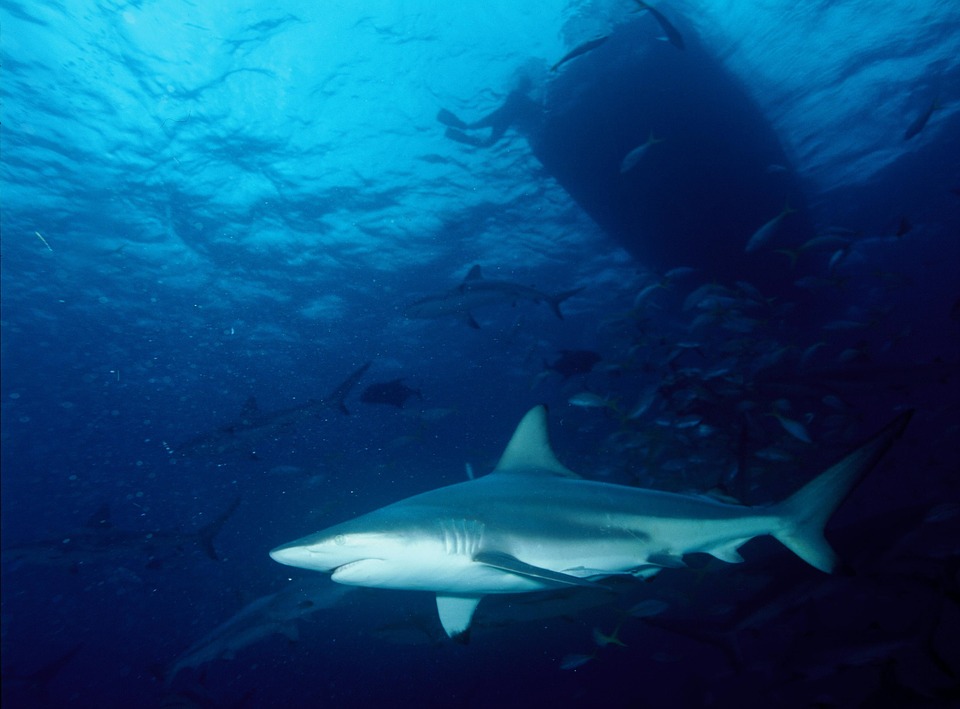
Shark Fin Ban Is Misguided, Would Undermine Sustainable U.S. Shark Fisheries, Say Experts

WASHINGTON (Saving Seafood) – September 14, 2017 – A ban on shark fin sales in the United States would undermine some of the planet’s most sustainable shark fisheries while harming global shark conservation efforts, according to two prominent shark scientists.

In a paper published this month in Marine Policy, Dr. David Shiffman, a Liber Ero Postdoctoral Research Fellow at Simon Fraser University in Vancouver, B.C., and Dr. Robert Hueter, Director of the Center for Shark Research at Mote Marine Laboratory in Sarasota, Fla., call proposed Congressional legislation banning the sale or purchase of shark fins in the United States “misguided.” Environmental group Oceana is pushing the legislation, known as the Shark Fin Trade Elimination Act.

In an interview with Saving Seafood, Dr. Shiffman said the legislation was “well-intentioned” but “overly simplistic.” By withdrawing from the global shark fin market, the United States would remove incentives for its trading partners to build sustainable shark fisheries, and would eliminate an important example of sustainable shark fisheries management, he said.

“We’re a relatively small percentage of the overall trade in shark fins, so banning the trade of shark fins within the U.S. will not have that much of a direct impact on shark mortality,” Dr. Shiffman told Saving Seafood. “But we’re a really high percentage of the sustainably caught, well-managed shark fishery. So removing us from the global marketplace for fins doesn’t help save that many sharks, but it removes this sustainable fishery from the marketplace as a template that can be copied.”

According to Dr. Shiffman, U.S. shark fisheries are built on a strong mix of “scientific research infrastructure” and “management and enforcement infrastructure,” which has helped make them some of the most sustainable in the world. His coauthor, Dr. Hueter, told Saving Seafood that enacting a shark fin ban would undermine decades of progress that went into building those sustainable fisheries.

“We have done a great job working together to rebuild the fish, and at least make the fisheries sustainable and profitable,” Dr. Hueter said. “And that is why this fin ban, in our opinion, is so misguided. Because after all these decades of work to get us to a great point with a bright future, this sort of ban would just cut the legs out from underneath the fishery. It would cause waste, put people out of business who are doing things right, and reward the folks in other nations who are not doing things well.”

Much of the public remains unaware of the sustainable status of most U.S. shark fisheries, a phenomenon the authors attribute to confusion over key issues related to shark conservation. In particular, many do not understand the difference between “shark finning” – the inhumane and illegal practice of removing a shark’s fins at sea – and sustainable landings of whole sharks required by U.S. law. Finning is “just this boogeyman of shark conservation activists,” Dr. Shiffman said. “People don’t understand what shark finning means in many cases.”

“We have sounded the alarm now for 20 years or more about this thing called finning to the point where we’ve gotten people so upset about it that they no longer listen to the subtle difference between finning and fishing,” Dr. Hueter said. “And they think that all sharks that are caught by commercial fishermen are finned animals.”

Should a total fin ban be enacted, rule-following U.S. fishermen would be economically harmed, the authors write in their paper, noting that nearly a quarter of the total value of shark meat sales comes from shark fins. Forcing fishermen to throw out fins from sustainably caught sharks would be wasteful, contradicting a United Nations plan of action to create “full use” in global shark fisheries, they write.

Instead of a fin ban, Dr. Shiffman and Dr. Hueter support policies focused on sustainable shark fisheries management. Dr. Hueter recommended five ways fishery managers could pursue this goal: increase penalties for those caught finning sharks, which Florida did earlier this year; stop imports of shark products from countries that don’t practice sustainable shark fishing; incentivize the domestic industry to process shark fins within the U.S. and provide for the domestic demand; closely monitor U.S. shark populations and support strict measures for sustainability; and increase public education about the problems facing global shark populations.

“Banning is always the easiest thing,” Dr. Hueter said. “Making the fishery so it’s regulated and sustainable and smart, that’s hard. But we shouldn’t be choosing things based on what sounds good or what feels good. We should be doing things based on what works.”

There is broad support in the scientific community for sustainable shark fisheries. In a recent survey of over 100 members of scientific research societies focusing on sharks and rays, Dr. Shiffman and Dr. Neil Hammerschlag, a marine ecologist at the University of Miami, found that 90 percent preferred sustainable management to a total ban on the sale of shark products. Dr. Shiffman believes that sustainable fisheries can go hand in hand with shark conservation.

“I am glad to see that the best available data, over and over again, is showing that we can have healthy shark populations while still having sustainable, well-managed fisheries that employ fishermen and provide protein to the global marketplace,” said Dr. Shiffman, who also writes for the marine science blog Southern Fried Science and frequently comments on shark conservation issues on Twitter. “We don’t need to choose between the environment and jobs in this case if we do it correctly.”

Time for seafood to bridge the gender gap, urges Iceland’s fisheries minister

September 13, 2017 — Gender equality and ensuring that women are given the same career opportunities and means to engage with the seafood industry as men is a major challenge that warrants urgent prioritization, according to Iceland Minister of Fisheries and Agriculture Þorgerður Katrín Gunnarsdóttir.

Speaking at the World Seafood Congress 2017 (WSC) taking place in Reykjavik, the minister applauded the seafood industry for its continued progress, including adding to the volume and quality of the seafood available to the market and making an increasingly important contribution to global food security. But she called on everyone involved in seafood “to do what they can” to overcome the gender gap that remains in the sector.

Globally, is currently estimated that just one percent of CEO positions in seafood are held by women, despite women accounting for more than 50 percent of all its jobs.

“It will benefit us all – men, women, the seafood sector as a whole. So please let’s all take significant steps to fix the gender gap,” she said.

Read the full story at Seafood Source

Brexit Leaves French Fishermen On The Hook

September 12, 2017 — France’s busiest port, Boulougne-sur-Mer, sits just across the English Channel from Britain, in the Calais region.

Seagulls glide above scores of brightly painted boats docking to unload the catch of the day — mainly sole but also cod, roussette, crab and scallops.

It’s all sold at a bustling seaside market where Marie-Laure Fontaine sells seafood from a fishing boat called Providence.

“Sole and cod and turbot, we get these all from British waters,” Fontaine says. “And this is a worry.”

Up to 80 percent of fish caught by fishermen here comes from British waters, which are about a two-hour boat ride away.

French fishermen have been nervous since Britain voted to leave the European Union last year. That’s because when the divorce is final, the U.K. will also leave what’s called the Common Fisheries Policy.

“After that, the U.K. will be an independent coastal state, like Norway or the Faroe Islands or Iceland,” says Barrie Deas, chief executive of the U.K.’s National Federation Fishermen’s Organisations. “The U.K. will determine its own fishing quotas and access arrangements. So I think it’s realistic for the French to be worried.”

Read and listen to the full story at NPR

Study negates concerns regarding radioactivity in migratory seafood

September 5, 2017 — When the Fukushima power plant released large quantities of radioactive materials into nearby coastal waters following Japan’s massive 2011 earthquake and tsunami, it raised concerns as to whether eating contaminated seafood might impair human health—not just locally but across the Pacific.

A new study by an international research team shows that those concerns can now be laid to rest, at least for consumption of meat from migratory marine predators such as tuna, swordfish, and sharks.

The team focused on cesium, a silvery metal with a large number of radioactive isotopes. Two of these, 134Cs and 137Cs, form when uranium fuel breaks down in nuclear reactors. The cesium isotopes are of particular concern because they were discharged in large quantities following the disaster, exhibit relatively long half-lives (2.1 and 30 years respectively), and tend to accumulate in the muscle tissues that people like to eat.

However, the team’s sampling of tissues from predatory fishes and other large vertebrates collected across the northern Pacific between 2012 and 2015 revealed no detectable levels of 134Cs, and 137Cs concentrations that were generally consistent with background levels from aboveground nuclear testing during the 1940s and 50s. They collected the animals from waters near Japan, Hawaii, and California.

Read the full story at Phys.org

15 Health Benefits of Eating Fish, According to Science

September 1, 2017 — Scientists consider fish as one of the most nutritious foods on the planet. Health experts recommend that individuals include fish into their diets as regularly as possible. This is because fish is packed with protein, vitamin D, important minerals such as selenium and iodine, as well as omega-3 fatty acids.

In fact, scientists and health experts maintain that fish is the number one source of the omega-3 fatty acids. In addition, scientific research shows that fish is one of the best dietary sources of vitamin D (1). Thus, consumption of fish can markedly improve rates of vitamin D deficiency, as well as ensure that people are getting enough omega-3 into their bodies.

This article will look at 15 scientifically proven health benefits of consuming fish. In addition, the article will present five delicious and healthy fish recipes that readers can make for themselves, their families, and friends.

1. Fish supports the health of bones and teeth

Fish is one of the best sources of vitamin D, and studies have shown that a deficiency in this nutrient results in low mineral density in the bones, as well as osteopenia, and osteoporosis (2).

Read the full list at Jen Reviews

Aquaculture can feed the world, new report claims

August 31, 2017 — A new study by University of California, Santa Barbara marine scientists led by Professor Rebecca Gentry, along with researchers from the Nature Conservancy, the National Oceanic and Atmospheric Administration, and the University of California, Los Angeles (UCLA), shows considerable potential for aquaculture to develop around the globe.

Fish farming is now the fastest-growing food sector in the world, and is frequently cited as having the potential to address future global food security issues. In their study, the researchers estimated that 15 billion metric tons (MT) of finfish could be grown globally per year, which is 100 times more than current world seafood consumption.

The results of their study, “Mapping the global potential for marine aquaculture,” published in the journal Nature Ecology and Evolution on 14 August, demonstrates the oceans’ vast potential to support aquaculture, director of the UCLA Institute of the Environment and Sustainability and report co-author Peter Kareiva said.

“We need to find more protein for our growing population, and we have pretty much tapped out wild fish as protein sources,” he said. “This study shows that farming fish in the ocean could play a huge role in feeding people without degrading our ocean or overfishing wild species.”

Both fish and bivalve aquaculture have potential for expansion in what the researchers termed “hot spots” – particularly in warm, tropical regions.

Indonesia, for example, was found to have one of the highest production potentials for fish and bivalves. Developing just one percent of Indonesia’s suitable ocean area could produce more than 24 million MT of fish per year. If this was used entirely for domestic consumption, it would increase seafood consumption per capita six-fold.

Read the full story at Seafood Source

Hurricane Harvey’s impact on regional seafood sector still being determined

August 30, 2017 — Hurricane Harvey has caused significant damage in Southeast Texas, but experts in the shrimp industry don’t believe there will be a long-term impact on the United States’ Gulf of Mexico shrimp industry.

However, some Houston-area seafood companies suffered damage from the storm and overall losses in Texas could total USD 100 billion (EUR 83.6 billion).

Rockport, Texas-based Global Blue Technologies, a shrimp farm and hatchery, was still assessing the damage to its facilities on Tuesday and SeafoodSource will provide an update soon.

AkerBiomarine’s krill oil plant in Houston suffered minor leaks due to heavy rain, but did not sustain damage, according to a statement the company provided to SeafoodSource.

“Due to severe weather conditions, we did a controlled shutdown of our Houston manufacturing plant on Friday, securing all assets and the site. The top priority in this situation is always the safety of our employees and their families,” AkerBioMarine said.

On Tuesday, the plant was still shut down.

Read the full story at Seafood Source

Pelagic survey highlights NOAA’s growing collaborative relationship with industry

August 30, 2017 — Earlier this year, officials with the National Oceanic and Atmospheric Administration used the Lisa Marie, a private fishing boat, to collect data for its annual coastal pelagic species survey. The move was part of an effort to increase collaboration between the public and private sectors.

Earlier this summer as officials with the U.S. National Oceanic and Atmospheric Administration completed work on an annual survey of coastal pelagic species (CPS) in the Pacific Ocean, they received some assistance from a new source: the private sector.

Not only were representatives from the West Coast seafood trade industry on board a federal vessel for five days while survey samples were taken, but one fisherman allowed NOAA officials to outfit his boat with equipment to survey more shallow waters near the coastline. The collaborative venture marked a milestone in a public-private dialogue that’s been going on for years.

The CPS survey collects data primarily on Pacific sardines, said Kristen Koch, the acting science and research director of NOAA’s Southwest Fisheries Service Center in La Jolla, California, but it also includes observations on other CPS fish such as northern anchovy and jack and Pacific mackerels. Typically, officials use the Reuben Lasker, a NOAA vessel, to conduct the survey. However, private sector representatives felt the government was missing out on some key data in their work.

Government leaders welcomed the idea to get more data to fill in the gaps they also sought to fill.

“Data is like gold to us,” said Koch. “If we can collect more of the kind of data we need, it improves the precision of our assessments of these species.”

Read the full story at Seafood Source

Industry’s challenge to seafood import monitoring program rejected

August 29, 2017 — A legal challenge to the Seafood Import Monitoring Program (SIMP) – a set of regulations requiring increased traceability for seafood imports – was rejected on Monday, 28 August.

The lawsuit was filed earlier this year by the National Fisheries Institute (NFI) and a large group of U.S. seafood companies, including Trident Seafoods, Fortune Fish and Gourmet, Handy Seafood, and Alfa International Seafood. The industry representatives argued that the program violated federal law and that their businesses would be harmed as a result of its implementation.

U.S. District Judge Amit Mehta ruled against the plaintiffs, finding that the Commerce Department’s implementation of the program was not done inappropriately. Specifically, Mehta found that SIMP was issued under rules allowed under the Magnuson-Stevens Act and Administrative Procedure Act, and that the department properly completed a regulatory flexibility analysis to determine SIMP’s impact on small businesses.

“The court finds that the rule’s issuance did not run afoul of the MSA, and the current Secretary of Commerce validly ratified the rule, thereby curing any alleged constitutional defect in the rule’s promulgation,” Mehta wrote.

Read the full story at Seafood Source

  • « Previous Page
  • 1
  • …
  • 24
  • 25
  • 26
  • 27
  • 28
  • …
  • 45
  • Next Page »

Recent Headlines

  • Scientists did not recommend a 54 percent cut to the menhaden TAC
  • Broad coalition promotes Senate aquaculture bill
  • Chesapeake Bay region leaders approve revised agreement, commit to cleanup through 2040
  • ALASKA: Contamination safeguards of transboundary mining questioned
  • Federal government decides it won’t list American eel as species at risk
  • US Congress holds hearing on sea lion removals and salmon predation
  • MASSACHUSETTS: Seventeen months on, Vineyard Wind blade break investigation isn’t done
  • Sea lions keep gorging on endangered salmon despite 2018 law

Most Popular Topics

Alaska Aquaculture ASMFC Atlantic States Marine Fisheries Commission BOEM California China Climate change Coronavirus COVID-19 Donald Trump groundfish Gulf of Maine Gulf of Mexico Illegal fishing IUU fishing Lobster Maine Massachusetts Mid-Atlantic National Marine Fisheries Service National Oceanic and Atmospheric Administration NEFMC New Bedford New England New England Fishery Management Council New Jersey New York NMFS NOAA NOAA Fisheries North Atlantic right whales North Carolina North Pacific offshore energy Offshore wind Pacific right whales Salmon South Atlantic Virginia Western Pacific Whales wind energy Wind Farms

Daily Updates & Alerts

Enter your email address to receive daily updates and alerts:
  • This field is for validation purposes and should be left unchanged.
Tweets by @savingseafood

Copyright © 2025 Saving Seafood · WordPress Web Design by Jessee Productions