Saving Seafood

  • Home
  • News
    • Alerts
    • Conservation & Environment
    • Council Actions
    • Economic Impact
    • Enforcement
    • International & Trade
    • Law
    • Management & Regulation
    • Regulations
    • Nutrition
    • Opinion
    • Other News
    • Safety
    • Science
    • State and Local
  • News by Region
    • New England
    • Mid-Atlantic
    • South Atlantic
    • Gulf of Mexico
    • Pacific
    • North Pacific
    • Western Pacific
  • About
    • Contact Us
    • Fishing Terms Glossary

Members Of Commercial Fishing Industry Oppose Proposed Changes To Herring Fishery

May 23, 2018 — Commercial fishing companies are against proposed changes to the Atlantic herring fishery management plan.

The New England Fisheries Management Council wants to establish a new process for setting the sustainable harvest limit, referred to as the “acceptable biological catch.” That control rule, which is set every three years, would be in place for a longer period of time.

The Town Dock, a Rhode Island-based seafood dealer and processor, said in a statement changing that rule would be problematic for the fishery.

Read the full story at Rhode Island Public Radio


Tricia Jedele: Offshore wind rush is irresponsible

May 21, 2018 — In an April opinion piece, Interior Secretary Ryan Zinke wrote that “affordable, reliable, and abundant American energy drives domestic jobs and prosperity.” If by “drives domestic jobs and prosperity” Zinke meant “threatens the very existence of New England fishermen,” then the East Farm Commercial Fisheries Center of Rhode Island (which represents Rhode Island commercial fishermen) would agree.

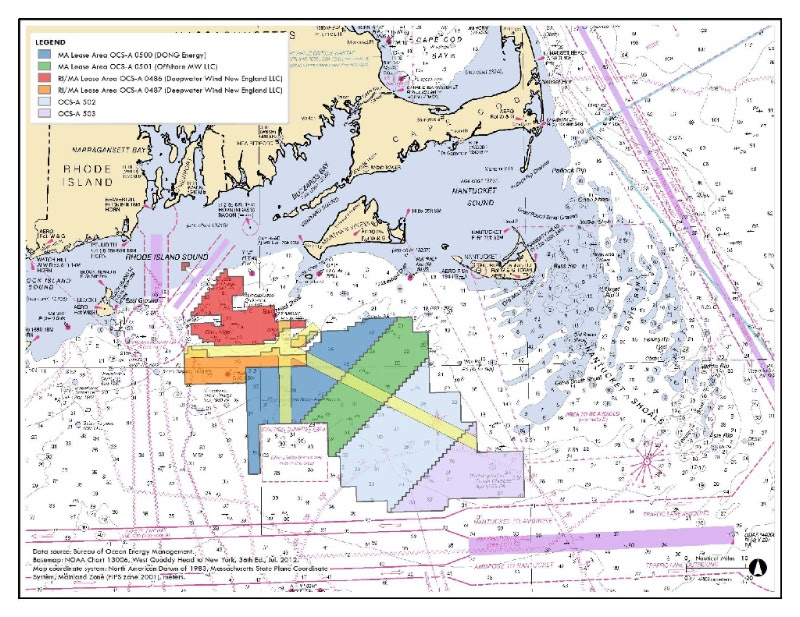
Right now, Zinke’s Bureau of Ocean Energy Management is reviewing a construction and operation plan submitted by Vineyard Wind. Vineyard Wind is a project company owned by Copenhagen Infrastructure Partners and Avangrid Renewables, a subsidiary of Iberdrola, a company based in the industrial port city of Bilbao, Spain. These companies plan to install a massive offshore wind project in the waters south of Martha’s Vineyard and Nantucket.  In the first phase of the project alone, according to the plan, Vineyard Wind will install between 88 and 106 wind turbine generators, up to four electrical service platforms, 156.4 nautical miles of cable, and up to three offshore export cables that are each 122.5 nautical miles long. And this is just the first project.

There are two other project companies also vying for state contracts and state and federal approvals. Deepwater Wind’s Revolution Wind could be built off the Massachusetts’ coast at various sizes up to 400 megawatts in its first phase.  Bay State Wind, a 50-50 joint venture between Ørsted (a company based in Denmark) and Eversource Energy, is a proposed offshore wind project located 25 miles off the Massachusetts’ coast and 15 miles off the coast of Martha’s Vineyard with the potential to build up to 2,000 megawatts of wind power in the area.  Combined and fully developed, these projects could install more than 500 turbines in the waters off Massachusetts and Rhode Island.

Read the full story at Commonwealth Magazine


Northeast squid fishermen, processors optimistic about steady markets

May 16, 2018 — The northeast longfin (loligo) squid fishery runs year-round, with the commercial harvest typically peaking in spring and fall. The shortfin (illex) squid season typically gains traction from May and runs into the fall, with catch largely related to feeding and spawning migration and market conditions.

Ex-vessel price for longfin varies from year to year and is driven by fresh market demand instead of freezer demand.

“It depends on the run, but fishermen get around $1.40 per pound, or higher, if the fresh market is hot,” said Eric Reid, general manager of the Rhode Island processor Seafreeze Shoreside. “That price doesn’t seem to want to go anywhere. The fishery is driven by the processor price, which is strong.”

NOAA approved new squid specifications for the 2018-20 fishing years. The annual quota for shortfin was set at 50.52 million pounds, and the longfin quota is similar at 50.56 million pounds.

“Currently, weather is determining the catch more than anything,” said Reid. “Fishing has not been spectacular yet, but we’ve been severely constrained for the past month or so. It’s weather dependent, but there are signs that the fish are around.”

“Right now, the domestic market demand is extremely good in the short term,” said Reid. “Once we get into our spring fishery, a lot more vessels are involved, and they are closer to the shore, so we will see how that impacts things.”

Read the full story at National Fisherman


As Gulf of Maine warms, will black sea bass make up for declines in lobster?

May 15, 2018 — The Gulf of Maine’s warming waters could mean that new fisheries are coming to Maine.

The Bangor Daily News reported that many lobster fishermen, concerned about a possible drop-off in the lobster resource, are looking at other species like Jonah crab and black sea bass. In 2016, fishermen in Connecticut, Massachusetts and Rhode Island together earned $2.38 million from their black sea bass fishery.

If Maine were to develop a black sea bass fishery, she said, fishermen could use techniques and equipment that are very similar to what they use now to catch lobster, which would help with the transition, Marissa McMahan, a senior fisheries scientist for the environmental science nonprofit Manomet, told the BDN.

Read the full story at MaineBiz


Scientists say Maine’s lobster boom won’t last. Here are the fisheries coming next.

May 14, 2018 — For the past two decades Maine’s lobster industry, which had $433 million worth of landings in 2017, has been lauded and envied as a model for how conservation practices can help a fishery thrive.

But if, as some have predicted, Maine’s lobster boom since 1990 reverses itself, lobstermen might find themselves having to catch something else in order to maintain their livelihoods out on the water. With an eye toward the future, many in Maine have been looking south to see what kind of emerging species other fishermen are catching as climate change disrupts the environment.

In southern New England, many fishermen have turned their attention to species such as Jonah crab and black sea bass, the numbers of which have increased as ocean temperatures warm and as lobster in the region have become more scarce. Maine’s lobster landings remain near historic highs, but some say the changes that have occurred south of Cape Cod are inevitable in the Gulf of Maine.

“I know it’s a hard concept to get around, but it’s going to happen,” Norbert Stamps, a Rhode Island fisherman, told a roomful of other fishermen at the Maine Fishermen’s Forum in Rockport in March.

Read the full story at the Bangor Daily News


The Future of Fishing Is Big Data and Artificial Intelligence

May 10, 2018 — New England’s groundfish season is in full swing, as hundreds of dayboat fishermen from Rhode Island to Maine take to the water in search of the region’s iconic cod and haddock. But this year, several dozen of them are hauling in their catch under the watchful eye of video cameras as part of a new effort to use technology to better sustain the area’s fisheries and the communities that depend on them.

Video observation on fishing boats—electronic monitoring—is picking up steam in the Northeast and nationally as a cost-effective means to ensure that fishing vessels aren’t catching more fish than allowed while informing local fisheries management. While several issues remain to be solved before the technology can be widely deployed—such as the costs of reviewing and storing data—electronic monitoring is beginning to deliver on its potential to lower fishermen’s costs, provide scientists with better data, restore trust where it’s broken, and ultimately help consumers gain a greater understanding of where their seafood is coming from.

“Electronic monitoring is a tremendous tool,” says Brett Alger, national electronics technology coordinator for NOAA Fisheries. “It isn’t necessarily for everyone or every fishery,” but “we’re working collaboratively in all of our regions with fishermen on the ground to understand their needs. I expect it to grow.”

The technology is required for highly migratory longline species in the Atlantic (swordfish). It’s thriving in the Pacific coast groundfish industry, and dozens of other fisheries regions have pilot initiatives.

Read the full story at Civil Eats


URI Leads Effort To Reform Commercial Fisheries in the Philippines

April 25, 2018 — Researchers at the University of Rhode Island are leading a new project in the Philippines to increase the number of fish in their waters.

The Philippines is one of the biggest fish producing nations in the world. The U.S., for example, depends on the country for crab and tuna.

However, the majority of their fishing grounds are overfished, according to the Environmental Defense Fund, a U.S.-based environmental advocacy organization.

URI and other Filipino universities and organizations will be working throughout the next five years to develop better fishery management plans for municipalities.

Read the full story at Rhode Island Public Radio


Rhode Island Fishing Industry Releases ‘Blueprint for Resilience’

April 25, 2018 — SEAFOOD NEWS — After two years members of the Rhode Island fishing industry have put together the Rhode Island Commercial Fisheries Blueprint for Resilience.

The Blueprint for Resilience was created to address issues that the state fisheries are facing: warming water temperatures, changing food webs, habitat alteration, shifting demographics and labor markets, increasing competition from other ocean industries, and regulatory strain. With financial support from the Saltonstall-Kennedy grant from NOAA, the project allows the industry to identify goals, tools and tactics for public relations, civic engagement, innovative seafood marketing and much more.

A launch event for the Blueprint for Resilience will take place May 7 from 5 p.m. – 8 p.m. at the South Kingstown Elks Lodge in Wakefield, RI. Members of the fishing industry will have a chance to brainstorm how to implement some of the recommendations.

Read the Rhode Island Commercial Fisheries Blueprint for Resilience here.

This story originally appeared on Seafood News, it is republished with permission.


Offshore wind farms concern fisherpeople

April 25, 2018 — When Greg Mataronas steams out of Narragansett Bay as early as 3 a.m., he is headed for grounds he knew as an eight-year-old. A native Rhode Islander, Mataronas grew up lobstering in Little Compton. After college, he returned to the ocean, unable to resist a profession rife with memories of his childhood. But as a commercial lobsterman, Mataronas’ days are far from youthful. Early morning wake-up calls, 16-hour days and occasional bouts of seasickness take their physical toll, and he has watched the lobster population around him decline over the last two decades. But more than the grueling lifestyle, there is a new force threatening Mataronas’ ability to provide for his wife and children: offshore wind energy.

Many fisherpeople see a future where segments of their industry will ultimately disappear unless the federal government ensures their concerns are taken into account in the construction and development of wind farms. Fisherpeople’s fears include the incompatibility of certain types of fishing gear with the clustered placement of wind turbines and a lack of site-specific research regarding economic and ecological impacts of the turbines.

Meghan Lapp, a fisheries liaison for Seafreeze Limited, an R.I.-based producer and trader of sea-frozen seafood, is also frustrated with a lack of communication between fisherpeople and wind energy companies. Though BOEM requires each wind energy company to construct and implement a “fisheries communication plan,” which details how the company will engage with and hear from the fishing industry, many fisherpeople complain that talk is not translating into action.

“All of our concerns fall on deaf ears,” Lapp said. “I personally have been meeting with BOEM for three years.” Lapp added that she gave “confidential business information” from over 20 fishing vessels to BOEM to demonstrate that there was heavy fishing activity on one particular lease site, but she said BOEM issued the lease regardless.   

Read the full story at the Brown Daily Herald


Massachusetts: Concerns, support aired at offshore wind hearings in Hyannis, on Nantucket

April 20, 2018 — NANTUCKET, Mass. — Attendees at public hearings in Hyannis and on Nantucket Wednesday for one of three offshore wind energy projects proposed for south of Martha’s Vineyard had questions about the environment, potential jobs and the effects on commercial and recreational fishing.

But others fully welcomed the benefit of a renewable energy project that — unlike Cape Wind, they said — appears to have a chance of coming to fruition.

“I’m just hoping that this will be the beginning of a national shift,” said Nantucket resident Colin Wyatt Leddy, who said he was “terribly sorry” to see Cape Wind not succeed.

The Cape Wind project, once slated for Nantucket Sound, is in the midst of relinquishing its lease with the federal Bureau of Ocean Energy Management.

With four public meetings under their belt, and a fifth in Kingston, Rhode Island today, Vineyard Wind executives are moving into the heavy lifting of federal permitting for their 400 to 800 megawatt project planned off the Vineyard.

Read the full story at the Cape Cod Times


  • « Previous Page
  • 1
  • …
  • 40
  • 41
  • 42
  • 43
  • 44
  • …
  • 61
  • Next Page »

Recent Headlines

  • USDA launches new office to support US seafood industry
  • US Celebrates 50 Years of the Law of Fisheries Management — the Magnuson-Stevens Act
  • Groundfish Gut Check: Partnering with the Fishing Industry to Update Groundfish Data
  • Senator Collins’ Statement on the Creation of the USDA Office of Seafood
  • NEW YORK: A familiar name earns one of the Mid-Atlantic’s top honors
  • Landmark US Magnuson-Stevens fisheries law turns 50 amid budget cut concerns
  • Buy American Seafood Act Could Help U.S. Fishermen
  • Pacific monuments reopening push fights over fishing, culture

Most Popular Topics

Alaska Aquaculture ASMFC Atlantic States Marine Fisheries Commission BOEM California China Climate change Coronavirus COVID-19 Donald Trump groundfish Gulf of Maine Gulf of Mexico Illegal fishing IUU fishing Lobster Maine Massachusetts Mid-Atlantic National Marine Fisheries Service National Oceanic and Atmospheric Administration NEFMC New Bedford New England New England Fishery Management Council New Jersey New York NMFS NOAA NOAA Fisheries North Atlantic right whales North Carolina North Pacific offshore energy Offshore wind Pacific right whales Salmon South Atlantic Virginia Western Pacific Whales wind energy Wind Farms

Daily Updates & Alerts

Enter your email address to receive daily updates and alerts:
  • This field is for validation purposes and should be left unchanged.
Tweets by @savingseafood

Copyright © 2026 Saving Seafood · WordPress Web Design by Jessee Productions