Saving Seafood

  • Home
  • News
    • Alerts
    • Conservation & Environment
    • Council Actions
    • Economic Impact
    • Enforcement
    • International & Trade
    • Law
    • Management & Regulation
    • Regulations
    • Nutrition
    • Opinion
    • Other News
    • Safety
    • Science
    • State and Local
  • News by Region
    • New England
    • Mid-Atlantic
    • South Atlantic
    • Gulf of Mexico
    • Pacific
    • North Pacific
    • Western Pacific
  • About
    • Contact Us
    • Fishing Terms Glossary

For sustainable fisheries, try eating ‘underloved’ fish

January 4, 2018 — Eating a wider variety of fish, including species like hake, skate, and cusk, would help keep overall fish stocks strong, according to chef and author Barton Seaver. Diversifying in this way would help ensure that people can keep eating plenty of fish—an important source of nutrients—as well as ensure economic stability for fishermen and coastal communities.

In a December 18, 2017 interview with Terry Gross on NPR’s Fresh Air, Barton, director of the Sustainable Seafood and Health Initiative at the Center for Health and the Global Environment at Harvard T.H. Chan School of Public Health, discussed sustainable fishing and other fish-related topics, such as fish farming and tips for buying quality fish.

Seaver said that just three species—tuna, salmon, and shrimp—account for 65% of total fish consumption. But overexploitation can decimate species, he said. For example, a boom in popularity of sea bass that began in the 1990s led to overfishing and depleted stocks.

Read the full story at the Harvard School of Public Health


Seafood traceability swims into Silicon Valley

November 10, 2017 — Forget the romantic image of a lonely fisherman chasing his catch on the open water. Fishing supply chains have become sprawling, technology-driven operations rife with overfishing and human rights abuses.

For that reason, fishing companies and the stores that sell their products are increasingly on the hook for the environmental and human effects of their supply chains. The need to know where fish comes from for legal compliance purposes and resource preservation, from sea to shelf, has spawned “seatech.”

Monica Jain, founder of Fish 2.0, an organization that fosters entrepreneurship in sustainable fishing and aquaculture, describes this space as “new monitoring, visibility, production and processing tools for the seafood industry.”

One-third of global fishing stocks are depleted, according to the Greenpeace Sea of Distress report issued in October. And global fish catches have been declining since the 1990s. With seafood production expected to increase 20 percent by 2025, ocean ecosystems are being decimated. Furthermore, the U.S. State Department has found forced labor and human trafficking on fishing vessels or processing facilities in more than 50 countries.

In response, Greenpeace found that major food industry players including Sodexo, Aramark and Compass group are taking strides towards protecting the oceans and the people who make a living from them by selling responsibly-sourced seafood, and increasing transparency and better practices at sea.

Aramark, for example, is the first U.S. foodservice company to procure seafood from vessels that don’t participate in transshipment, policies that allow vessels to fish for years and can breed labor and human rights abuses. Also this year, global tuna giant Thai Union has taken the lead to source sustainably caught tuna and protect worker’s rights.

Read the full story at GreenBiz


Sam’s Club Awarded Ocean Champion Award for Certified Sustainable Omega 3 Supplements

Photo Caption: Accepting the award on behalf of Jill Turner-Mitchael is David Badeen, Vice President HealthCare for Sam’s Club. Shown Left to Right – Sam’s Club President and Chief Executive Officer, John Furner; Sam’s Club Executive Vice President and Chief Merchandising Officer, Ashley Buchanan; Sam’s Club VP Health Care, David Badeen; Marine Stewardship Council U.S. Program Director, Eric Critchlow.

October 20, 2017 — The following was released by the Marine Stewardship Council:

The Marine Stewardship Council today awarded Sam’s Club and the Health and Wellness Team the US Ocean Champion award for their dedication to providing certified sustainable supplements to their customers. Under the leadership of Jill Turner-Mitchael, Senior Vice President of Consumables and Health & Wellness, 100% of Sam’s Club private label Member’s Mark fish and krill oil supplement products are traceable to a MSC-certified sustainable fishery.

“I am honored to be presenting Jill and her team with this award on behalf of the Marine Stewardship Council,” said Eric Critchlow, MSC Program Director, USA. “Jill’s leadership in sourcing certified sustainable supplements and allowing the consumer to choose between certified and non-certified is bold and, most importantly, demonstrates to consumers that they can make healthy choices for themselves and the ocean.”

By educating consumers about the importance of sustainably sourced products at point-of-purchase, Sam’s Club is driving measurable change of empowering millions of Americans to choose supplements that support healthy oceans and thriving communities.

“At Sam’s Club we know our members care about having access to quality products at a great value that are healthy choices for themselves as well as the environment,” said Jill Turner-Mitchael, Senior Vice President Consumables and Health & Wellness. “Our team works very closely with our suppliers to source the best product from the best merchants and think this is a great example of how everyone wins when we do just that.”

Only seafood products that carry the blue MSC ecolabel can be traced back through the supply chain to sustainable fisheries, ensuring complete traceability to a sustainable source. To achieve MSC certification, fisheries must meet 28 performance indicators for sustainability across three principles: sustainable fish stocks, minimizing environmental impacts, and effective management. The most common MSC certified sources of Omega-3s include cod, hake, hoki, krill, pollock, salmon and sardine.

Covering more than 70% of the planet’s surface, oceans supply the oxygen we breathe and are vital to human health and well-being. As a leader in the sustainable supplements sector, Sam’s Club is contributing to the long-term sustainability of ocean environments.

Lora Snyder: Help Harvey recovery by consuming sustainable Gulf seafood

October 6, 2017 — Many of the men and women who work every day to bring some of the best, sustainable seafood to your dinner plate have plenty to worry about – fishing can be hard business.

Fishers and others in the industry deal with a host of ever-changing variables: fuel prices, market fluctuations, fishery health and abundance, competition with imports, long unpredictable hours and one of the more uncertain wild cards – weather. Changing winds can mean the difference between days’ or even weeks’ worth of income.

And now, weather is becoming even more of a concern. Today, stronger and stronger storms that scientists attribute to warming oceans – a result of human-caused climate change – are becoming more common. These days bad weather is an existential threat to the industry.

According to the Chronicle Hurricane Harvey damaged or destroyed 25 percent of the Texas shrimp fleet. Oystermen predicted shortages of upcoming oyster harvests due to the runoff from Harvey’s historic rains. And then came Irma. Tragically, a Florida shrimper lost his life off the coast of Tampa, when the hurricane bulldozed up the state’s Gulf Coast.

Hurricanes Harvey and Irma have been devastating, but there is a unique way to help your fellow Americans. This is a great time to get better acquainted with our own healthy and sustainable seafood that’s right here in our backyard.

Read the full opinion piece at the Houston Chronicle

Salty Girl Seafood: Stop the misinformation: the oceans will not run out of fish by 2048

September 21, 2017 — This last year has been a stark reminder that we must be vigilant about questioning the information that we receive from the media. That today, as we are constantly inundated with a steady stream of the latest news, it is ever more important to question our sources, reflect on the content, and apply a critical eye to everything we read.

Last month, an article published on Forbes.com attempted to educate consumers about the status of our world’s oceans and the fish in them by painting a familiar, but largely unsubstantiated picture that has been repeatedly touted by the media in the last decade: “the oceans may run out of fish by 2048, so you should stop eating them.”

For the 1 billion people who rely on seafood for protein (largely in undeveloped countries), not eating fish isn’t much of an option — and for the many more who use seafood as a nutritious, healthful source of protein as a component of their diets, adding to the misinformation about the status of our world’s fisheries makes the notion of sustainable seafood confusing, as well as potentially damaging for the livelihoods of millions of people who depend on fishing as a way of life.

The best available evidence shows that the oceans, in fact, will not run out of fish by 2048.

Read the full opinion piece at Medium

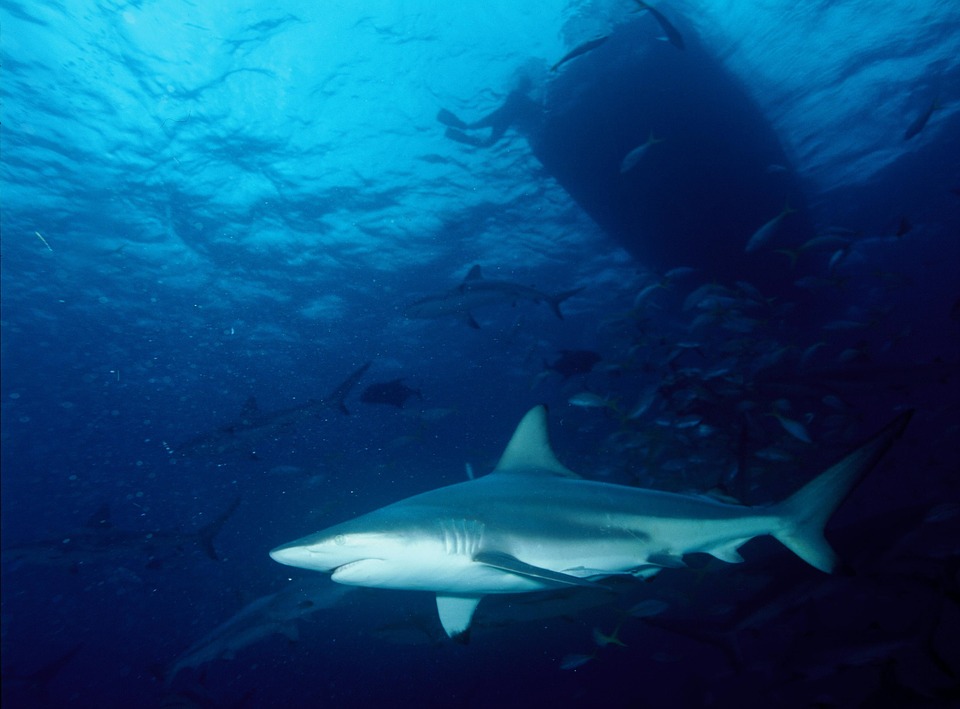
Shark Fin Ban Is Misguided, Would Undermine Sustainable U.S. Shark Fisheries, Say Experts

WASHINGTON (Saving Seafood) – September 14, 2017 – A ban on shark fin sales in the United States would undermine some of the planet’s most sustainable shark fisheries while harming global shark conservation efforts, according to two prominent shark scientists.

In a paper published this month in Marine Policy, Dr. David Shiffman, a Liber Ero Postdoctoral Research Fellow at Simon Fraser University in Vancouver, B.C., and Dr. Robert Hueter, Director of the Center for Shark Research at Mote Marine Laboratory in Sarasota, Fla., call proposed Congressional legislation banning the sale or purchase of shark fins in the United States “misguided.” Environmental group Oceana is pushing the legislation, known as the Shark Fin Trade Elimination Act.

In an interview with Saving Seafood, Dr. Shiffman said the legislation was “well-intentioned” but “overly simplistic.” By withdrawing from the global shark fin market, the United States would remove incentives for its trading partners to build sustainable shark fisheries, and would eliminate an important example of sustainable shark fisheries management, he said.

“We’re a relatively small percentage of the overall trade in shark fins, so banning the trade of shark fins within the U.S. will not have that much of a direct impact on shark mortality,” Dr. Shiffman told Saving Seafood. “But we’re a really high percentage of the sustainably caught, well-managed shark fishery. So removing us from the global marketplace for fins doesn’t help save that many sharks, but it removes this sustainable fishery from the marketplace as a template that can be copied.”

According to Dr. Shiffman, U.S. shark fisheries are built on a strong mix of “scientific research infrastructure” and “management and enforcement infrastructure,” which has helped make them some of the most sustainable in the world. His coauthor, Dr. Hueter, told Saving Seafood that enacting a shark fin ban would undermine decades of progress that went into building those sustainable fisheries.

“We have done a great job working together to rebuild the fish, and at least make the fisheries sustainable and profitable,” Dr. Hueter said. “And that is why this fin ban, in our opinion, is so misguided. Because after all these decades of work to get us to a great point with a bright future, this sort of ban would just cut the legs out from underneath the fishery. It would cause waste, put people out of business who are doing things right, and reward the folks in other nations who are not doing things well.”

Much of the public remains unaware of the sustainable status of most U.S. shark fisheries, a phenomenon the authors attribute to confusion over key issues related to shark conservation. In particular, many do not understand the difference between “shark finning” – the inhumane and illegal practice of removing a shark’s fins at sea – and sustainable landings of whole sharks required by U.S. law. Finning is “just this boogeyman of shark conservation activists,” Dr. Shiffman said. “People don’t understand what shark finning means in many cases.”

“We have sounded the alarm now for 20 years or more about this thing called finning to the point where we’ve gotten people so upset about it that they no longer listen to the subtle difference between finning and fishing,” Dr. Hueter said. “And they think that all sharks that are caught by commercial fishermen are finned animals.”

Should a total fin ban be enacted, rule-following U.S. fishermen would be economically harmed, the authors write in their paper, noting that nearly a quarter of the total value of shark meat sales comes from shark fins. Forcing fishermen to throw out fins from sustainably caught sharks would be wasteful, contradicting a United Nations plan of action to create “full use” in global shark fisheries, they write.

Instead of a fin ban, Dr. Shiffman and Dr. Hueter support policies focused on sustainable shark fisheries management. Dr. Hueter recommended five ways fishery managers could pursue this goal: increase penalties for those caught finning sharks, which Florida did earlier this year; stop imports of shark products from countries that don’t practice sustainable shark fishing; incentivize the domestic industry to process shark fins within the U.S. and provide for the domestic demand; closely monitor U.S. shark populations and support strict measures for sustainability; and increase public education about the problems facing global shark populations.

“Banning is always the easiest thing,” Dr. Hueter said. “Making the fishery so it’s regulated and sustainable and smart, that’s hard. But we shouldn’t be choosing things based on what sounds good or what feels good. We should be doing things based on what works.”

There is broad support in the scientific community for sustainable shark fisheries. In a recent survey of over 100 members of scientific research societies focusing on sharks and rays, Dr. Shiffman and Dr. Neil Hammerschlag, a marine ecologist at the University of Miami, found that 90 percent preferred sustainable management to a total ban on the sale of shark products. Dr. Shiffman believes that sustainable fisheries can go hand in hand with shark conservation.

“I am glad to see that the best available data, over and over again, is showing that we can have healthy shark populations while still having sustainable, well-managed fisheries that employ fishermen and provide protein to the global marketplace,” said Dr. Shiffman, who also writes for the marine science blog Southern Fried Science and frequently comments on shark conservation issues on Twitter. “We don’t need to choose between the environment and jobs in this case if we do it correctly.”

Researchers and fishing companies form coalition for sustainable seas

August 16, 2017 — A new paper by Henrik Österblom, Jean-Baptiste Jouffray, Carl Folke and Johan Rockström describes how the authors engaged with large seafood producers to coproduce a global science–business initiative for ocean stewardship. They suggest that this initiative is improving the prospects for transformative change by providing novel links between science and business, between wild-capture fisheries and aquaculture, and across geographical space. They argue that scientists can play an important role in facilitating change by connecting knowledge to action among global actors, while recognizing risks associated with such engagement.

The authors argue that the methods developed through this case study contribute to identifying key competences in sustainability science and hold promises for other sectors as well.

The following is taken from the abstract of “Emergence of a global science-business initiative for ocean stewardship,” published in Proceedings of the National Academy of Sciences:

The ocean represents a fundamental source of micronutrients and protein for a growing world population. Seafood is a highly traded and sought after commodity on international markets, and is critically dependent on healthy marine ecosystems. A global trend of wild stocks being overfished and in decline, as well as multiple sustainability challenges associated with a rapid growth of aquaculture, represent key concerns in relation to the United Nations Sustainable Development Goals. Existing efforts aimed to improve the sustainability of seafood production have generated important progress, primarily at the local and national levels, but have yet to effectively address the global challenges associated with the ocean.

This study highlights the importance of transnational corporations in enabling transformative change, and thereby contributes to advancing the limited understanding of large-scale private actors within the sustainability science literature.

Read the full paper here

Too Big To Ignore explores challenges to sustainable development of local fisheries

August 10, 2017 — Two years after FAO member states agreed to adopt a human rights-based approach to governing the small-scale fisheries in their countries, researchers invested in the development of small-scale fisheries have released a book outlining progress made in implementing those reforms and the challenges in doing so.

The book, “Small-Scale Fisheries Guidelines: Global Implementation,”  reviews countries’ efforts thus far to implement the human rights-based principles, otherwise known as  Voluntary Guidelines for Securing Sustainable Small-Scale Fisheries, at the local level. Comprising essays and case studies by more than 90 authors from academia, the FAO, and civil society, it also considers the need to contextualize the guidelines to fit local circumstances.

Edited by researchers associated with Too Big To Ignore, a research network and global partnership dedicated to the promotion and support of small-scale fisheries, the book considers case studies in 34 countries, including the Pacific, Africa, Asia, and the Caribbean.

Read the full story at Seafood Source

SIMBA Seafood Traceability System Improves Productivity with Real Time Production and Inventory Updates for Management, Operations and Accounting

July 27, 2017 — REDMOND, Wash. — The following was released by Dynamic Systems, Inc.:

Dynamic Systems, Inc., a leader in Automated Seafood Solutions has updated SIMBA to now track production minute to minute as it happens on the plant floor for real-time data.

Most Seafood Processors record plant production and inventory manually using paper and pen or spreadsheets. Although the system works it is time consuming and error-prone.

The SIMBA System now provides real-time information to Management for timely business decision-making. Operations can monitor each production line in real-time and identify bottlenecks or issues as they happen. And Finance can have inventory and shipping data automatically uploaded to their accounting or ERP system for immediate billing.

Plant floor data entry is accomplished seamlessly using touch screens which can be formatted to show each user only what they will need to select. Employees are able to quickly enter multiple attributes per production run, such as species, grade, color, area, etc., and print unique labels for each carton.

SIMBA’s traceability function offers granular data with depth of traceability unmatched.  Track lots through processing, commingling and re-packing. Print audit reports with the punch of a button as soon as the items are packed.

The accuracy and speed of barcode scanning allows SIMBA’s inventory and shipping information to upload in real-time for sales and invoicing. Warehouse personnel use mobile barcode scanners to record carton and pallet locations and to ship against sales orders, work orders or log cartons into specific vans.

SIMBA Solves 3 Huge Problems: “SIMBA has been a great tool for our company. It solved three huge problems: Production Tracking, Traceability, and Shipping Accuracy. We would like to expand the system in the near future.”

Americans Need to Know U.S. Fisheries are Sustainable: Former Senior NOAA Official

July 24, 2017 — Earlier this month, Saving Seafood unveiled our campaign to tell the public that American Seafood is Sustainable Seafood™. A recent paper by Mark Helvey, former NOAA Assistant Regional Administrator for Sustainable Fisheries for the Pacific Region, confirms that purchasing U.S.-caught seafood is one of the most sustainable choices consumers can make, and notes that, “Most Americans remain unaware of the high environmental standards by which U.S. federal marine fisheries – and many state fisheries – are managed, in compliance with multiple state and federal laws.”

According to the paper, the standards under which U.S. fishermen operate “conform to or exceed internationally accepted guidelines for sustainable fisheries adopted by the Food and Agriculture Organization of the United Nations.”

The first recommendation made in the peer-reviewed paper is to “increase awareness…of the high environmental standards by which U.S. federal marine fisheries – and many state fisheries – are managed.”

The paper makes the case that, “Sea Grant Extension Programs in U.S. coastal states and territories have conducted education and out-reach, with NOAA Fishwatch and a number of nongovernmental organizations also helping to bridge this gap. However, further efforts to address this lack of understanding are needed.”

This is precisely the goal of our American Seafood is Sustainable Seafood™ campaign.

Mr. Helvey provided the following summary of his paper to Saving Seafood:

  • The United States is recognized for its robust seafood appetite and strong commitment to environmental conservation. However, efforts to close or restrict its own domestic fisheries in pursuit of environmental protection are often not considered within the context of seafood consumption.
  • Restricting U.S. fisheries comes at the cost of displaced negative environmental impacts associated with the fishing activities of less-regulated, foreign fisheries.
  • The authors provide six solutions for addressing this issue beginning with the need for U.S. consumers becoming more aware of the exceedingly high environmental standards by which U.S. marine fisheries are managed relative to many foreign ones.
  • While efforts by NOAA’s Sea Grant Extension Program, FishWatch, and a number of nongovernmental organizations are bridging the information gap, the authors stress that more is required for increasing awareness that U.S fisheries are sustainable fisheries.

The paper, “Can the United States have its fish and eat it too?,” was published in the January 2017 volume of Marine Policy and is co-authored by Caroline Pomeroy, Naresh C. Pradhan, Dale Squires, and Stephen Stohs.

Read the full paper at ScienceDirect

  • « Previous Page
  • 1
  • …
  • 18
  • 19
  • 20
  • 21
  • 22
  • …
  • 26
  • Next Page »

Recent Headlines

  • Scientists did not recommend a 54 percent cut to the menhaden TAC
  • Broad coalition promotes Senate aquaculture bill
  • Chesapeake Bay region leaders approve revised agreement, commit to cleanup through 2040
  • ALASKA: Contamination safeguards of transboundary mining questioned
  • Federal government decides it won’t list American eel as species at risk
  • US Congress holds hearing on sea lion removals and salmon predation
  • MASSACHUSETTS: Seventeen months on, Vineyard Wind blade break investigation isn’t done
  • Sea lions keep gorging on endangered salmon despite 2018 law

Most Popular Topics

Alaska Aquaculture ASMFC Atlantic States Marine Fisheries Commission BOEM California China Climate change Coronavirus COVID-19 Donald Trump groundfish Gulf of Maine Gulf of Mexico Illegal fishing IUU fishing Lobster Maine Massachusetts Mid-Atlantic National Marine Fisheries Service National Oceanic and Atmospheric Administration NEFMC New Bedford New England New England Fishery Management Council New Jersey New York NMFS NOAA NOAA Fisheries North Atlantic right whales North Carolina North Pacific offshore energy Offshore wind Pacific right whales Salmon South Atlantic Virginia Western Pacific Whales wind energy Wind Farms

Daily Updates & Alerts

Enter your email address to receive daily updates and alerts:
  • This field is for validation purposes and should be left unchanged.
Tweets by @savingseafood

Copyright © 2025 Saving Seafood · WordPress Web Design by Jessee Productions