Saving Seafood

  • Home
  • News
    • Alerts
    • Conservation & Environment
    • Council Actions
    • Economic Impact
    • Enforcement
    • International & Trade
    • Law
    • Management & Regulation
    • Regulations
    • Nutrition
    • Opinion
    • Other News
    • Safety
    • Science
    • State and Local
  • News by Region
    • New England
    • Mid-Atlantic
    • South Atlantic
    • Gulf of Mexico
    • Pacific
    • North Pacific
    • Western Pacific
  • About
    • Contact Us
    • Fishing Terms Glossary

Western Pacific Regional Fishery Management Council: US Billfish is Sustainable, Provides Fresh Seafood and Local Revenue

August 2, 2018 — The following was released by the Western Pacific Regional Fishery Management Council:

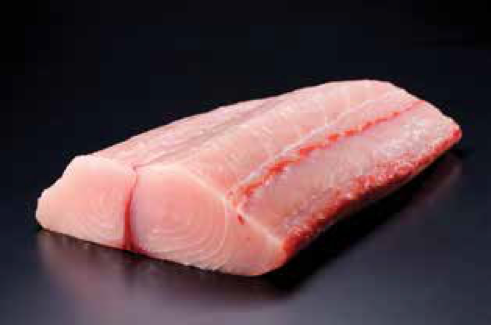
The Western Pacific Regional Fishery Management Council is disappointed that America’s seafood consumers may soon be deprived of sustainably harvested domestic marlin products should President Trump sign legislation to prohibit interstate commerce of billfish (not including swordfish) landed in Hawaii, American Samoa, Guam and the Commonwealth of the Northern Mariana Islands. The bill, introduced by U.S. Rep. Darren Soto’s (D-Fla.), passed the House on June 26 and the Senate on July 30 and is now headed to the president.

“It is upsetting, in this era of tackling illegal, unreported and unregulated (IUU) fishing and the $12 billion US seafood trade deficit, that highly monitored US Pacific Island fishing and seafood communities may suffer hardship should this legislation become law,” notes Kitty M. Simonds, executive director of the Western Pacific Regional Fishery Management Council.

Under current law, billfish caught by U.S. vessels that are landed in Hawaii or other U.S. Pacific Islands may be sold to markets on the U.S. mainland. More than 550,000 pounds of American-caught billfish landed in the U.S. Pacific Islands are annually marketed in the continental United States. The billfish is worth approximately $830,000 in 2017 dockside value. When the dockside value is expanded through wholesale and retail markets, the estimated annual value is approximately $2.5 million.

The commercial harvest of Atlantic billfish has been prohibited in the United States since 1988 because several Atlantic billfish species are overfished and/or subject to overfishing (e.g., blue marlin, white marlin and East Atlantic sailfish). By contrast, Pacific and Western Pacific billfish populations are not overfished nor subject to overfishing, with the exception of striped marlin, due to international fishing. A Billfish Certificate of Eligibility (COE) is required to accompany billfish to any dealer or processor who subsequently receives or possesses the billfish. The COE documents the vessel, homeport, port of offloading and date of offloading and ensures the fish is not from the Atlantic or foreign fisheries.

Chris Oliver, NOAA Assistant Administrator for Fisheries, in December 2017, said he has “full confidence in these existing management processes to sustainably manage billfish populations.”

Congresswomen Colleen Hanabusa (D-Hawaii), Madeleine Z. Bordallo (D-Guam) and Aumua Amata Coleman Radewagen (R-American Samoa), in an Additional Views statement on H.R. 4528, said the legislation “will negatively impact the livelihoods of fishermen in Hawaii, Guam and the Pacific Insular Areas by closing off the only off-island market for U.S.-caught billfish.” Acknowledging that several Atlantic billfish species are subject to overfishing, the Congresswomen said, “We support needed-conservation efforts in the Atlantic, but do not believe that Pacific fisheries need to be targeted in order to achieve these goals.”

Secretary of Commerce Wilbur Ross, in a June 5, 2018, letter to the Western Pacific Regional Fishery Management Council, said “we believe the legislation would not advance the conservation of billfish significantly, and would block a small amount of sustainably harvested domestic product from entering commerce on the U.S. mainland.”

NMFS estimates that the United States imports more than 80 percent of the seafood consumed in the nation (www.fishwatch.gov/sustainable-seafood/the-global-picture). According to NMFS data, the United States imported more than 6 billion pounds of seafood valued at more than $21.5 billion in 2017, which is more imported seafood than at any point in the nation’s history.

For more information, go to www.wpcouncil.org/billfish.

Serving Blue Martin Tempura at the Western Pacific Regional Fishery Management Council’s booth during the 2003 NOAA Fish Fry are (i-r) Council Executive Director Kitty Simonds, Secretary of Commerce Donald Evans, NOAA Administrator Conrad C. Lautenbacher, and Honolulu Chef Russel Siu.

Western Pacific Region Issues Status of the Fisheries 2017

August 2, 2018 — SEAFOOD NEWS — The 2017 annual reports on fisheries in Hawaii and the U.S. Pacific Islands are now available. Some three dozen reports provide data and trends about last year’s fishery participation, catch rates, landings and other fishery performance factors. Each report also describes ecological components that may impact fishery outcomes, such as protected species interactions, climate and oceanographic conditions and socioeconomic factors. Pacific

A summary of the Western Pacific Region Status of the Fisheries 2017 is available here.

The summary includes descriptions of the fleets, from small sailing vessels to the modern tuna seiners. For instance, here is a description of the American Samoa tuna longline fleet: “The American Samoa longline fleet includes nine vessels greater than 70 feet,  five vessels between 50 and 70 feet and one vessel less than 40 feet in length. All but three of the vessels are owned by the families of Samoan women, who manage the vessels.”

The summary also includes all the regulatory actions taken by the Council in 2017, in chronological order.

The Western Pacific Regional Fishery Management Council ensures that fisheries are sustainable and marine resources are soundly stewarded seaward of the state waters of Hawai‘i, American Samoa, Guam, the Commonwealth of the Northern Mariana Islands (CNMI) and the Pacific Remote Island Areas (PRIA).

To monitor the fisheries, the Council publishes annual reports for the five fishery ecosystem plans (FEPs) that the Council has developed, monitored and amended. The complete annual reports are available here.

Annual reports are produced for each of five fishery ecosystem plans (FEPs) that have been developed, monitored and amended by the Western Pacific Regional Fishery Management Council. They include the Pelagic FEP, the Pacific Remote Island Areas FEP and FEPs for the Hawai’i Archipelago, American Samoa Archipelago and Mariana (Guam and the Commonwealth of the Northern Mariana Islands) Archipelago.

Except for Hancock seamount armorhead and Western and Central North Pacific striped marlin, none of the fisheries within the Western Pacific Regional Fishery Management Council’s jurisdiction are overfished. The armorhead was over fished by Japanese and Soviet fleets prior to the establishment of the Council and has been under a moratorium since 1986. The striped marlin is over fished due to international  fishing.

This story originally appeared on SeafoodNews.com, a subscription site. It is reprinted with permission.

Federal Fishery Managers to Ask American Samoa Government, Cannery to Act on Fishery Matters

UTULEI, AMERICAN SAMOA — October 19, 2017 — The following was released by the Western Pacific Regional Fishery Management Council:

The Western Pacific Regional Fishery Management Council yesterday at the Rex Lee Auditorium in Utulei, American Samoa, voted to undertake the following actions regarding American Samoa fisheries operating in federal waters (3 to 200 nautical miles offshore).

American Samoa Marine Conservation Plan (MCP): The Council noted that the American Samoa MCP expires in mid-2018 and recommended that American Samoa Government (ASG) conduct meetings with relevant stakeholders to develop its new MCP before submitting it to the Council in early 2018. The MCP identifies fishery development projects to be funded from certain fines or fees received from fisheries in the US exclusive economic zone (EEZ) around American Samoa.

Non-fishing Impacts on Fish Habitat: The Council will ask the ASG to consider which department should have permitting and enforcement authority for sand mining regulations, provide outreach and review the regulations to ensure they are in line with other natural resource management programs. It will also encourage ASG to build capacity to collaborate between the government and communities in ongoing natural resource management and education/outreach efforts.

Fisheries Data Collection: The Council will ask the American Samoa Department of Marine and Wildlife Resources to distinguish between foreign longline and domestic longline in the retail fish vendor data and to provide its needs regarding data collection staff capacity and funding.

Longline Dock Extension Project: The Council recommended that the ASG commit to identifying funds for the construction of the longline dock extension or the Council will consider reprograming the funds it has to support the project.

Tri Marine/Samoa Tuna Packers (STP): The Council will ask that the company allow American Samoa longline vessels to access the STP’s small dock, which the Council helped fund. The Council will also ask the company for a status update on its facility and operations in American Samoa. STP recently closed, leaving StarKist as the sole operational tuna cannery in the Territory.

The Council will conclude its meeting today at the Rex Lee Auditorium. For the full agenda and additional information, go to www.wpcouncil.org/category/upcoming-council-and-advisory-body-meetings/ or email info@wpcouncil.org or phone (808) 522-8220.

Western Pacific Regional Fishery Management Council: Secretary of Commerce appointees from nominees selected by American Samoa, CNMI, Guam and Hawai`i governors: Edwin Ebisui Jr. (chair); Michael Duenas, Guam Fishermen’s Cooperative Association (Guam) (vice chair); John Gourley, Micronesian Environmental Services (CNMI) (vice chair); Christinna Lutu-Sanchez, commercial fisherman (American Samoa) (vice chair); Michael Goto, United Fishing Agency (Hawai‘i); Dean Sensui, film producer (Hawai‘i); Archie Soliai, StarKist (American Samoa). Designated state officials: Suzanne Case, Hawai`i Department of Land & Natural Resources; Ray Roberto, CNMI Department of Lands and Natural Resources; Matt Sablan, Guam Department of Agriculture; Henry Sesepasra, American Samoa Department of Marine & Wildlife Resources. Designated federal officials (voting): Michael Tosatto, NMFS Pacific Islands Regional Office. Designated federal officials (non-voting): Matthew Brown, USFWS; Michael Brakke, US Department of State; RADM Vincent B. Atkins, USCG 14th District.

American Samoa Demand Answers From Fisheries Management Council Conference

October 16, 2017 — PAGO PAGO, American Samoa — Due to the many concerns from members of the House Agriculture, Marine & Wildlife and Forestry Committee, on the issues of Federal regulations that affect fisheries in American Samoa, the director of the Department of Marine Wildlife Resource, Va’amua Henry Sesepasara, asked House members to make sure they voice all questions and frustrations to members of the Western Pacific Fishery Management Council (WPFMC) when their annual conference convenes next week.

Va’amua and Christine Lutu-Sanchez, who is president of the Tautai Longline Fishing Association and also one of the two American Samoa representatives on the WPFMC, appeared before the Committee last Friday, to discuss issues pertaining to fishing in American Samoa, and how federal regulations affect fishing in the territory.

However, one of the main issues discussed during the hearing, had to do with money that American Samoa fishing boats are paying for fishing licenses, and money that fishing boats pay in fines if they are caught fishing illegally inside the territory’s Exclusive Economic Zone (EEZ).

Rep. Vesi Talalelei Fautanu Jr. believes all these monies should come straight to American Samoa, instead of going to federal agencies that work together to enforce regulations on the seas; and other reps reminded Va’amua that all new revenues must be sent to the Fono for appropriation before DMWR can use them.

Va’amua confirmed that all monies from fishing vessel fines and licenses go straight to the National Oceanic Atmospheric Administration (NOAA) — and American Samoa through DMWR must send them a proposal to notify them what project they want to use the funds on, before the territory can access the funds.

Read the full story at the Pacific Islands Report

Federal Court Sides With American Samoa Over Large Vessel Protected Area

August 3, 2017 — PAGO PAGO, American Samoa — The federal court in Honolulu has denied the US National Marine Fisheries Service (NMFS) motion for reconsideration, to amend the court decision issued this past March that found that the NMFS 2016 rule to reduce from 50 to 20 miles the Large Vessel Prohibited Area (LVPA) in territorial waters “was arbitrary and capricious”.

MOTION DENIED

“The court has considered the Motion for Reconsideration as a non-hearing matter,” according to the one-page decision issued this past Monday. “After careful review of the motion, supporting and opposing memoranda, and the relevant legal authority, the Motion for Reconsideration is hereby denied.”

According to the decision, a written order by the court will follow, that will supersede this ruling. It’s not clear when the written order will be rendered by the court.

BACKGROUND

Besides NMFS, other defendants in the case were the US Commerce Department, and NOAA fisheries. NMFS issued a 2016 LVPA rule which became effective on Feb. 3, 2016.

Plaintiff is the Territory of American Samoa, through the Governor’s Office, or ASG. The major focus of the plaintiff’s lawsuit, filed in March 2016, centered around the two Deeds of Cession — 1900 Deed of Cession for Tutuila and Aunu’u islands and the 1904 Deed of Cession for Manu’a islands — with the United States.

Read the full story at the Pacific Islands Report

American Samoa Biologist Says Marine Monument Designation Not Based On Science

July 18, 2017 — Department of Marine and Wildlife Resources (DMWR) Chief Fisheries Biologist, Domingo Ochavillo has shared concerns with US Interior Secretary Ryan Zinke, over the designation of Rose Atoll as a marine monument; and also argues that expansion of the Pacific Remote Islands National Marine Monument was not based on science “but more on political legacy considerations.”

The biologist’s comment was in response to Zinke’s request for public comments on DOI’s review of all land and marine monuments in the nation including Rose Atoll and Pacific Remote Islands following President Trump’s executive order in April.

“There is a need to review these national monument designations so that they are based on the best available science, and adequate cultural and economic considerations,”  said Ochavillo who wrote the comment-letter in her capacity as DMWR acting director at the time.

“The recent consideration of the American Samoa Deeds of Cession as a relevant document for federal decisions makes it more imperative now to review these marine monument designations,” said Ochavillo, referring to the Honolulu federal court decision this year that voids a US National Marine Fisheries Service rule which reduced last year the Large Vessel Prohibited Area in territorial waters from 50 to 12 miles.

Read the full story at Pacific Islands Report

WESPAC’s Work To ‘Define Cultural Fishing’ Could Impact American Samoa

June 29, 2017 — An attorney with the US National Oceanic and Atmospheric Administration has hinted to a federally established group that its work to define cultural fishing will have an impact on future issues pertaining to fisheries in American Samoa.

One of the main issues on the agenda at last week’s three-day meeting of the Western Pacific Regional Fisheries Management Council, held in Honolulu, dealt with defining cultural fishing in American Samoa, following a Honolulu federal judge’s decision in March, that the US National Marine Fisheries Services failed to consider the Deeds of Cession, when implementing the 2016 amendment to the Large Vessel Prohibited Area in territorial waters.

US District Court Judge Leslie Kobayashi said the NMFS’ 2016 LVPA Rule disregards its obligations under the Deeds of Cession to “protect and preserve cultural fishing rights in American Samoa.” (The Deeds for Tutuila and Aunu’u were signed in 1900, and 1904 for Manu’a — with the US.)

There were several discussions during the Council’s three-day meeting on ways to define cultural fishing and what is considered cultural fishing, as well as protecting and preserving cultural fishing in the territory.

What was clear from the speakers and answers from NOAA officials as well as others, is that ASG, the local fishing community, and others in the territory need to be consulted for a final definition.

Among the many questions raised, were those from American Samoa Council member, Christinna Lutu-Sanchez, who wanted to know if once the cultural fishing definition is finalized, would that cultural fishing definition apply to anyone fishing within the LVPA, and not necessarily just the US longline fleet based in American Samoa.

Read the full story at Pacific Islands Report

Blown Deadlines Weaken Hawaii’s Voice On Federal Fishery Council

June 28, 2017 — Hawaii will soon have less influence in setting national policies that affect everything from commercial fishing to endangered species in nearly 1.5 million square miles of the Pacific Ocean.

Gov. David Ige’s administration twice missed deadlines to submit to federal officials a list of names to fill two at-large terms that expire in August on the Western Pacific Regional Fishery Management Council.

The seats have historically been held by Hawaii residents. Instead, they will be filled from the lists provided by the governors of American Samoa and the Northern Mariana Islands. Guam, the other U.S. territory represented on the council, did not nominate anyone.

Environmentalists see it as a missed opportunity for Ige to rebalance the council, which has long weighed heavier on the side of the commercial fishing industry than conservation. Others view it as a blown chance for Hawaii’s longline tuna fishermen to maintain their grip on the council’s direction.

Read the full story at the Honolulu Civil Beat

American Samoa Calls On Federal Court To Dismiss Large Vessel Prohibited Area Case

May 31, 2017 — With federal defendants offering no new evidence in the Large Vessel Prohibited Area (LVPA) legal battle, the Territory of American Samoa has asked the federal court in Honolulu to dismiss defendants’ motion for reconsideration and to amend the court’s judgement.

Early this month, the federal defendants, including the US Commerce Department and US National Marine Fisheries asked the federal court to “reconsider and amend” its judgment, which was in favor of plaintiff, the Territory of American Samoa, through the Governor’s Office, or ASG.

US District Court Judge Leslie Kobayashi in March this year ruled in favor of American Samoa, saying that the NMFS’ decision in 2016 to reduce the LVPA in territorial waters is invalid and that NMFS’ adoption of the 2016 LVPA rule, which became effective on Feb. 3, 2016 “was arbitrary and capricious”.

The major focus of the plaintiff’s lawsuit centered around the two Deeds of Cession — 1900 Deed of Cession for Tutuila and Aunu’u islands and the 1904 Deeds of Cession for Manu’a islands — with the United States.

Kobayashi agreed with ASG saying that the court concluded that the Deeds of Cession require the United States to preserve American Samoan cultural fishing practices.

However, the federal defendants requested the court, to among other things, reconsider its judgement. See Samoa News edition May 11th on federal defendants arguments.

Read the full story at the Pacific Island Report

U.S. Commerce Department, Fisheries Service Ask Court To Reconsider Finding On American Samoa Large Vessel Protection Area Case

May 12, 2017 — By holding that the Deeds of Cession require the United States to preserve American Samoan cultural fishing, the federal court created a new requirement that National Marine Fisheries Service’s fishing regulations protect “cultural fishing practices” in the U.S. Exclusive Economic Zone (EEZ) around American Samoa, according to federal defendants in the large vessel prohibited area (LVPA) lawsuit.

The federal defendants, including the US Commerce Department and NMFS, made the argument in its 99-page motion and support documents filed yesterday with the Honolulu federal court, which was requested to “reconsider and amend” its judgment “with respect to two issues — standing and remedy.”

Plaintiff is the Territory of American Samoa, through the Governor’s Office, or ASG.

US District Court Judge Leslie Kobayashi in March this year ruled in favor of American Samoa, saying that the NMFS’ decision in 2016 to reduce the LVPA in territorial waters is invalid and that NMFS’ adoption of the 2016 LVPA rule, which became effective on Feb. 3, 2016 “was arbitrary and capricious”.

The major focus of the plaintiff’s lawsuit centered around the two Deeds of Cession — 1900 Deed of Cession for Tutuila and Aunu’u islands and the 1904 Deeds of Cession for Manu’a islands — with the United States.

Read the full story at Pacific Islands Report 

  • « Previous Page
  • 1
  • …
  • 11
  • 12
  • 13
  • 14
  • 15
  • …
  • 18
  • Next Page »

Recent Headlines

  • Scientists did not recommend a 54 percent cut to the menhaden TAC
  • Broad coalition promotes Senate aquaculture bill
  • Chesapeake Bay region leaders approve revised agreement, commit to cleanup through 2040
  • ALASKA: Contamination safeguards of transboundary mining questioned
  • Federal government decides it won’t list American eel as species at risk
  • US Congress holds hearing on sea lion removals and salmon predation
  • MASSACHUSETTS: Seventeen months on, Vineyard Wind blade break investigation isn’t done
  • Sea lions keep gorging on endangered salmon despite 2018 law

Most Popular Topics

Alaska Aquaculture ASMFC Atlantic States Marine Fisheries Commission BOEM California China Climate change Coronavirus COVID-19 Donald Trump groundfish Gulf of Maine Gulf of Mexico Illegal fishing IUU fishing Lobster Maine Massachusetts Mid-Atlantic National Marine Fisheries Service National Oceanic and Atmospheric Administration NEFMC New Bedford New England New England Fishery Management Council New Jersey New York NMFS NOAA NOAA Fisheries North Atlantic right whales North Carolina North Pacific offshore energy Offshore wind Pacific right whales Salmon South Atlantic Virginia Western Pacific Whales wind energy Wind Farms

Daily Updates & Alerts

Enter your email address to receive daily updates and alerts:
  • This field is for validation purposes and should be left unchanged.
Tweets by @savingseafood

Copyright © 2025 Saving Seafood · WordPress Web Design by Jessee Productions