
April 4, 2014 — Sometimes the smallest critters can cause the biggest problems. For example, the rusty crayfish, which measures only five inches fully extended, is a major headache once it invades a fishery because the crustacean feeds on fish eggs and vegetation. The loss of vegetation reduces habitat for native crayfish and aquatic animals.
The rusty crayfish is native to the Ohio River, but N.C. Wildlife Resources Commission biologists discovered the rusty crayfish in 2007 making itself at home in the North Fork Catawba River, upstream of Lake James. The invader has expanded its presence 10 miles upstream in the North Fork Catawba, according to TR Russ, an aquatic wildlife diversity biologist with the NCWRC.
Any fisherman who finds a rusty crayfish should kill it immediately, note its location, freeze it, and contact Russ at thomas.russ@ncwildlife.org. The rusty crayfish can be identified from other crayfish by a rust-colored spot on its sides, just in front of its tail. The rusty crayfish also has black bands on the tips of its claws.
Read the full story at The Dispatch
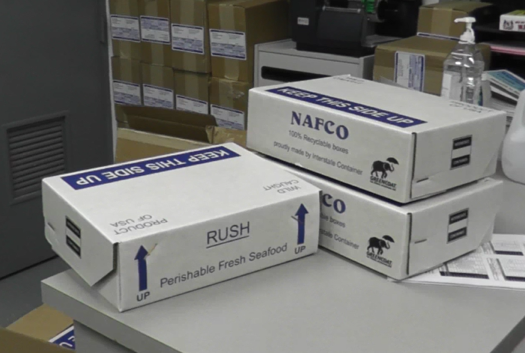 Global Green USA, building on previous successful recyclable packaging tests, came to the heart of New England for the next installment of the pilot series. With the help of a grocer and one of their primary seafood suppliers, Global Green USA documented the ice-packing of water-resistant, recyclable boxes made by Cascades and Interstate Container and shipped to a location in Boston, just in time for the last day of the Boston Seafood Expo on March 18th. As the boxes were unloaded, all present confirmed that they had performed well, indicating that future shipments could also be sent in the strong, water-resistant, recyclable packaging.