Saving Seafood

  • Home
  • News
    • Alerts
    • Conservation & Environment
    • Council Actions
    • Economic Impact
    • Enforcement
    • International & Trade
    • Law
    • Management & Regulation
    • Regulations
    • Nutrition
    • Opinion
    • Other News
    • Safety
    • Science
    • State and Local
  • News by Region
    • New England
    • Mid-Atlantic
    • South Atlantic
    • Gulf of Mexico
    • Pacific
    • North Pacific
    • Western Pacific
  • About
    • Contact Us
    • Fishing Terms Glossary

Western Pacific Region Issues Status of the Fisheries 2017

August 2, 2018 — SEAFOOD NEWS — The 2017 annual reports on fisheries in Hawaii and the U.S. Pacific Islands are now available. Some three dozen reports provide data and trends about last year’s fishery participation, catch rates, landings and other fishery performance factors. Each report also describes ecological components that may impact fishery outcomes, such as protected species interactions, climate and oceanographic conditions and socioeconomic factors. Pacific

A summary of the Western Pacific Region Status of the Fisheries 2017 is available here.

The summary includes descriptions of the fleets, from small sailing vessels to the modern tuna seiners. For instance, here is a description of the American Samoa tuna longline fleet: “The American Samoa longline fleet includes nine vessels greater than 70 feet,  five vessels between 50 and 70 feet and one vessel less than 40 feet in length. All but three of the vessels are owned by the families of Samoan women, who manage the vessels.”

The summary also includes all the regulatory actions taken by the Council in 2017, in chronological order.

The Western Pacific Regional Fishery Management Council ensures that fisheries are sustainable and marine resources are soundly stewarded seaward of the state waters of Hawai‘i, American Samoa, Guam, the Commonwealth of the Northern Mariana Islands (CNMI) and the Pacific Remote Island Areas (PRIA).

To monitor the fisheries, the Council publishes annual reports for the five fishery ecosystem plans (FEPs) that the Council has developed, monitored and amended. The complete annual reports are available here.

Annual reports are produced for each of five fishery ecosystem plans (FEPs) that have been developed, monitored and amended by the Western Pacific Regional Fishery Management Council. They include the Pelagic FEP, the Pacific Remote Island Areas FEP and FEPs for the Hawai’i Archipelago, American Samoa Archipelago and Mariana (Guam and the Commonwealth of the Northern Mariana Islands) Archipelago.

Except for Hancock seamount armorhead and Western and Central North Pacific striped marlin, none of the fisheries within the Western Pacific Regional Fishery Management Council’s jurisdiction are overfished. The armorhead was over fished by Japanese and Soviet fleets prior to the establishment of the Council and has been under a moratorium since 1986. The striped marlin is over fished due to international  fishing.

This story originally appeared on SeafoodNews.com, a subscription site. It is reprinted with permission.

WPRFMC Managers Recommend Changes to Swordfish Longline Fishery in Light of Turtle Interactions

June 14, 2018 — SEAFOOD NEWS — Federal fishery managers recommended measures to manage sea turtle interactions in the Hawaii shallow-set longline fishery targeting swordfish this week in Hawaii.

The Western Pacific Regional Fishery Management Council recommended amending the Pelagic Fishery Ecosystem Plan (FEP) for the Western Pacific Region to establish a framework that consists of:

a) annual fleet-wide limits on the number of North Pacific loggerhead and leatherback interactions. Once either of these interaction limits is reached, the fishery closes for the remainder of the year; and

b) individual trip interaction limits for loggerhead and leatherback turtles. When a vessel has reached the limit on a trip, the vessel would be required to return to port and may resume shallow-setting upon providing the required 72-hour notice to National Marine Fisheries Service (NMFS) for observer placement.

The North Pacific loggerhead population in Japan has been increasing at about 9 percent annually. Mike Seki, director of NMFS Pacific Islands Fisheries Science Center, characterized the population as “robust.”

NMFS has reinitiated formal consultation under the Endangered Species Act (ESA) for the continued operation of the Hawaii shallow-set fishery. The Council anticipates NMFS will complete consultation and issue a new biological opinion for the fishery by Oct. 31, 2018.

Based upon the current NMFS biological evaluation to support this consultation, the Council anticipates the new opinion will authorize the take of no more than 37 North Pacific loggerheads and 21 leatherbacks. Accordingly, the Council recommended an annual fleet-wide limit of 37 North Pacific loggerheads and 21 leatherbacks, effective Jan. 1, 2019, and an individual trip limit of five North Pacific loggerhead turtles. The Council did not recommend specifying a leatherback turtle trip limit at this time. The effectiveness of the loggerhead turtle trip limit and potential need for leatherback turtle limit would be monitored annually, the Council said in a press release.

At the same time, the Council recommended a sea turtle interaction avoidance pilot program be established utilizing an industry-led fleet communication system. It also requested NMFS conduct further research on the sea turtle issue for this fishery, including research to minimize trailing gear on released loggerhead and leatherback turtles to further reduce post-hooking mortality rates.

Last week, the WPRFMC’s Scientific and Statistical Committee noted the Hawaii shallow-set fleet likely poses less biological risk to turtle populations than other fleets operating in the region, the SSC said in a statement. The industry and managers have recognized this in the past, when lawsuits forced the swordfish fishery to close completely or for part of the year.

The Hawaii Longline Association, NMFS and Turtle Island Restoration Network and other plaintiffs agreed to a settlement agreement in May to close the Hawaii shallow-set longline fishery for the rest of this year.

Hawaii vessels must adhere to numerous regulatory measures, such as the interaction caps, mandatory observers on all trips to monitor protected species interactions, mandatory use of circle hooks and mackerel-type bait to reduce the risk of hooking sea turtles and mandatory equipment for and training in the safe release of live turtles — some other countries do not adhere to such strict regulatory measures.

The SSC also noted that North Pacific loggerhead nesting beach trends in Japan were much higher in the last decade than in previous years.

This story originally appeared on SeafoodNews.com, a subscription site. It is reprinted with permission.
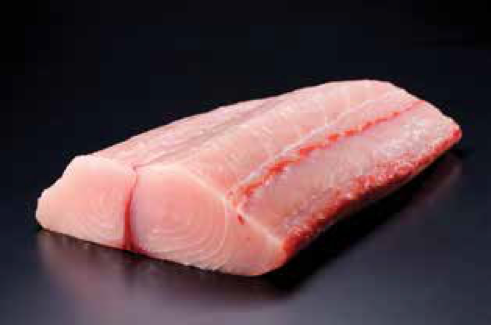
Hawaii: More Tuna For Hawaii Fishing Boats In 2018

December 27, 2017 — Hawaii’s longline fishermen didn’t get everything they were hoping for at the most recent annual meeting of the Western and Central Pacific Fisheries Commission, an international body that sets tuna catch limits for the U.S., several Asian countries and small island developing states.

But they did come out of the weeklong meeting in the Philippines with an agreement that will let the Honolulu-based fleet fish for an additional 400 tons of bigeye in 2018. Their quota next year will be about 3,500 tons, the same level as 2016.

Eric Kingma of the Western Pacific Regional Fishery Management Council, a quasi-governmental body that manages 1.5 million square miles of U.S. waters, described the new catch limit as “suboptimal” for the roughly 140 longline vessels in Hawaii that target bigeye tuna for fresh sashimi markets and restaurants.

He said the measure does recognize the financial arrangements that Hawaii’s longliners have had the past few years with three U.S. Pacific island territories to extend their catch by up to 3,000 tons. The deals involve paying $250,000 into a fisheries development fund managed by Wespac in exchange for the ability to fish for an additional 1,000 tons and attribute it to that territory.

In 2017, the U.S. longline fleet hit its annual limit of 3,138 tons within the first eight months of the season, according to the National Oceanic and Atmospheric Administration’s Fisheries Service. The fishermen then caught an additional 1,000 tons by the first week of December that they attributed to the Northern Marianas and have continued fishing for another 1,000 tons under their agreement with American Samoa. There is a similar arrangement with Guam should they need it, but that doesn’t seem necessary this year.

Read the full story at the Honolulu Civil Beat


NCFC Members Reaffirm Support for Interior Department’s Marine Monument Recommendations

December 5, 2017 — The following was released by Saving Seafood’s National Coalition for Fishing Communities:

Following today’s official release of Interior Secretary Ryan Zinke’s recommendations to alter three marine national monuments, members of Saving Seafood’s National Coalition for Fishing Communities are reiterating their support for these recommendations, which will lessen the economic burden on America’s fishing communities while still providing environmental protections for our ocean resources.

In September, NCFC members expressed initial support for the changes when a draft of the recommendations were reported in the press. Because the final recommendations are identical to those initially reported, NCFC members stand by their initial statement, which is reproduced below:

Secretary Zinke’s recommendations to President Donald Trump would allow commercial fishing managed under the Magnuson-Stevens Act (MSA) in the recently designated Northeast Canyons and Seamounts Marine National Monument. He also  recommended revising the boundaries or allowing commercial fishing under the MSA in the Pacific Remote Islands Marine National Monument and the Rose Atoll Marine National Monument. NCFC members in the Pacific hope that the White House will extend these recommendations to the Papahānaumokuākea Marine National Monument, and appreciate the open and transparent process by which Secretary Zinke reviewed these designations.

Marine monument expansions and designations have been widely criticized by commercial fishing interests as well as by the nation’s eight regional fishery management councils, which in a May 16 letter told Secretary Zinke and Commerce Secretary Wilbur Ross that marine monument designations “have disrupted the ability of the Councils to manage fisheries throughout their range.” Fishing industry members believe these monuments were created with insufficient local input from stakeholders affected by the designations, and fishing communities felt largely ignored by previous administrations.

“The Northeast Canyons and Seamounts Marine National Monument was designated after behind-closed-door campaigns led by large, multinational, environmental lobbying firms, despite vocal opposition from local and federal officials, fisheries managers, and the fishing industry,” said Eric Reid, general manager of Seafreeze Shoreside in Narragansett, R.I., who has been critical of the Obama Administration’s process in designating the monument. “But the reported recommendations from the Interior Department make us hopeful that we can recover the areas we have fished sustainably for decades. We are grateful that the voices of fishermen and shore side businesses have finally been heard,” Mr. Reid concluded.

“There seems to be a huge misconception that there are limitless areas where displaced fishermen can go,” said Grant Moore, president of the Atlantic Offshore Lobstermen’s Association. “Basically with the stroke of a pen, President Obama put fishermen and their crews out of work and harmed all the shore-side businesses that support the fishing industry.”

“The fisheries management process under the existing Magnuson Act is far from perfect, but its great strength is that it has afforded ample opportunities for all stakeholders to study and comment on policy decisions, and for peer review of the scientific basis for those decisions,” stated Mayor Jon Mitchell of New Bedford, Massachusetts, the nation’s top-grossing commercial fishing port. In March, Mayor Mitchell submitted testimony to Congress expressing concern over marine monuments. “The marine monument designation process may have been well intended, but it has simply lacked a comparable level of industry input, scientific rigor, and deliberation. That is why I think hitting the reset button ought to be welcomed no matter where one stands in the current fisheries debates, because the end result will be better policy and better outcomes,” Mayor Mitchell concluded.

Fishermen in the Pacific are also supportive of the Interior Department’s review, but remain concerned about the effects of the Papahānaumokuākea Monument, which was omitted from the version of the recommendations being reported. “We are appreciative of Secretary Zinke’s review, and his reported recommendations to support commercial fishing in the Pacific Remote Islands Monument,” said Sean Martin, president of the Hawaii Longline Association. Hawaii’s longline fishing fleet supplies a large portion of the fresh tuna and other fish consumed in Hawaii. “However, we hope that the White House will extend these recommendations to the Papahānaumokuākea Monument, where President Obama closed an area nearly the size of Alaska without a substantive public process. The longline fleet caught about 2 million pounds of fish annually from the expanded area before it was closed to our American fishermen. That was a high price to pay for a presidential legacy,” Mr. Martin continued.

The recommended changes come after an extensive and open public comment period in which the Interior Department solicited opinions from scientists, environmentalists, industry stakeholders, and members of the public. As part of the Interior Department’s review process, Secretary Zinke engaged with communities around the country affected by monument designations. This included a meeting with local fishermen in Boston who explained how the designation of the Northeast Canyons and Seamounts Monument has negatively impacted their livelihoods.

Critics of the monument designation include the regional fishery management councils; numerous fishing groups on the East Coast; and mayors from fishing communities on both coasts.

Additionally, fishery managers in Hawaii have been critical of expansions of both the Papahānaumokuākea Monument and the Pacific Remote Islands Monument. In an April 26 letter to Secretary Zinke, the Western Pacific Regional Fishery Management Council stated that marine monuments around Hawaii “impose a disproportionate burden on our fishermen and indigenous communities,” and noted that they have closed regulated domestic commercial fishing in 51 percent of the U.S. exclusive economic zone in the region.

Florida charter fishermen applauded the review, and a return to the process of established law that guides fishery management. “Destin, Florida was founded by commercial fishermen before the turn of the 20th century, and continues to be a major port for commercial and charter fishing fleets,” said Captain Gary Jarvis, president of the Destin Charter Boat Association. “To our fishing community, it’s extremely important to address closures of historical fishing grounds through the Magnuson-Stevens mandated regional council process.”

Curiously, although President Obama’s September 2016 monument designation prohibited sustainable low-impact commercial fishing, it allowed other extractive activities including recreational fishing, and even far more destructive activities such as the digging of trenches for international communications cables.

NCFC members supporting the Interior Department’s reported recommendations include:

  • Atlantic Offshore Lobstermen’s Association
  • Destin Charter Boat Association
  • Fisheries Survival Fund
  • Garden State Seafood Association
  • Hawaii Longline Association
  • Long Island Commercial Fishing Association
  • North Carolina Fisheries Association
  • Seafreeze Shoreside
  • Southeastern Fisheries Association
  • Western Fishboat Owners Association
  • West Coast Seafood Processors Association

Learn more about the National Coalition for Fishing Communities here.


Federal Fishery Managers to Ask American Samoa Government, Cannery to Act on Fishery Matters

UTULEI, AMERICAN SAMOA — October 19, 2017 — The following was released by the Western Pacific Regional Fishery Management Council:

The Western Pacific Regional Fishery Management Council yesterday at the Rex Lee Auditorium in Utulei, American Samoa, voted to undertake the following actions regarding American Samoa fisheries operating in federal waters (3 to 200 nautical miles offshore).

American Samoa Marine Conservation Plan (MCP): The Council noted that the American Samoa MCP expires in mid-2018 and recommended that American Samoa Government (ASG) conduct meetings with relevant stakeholders to develop its new MCP before submitting it to the Council in early 2018. The MCP identifies fishery development projects to be funded from certain fines or fees received from fisheries in the US exclusive economic zone (EEZ) around American Samoa.

Non-fishing Impacts on Fish Habitat: The Council will ask the ASG to consider which department should have permitting and enforcement authority for sand mining regulations, provide outreach and review the regulations to ensure they are in line with other natural resource management programs. It will also encourage ASG to build capacity to collaborate between the government and communities in ongoing natural resource management and education/outreach efforts.

Fisheries Data Collection: The Council will ask the American Samoa Department of Marine and Wildlife Resources to distinguish between foreign longline and domestic longline in the retail fish vendor data and to provide its needs regarding data collection staff capacity and funding.

Longline Dock Extension Project: The Council recommended that the ASG commit to identifying funds for the construction of the longline dock extension or the Council will consider reprograming the funds it has to support the project.

Tri Marine/Samoa Tuna Packers (STP): The Council will ask that the company allow American Samoa longline vessels to access the STP’s small dock, which the Council helped fund. The Council will also ask the company for a status update on its facility and operations in American Samoa. STP recently closed, leaving StarKist as the sole operational tuna cannery in the Territory.

The Council will conclude its meeting today at the Rex Lee Auditorium. For the full agenda and additional information, go to www.wpcouncil.org/category/upcoming-council-and-advisory-body-meetings/ or email info@wpcouncil.org or phone (808) 522-8220.

Western Pacific Regional Fishery Management Council: Secretary of Commerce appointees from nominees selected by American Samoa, CNMI, Guam and Hawai`i governors: Edwin Ebisui Jr. (chair); Michael Duenas, Guam Fishermen’s Cooperative Association (Guam) (vice chair); John Gourley, Micronesian Environmental Services (CNMI) (vice chair); Christinna Lutu-Sanchez, commercial fisherman (American Samoa) (vice chair); Michael Goto, United Fishing Agency (Hawai‘i); Dean Sensui, film producer (Hawai‘i); Archie Soliai, StarKist (American Samoa). Designated state officials: Suzanne Case, Hawai`i Department of Land & Natural Resources; Ray Roberto, CNMI Department of Lands and Natural Resources; Matt Sablan, Guam Department of Agriculture; Henry Sesepasra, American Samoa Department of Marine & Wildlife Resources. Designated federal officials (voting): Michael Tosatto, NMFS Pacific Islands Regional Office. Designated federal officials (non-voting): Matthew Brown, USFWS; Michael Brakke, US Department of State; RADM Vincent B. Atkins, USCG 14th District.

American Samoa Demand Answers From Fisheries Management Council Conference

October 16, 2017 — PAGO PAGO, American Samoa — Due to the many concerns from members of the House Agriculture, Marine & Wildlife and Forestry Committee, on the issues of Federal regulations that affect fisheries in American Samoa, the director of the Department of Marine Wildlife Resource, Va’amua Henry Sesepasara, asked House members to make sure they voice all questions and frustrations to members of the Western Pacific Fishery Management Council (WPFMC) when their annual conference convenes next week.

Va’amua and Christine Lutu-Sanchez, who is president of the Tautai Longline Fishing Association and also one of the two American Samoa representatives on the WPFMC, appeared before the Committee last Friday, to discuss issues pertaining to fishing in American Samoa, and how federal regulations affect fishing in the territory.

However, one of the main issues discussed during the hearing, had to do with money that American Samoa fishing boats are paying for fishing licenses, and money that fishing boats pay in fines if they are caught fishing illegally inside the territory’s Exclusive Economic Zone (EEZ).

Rep. Vesi Talalelei Fautanu Jr. believes all these monies should come straight to American Samoa, instead of going to federal agencies that work together to enforce regulations on the seas; and other reps reminded Va’amua that all new revenues must be sent to the Fono for appropriation before DMWR can use them.

Va’amua confirmed that all monies from fishing vessel fines and licenses go straight to the National Oceanic Atmospheric Administration (NOAA) — and American Samoa through DMWR must send them a proposal to notify them what project they want to use the funds on, before the territory can access the funds.

Read the full story at the Pacific Islands Report

Sylvia Spalding: Congressman Was Wrong About Lobbying

October 10, 2017 — The Honolulu Civil Beat article “Congressman Blasts Fishery Council for ‘Improper Lobbying’” by Kirstin Downey repeats unsubstantiated and serious allegations of Congressman Gregorio Sablan (D-CNMI). These allegations could have been clarified through review of the procedures and regulations of the Western Pacific Regional Fishery Management Council, which are publicly available.

Green sea turtle petition: After considering the improved abundance and distribution information on Hawaii green sea turtles, the Council voted to direct Council staff to assist in the preparation of a request to the National Marine Fisheries Service to classify the population as a Distinct Population Segment as a step toward potential delisting.

The Council routinely makes conservation and management recommendations related to fisheries stocks, protected species and marine ecosystems, as authorized by the Magnuson-Stevens Fishery Conservation and Management Act (MSA).

Read this full opinion piece at the Honolulu Civil Beat

Hawaii Longline Leader Testifies on Ways to Strengthen the MSA

July 27, 2017 — SEAFOOD NEWS — A Hawaii fishing industry leader made three suggestions to the House Natural Resources Committee’s Subcommittee on Water, Power and Oceans during a hearing last week on “Exploring the Successes and Challenges of the Magnuson-Stevens Act.” The hearing was designed to continue discussions relevant to MSA reform and consider current draft legislation.

Hawaii Longline Association President Sean Martin, one of four invited witnesses, said overall the MSA is working well, but the Hawaii seafood industry is facing problems related to national monuments created under the Antiquities Act, Endangered Species Act issues and more.

“The MSA is a success and should be the principal source of authority for management of U.S. fisheries,” Martin said in his testimony. “Overfished stocks have been rebuilt, and few stocks are now overfished. Management measures are precautionary and based on the best scientific information available. The regional fishery management councils provide regional fishing expertise and utilize an effective bottom-up decision making process that includes the fishing industry. The MSA also requires the evaluation of impacts on fish stocks as well as fishermen and fishing communities.”

However, the 140 active vessels in the longline fleet, which lands roughly $100 million worth of tuna and other highly migratory fish annually, is struggling with access to fishing grounds.

“We operate in a very competitive arena, both for fishing grounds in international waters and for the U.S. domestic market. The recent marine monument designations established under the Antiquities Act prohibits us from fishing in 51 percent of the US Exclusive Economic Zone in the Western Pacific region,” Martin said. “Access to the high seas is also being challenged by recent United Nations initiatives. Closure of US waters and the high seas hurts us, reducing our ability to compete and increasing the vulnerability of our markets to foreign takeover.”

Martin said the longliners have worked with NMFS and the Western Pacific Regional Fishery Management Council for more than 25 years to ensure sound fishery data would be used in stock assessments and regulations. They have collaborated on research such as gear modifications to protect sea turtles, seabirds and marine mammals.

“We are proud of our efforts and the Hawaii longline fishery is an iconic, internationally recognized model fishery. It is the most highly monitored, strictly regulated longline fishery in the Pacific,” he said.

With that, Martin suggested three things to help make the MSA stronger:

  1. Manage U.S. ocean fisheries through the MSA process;
  2. Strengthen support for U.S. fisheries in the international arena; and
  3. Simplify the MSA regulatory process.

“In recent years, the management of fisheries covered by the MSA has been circumvented by other statutes and authorities,” Martin said regarding using the MSA process for managing ocean fisheries. “This includes the Endangered Species Act, Marine Mammal Protection Act, Migratory Bird Treaty Act, National Marine Sanctuaries Act, and the Antiquities Act. These acts do not require the same level of public consultation and transparency as compared to the MSA.

“For our fishery, the biggest gains in protection have been achieved through the Council process. For example, sea turtle and seabird interactions were reduced by 90 percent as a result of industry cooperative research and Council developed regulations. In HLA’s view, fisheries should be managed primarily through the fishery management councils under the MSA. This ensures a transparent, public, and science-based process which allows the fishing industry and stakeholders to be consulted. It provides that analyses of impacts to fishery dependent communities are considered, and prevents regulations that might otherwise be duplicative, unenforceable, or contradictory.

“Past administrations have established huge national marine monuments in the Pacific totaling more than 760 million acres of U.S. waters under the Antiquities Act of 1906. In our view, marine monument designations were politically motivated and addressed non-existing problems. Fisheries operating in these areas were sustainably managed for several decades under the MSA and the Western Pacific Council. There was no serious attempt to work with the fishing industry in the designations of these marine monuments. Public input was minimal.”

Regarding support for U.S. fisheries in the international arena, Martin said, “In 2016, Congress enacted ‘Amendments to the Western and Central Pacific Fisheries Convention Implementation Act’ (16U.S.C. 6901 et seq.). The amendments direct the Secretaries of Commerce and State to seek to minimize any disadvantage to U.S. fisheries relative to other fisheries of the region and to maximize U.S. fisheries’ harvest of fish in the Convention Area.

“The amendments are intended to level the playing field between
U.S. and foreign fisheries. U.S. fisheries managed under the MSA are sustainable, yet they are often disadvantaged within international fisheries commissions. U.S. fishing interests require strong U.S. government negotiators to advocate and support U.S. fisheries.

“For example, the Hawaii longline bigeye quota has been reduced to 3,345 metric tonnes (mt), while quotas for other countries have not been reduced (e.g. Indonesia). The WCPFC-imposed quotas are based on historical catch and do not match current fishing capacity. For example, Japan has a bigeye quota of nearly 17,000 mt, but only catches around 11,000 mt. China has been expanding its longline fleet from about 100 vessels in 2001 to over 430 vessels in 2015, and has a bigeye quota of around 7,000 mt. Our fleet has been limited to 164 permits since 1991. China is continuing to expand its longline fisheries and supplying US markets with poorly monitored seafood.”

Lastly, Martin hit on another problem faced by several industry groups around the country, not just in Hawaii: Simplifying the MSA regulatory process. The National Environmental Policy Act has caused delays and duplications in several regions.

“HLA supports the regional councils’ efforts to achieve a more streamlined process for approval of regulatory actions,” Martin testified. “A fishery management plan document from a regional council typically contains a full discussion of impacts on the fisheries, on the fish stocks, and on associated species (e.g., endangered species, marine mammals, seabirds, etc.).

“The National Environmental Policy Act requires duplicative evaluation and incongruent public comment periods. The analytical duplication between the MSA and NEPA is unnecessary, delays needed actions, has a high cost, and provides more avenues for legal challenges and delays on non-MSA grounds. Also, it is often very confusing to the industry with regard to timing and where we should apply our input in the process.”

Martin said the longline association recommends amending the MSA to authorize a single analytical document for any proposed regulatory action that will streamline the process, eliminate duplication and allow for more meaningful industry input.

This story originally appeared on Seafoodnews.com, a subscription site. It is reprinted with permission.

Papahanaumokuakea Review Spurs Tension With Conservation Groups, Fisheries

June 28, 2017 — President Donald Trump’s targeting of the Papahanaumokuakea Marine National Monument in the northwest Hawaiian Islands for national review has revived a lopsided debate between Native Hawaiians, senators, scientists and conservation groups in favor of the monument’s designation, and an activist fishery council mainly concerned with “maximizing longline yields.”

The Western Pacific Regional Fishery Management Council vocally opposed the monument’s expansion in 2016 during a public comment process, communicating that to the White House under the leadership of Executive Director Kitty Simonds. Simonds’ PowerPoint presentation at a recent Council Coordination Committee meeting detailed other monument areas in the Pacific under review, including the Pacific Remote Islands and Rose Atoll, explicitly criticizing the designations as an abuse of the Antiquities Act. The PowerPoint concludes, “Make America great again. Return U.S. fishermen to U.S. waters.”

Established by the Magnuson-Stevens Fishery Conservation and Management Acts of 1976 and 1996, WESPAC is charged with reporting its recommendations for preventing overfishing and protecting fish stocks and habitat to the Commerce Department.

While WESPAC International Fisheries Enforcement and National Environmental Policy Act coordinator Eric Kingma believe that WESPAC’s communications with the president fall within the agency’s purview of advising the executive branch, others, including Earthjustice attorney Paul Achitoff, consider the comments an illegal “lobby to expand WESPAC turf” and shape public policy.

WESPAC argues that monument expansion hampers longline fishermen from feeding Hawaii, which imports roughly 60 percent of the fish it eats. Pro-expansion groups such as Expand Papahanaumokuakea point out that only 5 percent of longliner take came from the monument; that longliners have recently reached their quota by summer, then resorted to buying unused blocks from other fleets; and that much of the longliners’ take, including sashimi-grade bigeye tuna, is sold at auction to the mainland U.S., as well as to Japanese and other foreign buyers. The bigeye tuna catch, moreover, has been trending upward every year since the first year of logbook monitoring in 1991. In 2014, the Hawaii longline fleet caught a record 216,897 bigeye tuna, up 12 percent from 2013.

Read the full story at Courthouse News Service

It Looks Like Another Good Year For Hawaii Tuna Fishermen

June 15, 2017 — Hawaii’s longline fishermen will hit their annual 3,138-ton limit for bigeye tuna in the western and central Pacific by early September, according to a forecast Wednesday by federal fishery biologist Christofer Boggs.

But that’s not expected to stop them from setting their hooks for more ahi through the end of the year. In fact, the longliners may be able to haul in another 3,000 tons thanks to deals that let them attribute additional catch to certain U.S. territories in exchange for payments to a federally managed fund.

Environmental groups are concerned that the quota-sharing agreements are leading to overfishing.

But they’re good news for consumers who enjoy fresh ahi poke, sashimi and tuna steaks that are revered in the islands. Prices can spike when the fishery closes and a constant supply helps the market remain more stable.

Boggs delivered his report to the Scientific and Statistical Committee that advises the Western Pacific Regional Fishery Management Council. The council, known as Wespac, is tasked with developing policies to prevent overfishing, minimize bycatch and protect fish stocks and habitat but has a long history of fighting for measures to benefit the fishing industry and getting sued for hurting the environment.

Read the full story at the Honolulu Civil Beat

  • « Previous Page
  • 1
  • …
  • 20
  • 21
  • 22
  • 23
  • 24
  • …
  • 26
  • Next Page »

Recent Headlines

  • Scientists did not recommend a 54 percent cut to the menhaden TAC
  • Broad coalition promotes Senate aquaculture bill
  • Chesapeake Bay region leaders approve revised agreement, commit to cleanup through 2040
  • ALASKA: Contamination safeguards of transboundary mining questioned
  • Federal government decides it won’t list American eel as species at risk
  • US Congress holds hearing on sea lion removals and salmon predation
  • MASSACHUSETTS: Seventeen months on, Vineyard Wind blade break investigation isn’t done
  • Sea lions keep gorging on endangered salmon despite 2018 law

Most Popular Topics

Alaska Aquaculture ASMFC Atlantic States Marine Fisheries Commission BOEM California China Climate change Coronavirus COVID-19 Donald Trump groundfish Gulf of Maine Gulf of Mexico Illegal fishing IUU fishing Lobster Maine Massachusetts Mid-Atlantic National Marine Fisheries Service National Oceanic and Atmospheric Administration NEFMC New Bedford New England New England Fishery Management Council New Jersey New York NMFS NOAA NOAA Fisheries North Atlantic right whales North Carolina North Pacific offshore energy Offshore wind Pacific right whales Salmon South Atlantic Virginia Western Pacific Whales wind energy Wind Farms

Daily Updates & Alerts

Enter your email address to receive daily updates and alerts:
  • This field is for validation purposes and should be left unchanged.
Tweets by @savingseafood

Copyright © 2025 Saving Seafood · WordPress Web Design by Jessee Productions