Saving Seafood

  • Home
  • News
    • Alerts
    • Conservation & Environment
    • Council Actions
    • Economic Impact
    • Enforcement
    • International & Trade
    • Law
    • Management & Regulation
    • Regulations
    • Nutrition
    • Opinion
    • Other News
    • Safety
    • Science
    • State and Local
  • News by Region
    • New England
    • Mid-Atlantic
    • South Atlantic
    • Gulf of Mexico
    • Pacific
    • North Pacific
    • Western Pacific
  • About
    • Contact Us
    • Fishing Terms Glossary

What type of seafood is healthiest? Here’s what experts recommend.

June 12, 2025 — Are you eating enough seafood?

It’s full of vitamins, minerals and protein, and it’s an excellent source of omega-3 fatty acids, a critical nutrient that our bodies need but can’t produce. Studies suggest that eating fish is good for your brain, eye and cardiovascular health. Health authorities recommend that adults eat at least two servings every week, equivalent to about eight ounces.

Yet 90 percent of U.S. adults eat so little seafood that they fall short of the recommendations. That’s not entirely surprising. Dietitians say that many people don’t know about the health benefits of eating seafood, or they may have concerns about the environmental impact and sustainability of commercial fishing. Some may be worried about exposure to mercury, a neurotoxin that’s found throughout the ocean and that can accumulate in fish. Others may be concerned about the costs.

The seafood landscape can also be confusing. With so many options — from shrimp to salmon to canned tuna — how do you know which ones to eat?

According to experts, the best types of seafood are those that meet three criteria:

  • Relatively low in mercury and high in omega-3 fats.
  • Sustainable.
  • Accessible and affordable.

Here’s what to know about seafood, including the healthiest types — and the ones you should reconsider and avoid altogether.

Why eating seafood can make you healthier

Fish is among the best sources of EPA and DHA, two omega-3 fatty acids that are known to reduce inflammation and promote brain and heart health.

“These types of fats are found in high concentrations in your brain, your eyes and your central nervous system,” said Katherine Zeratsky, a registered dietitian nutritionist at the Mayo Clinic. “They’re called essential fatty acids because we need them — and we have to get them from food.”

In 2020, a meta-analysis of studies that followed more than 900,000 people for up to 30 years found that higher fish consumption was associated with a lower risk of developing heart disease and a lower likelihood of dying from the disease. Another meta-analysis of studies involving roughly 670,000 people found that those who ate the most seafood were less likely to die prematurely from any cause. People who on average ate the equivalent of about a half a serving of fish per day (roughly two ounces) were 12 percent less likely to die early.

The evidence is so compelling that the American Heart Association says that eating one to two servings of seafood per week can reduce the risk of heart disease, strokes and sudden cardiac death, “especially when seafood replaces the intake of less healthy foods.”
Read the full article at The Washington Post

Omega-3s found to reverse Alzheimer’s-related visual decline

April 25, 2023 — A new form of omega-3 fatty acid could help reverse visual decline caused by age-related macular degeneration.

The condition, which affects one in 10 Americans over 50 years old, and especially those with Alzheimer’s disease and diabetes, has been found to be treatable in mice in a study using a new type of omega-3 docosahexaenoic acid (DHA) that can cross into the retinas from the bloodstream. The study found mice bred to exhibit processes similar to those found in early-onset Alzheimer’s disease treated with the human equivalent of 250 to 500 milligrams of LPC-DHA daily for six months showed a 96 percent improvement in retinal DHA content, and preserved retinal structure and function that was likely the result of the presence of DHA in their retinas, according to a press release from the American Society for Biochemistry and Molecular Biology.

Read the full article at SeafoodSource

Fish oil supplements help ease cancer treatment pain, study suggests

June 6, 2018 — Fish oil supplements may help alleviate the painful side effects of some cancer treatments, research suggests.

Two separate studies, presented at the American Society of Clinical Oncology (ASCO) meeting in Chicago, show Omega-3 fatty acids can reduce discomfort caused by certain therapies.

The benefits were seen in some breast and bowel cancer patients, with the supplement thought to reduce inflammation.

Dr Andrew Epstein, speaking as an expert for ASCO, said: “It’s adding to the evidence base that nutritionally supplemental therapies like Omega-3 may have a place in supporting patients as they go through their cancer care.”

Around half of women taking aromatase inhibitors, a common drug for postmenopausal women with hormone receptor positive breast cancer, experience joint pain.

The hormone treatment is usually taken for between five to 10 years after surgery.

However an estimated 25% of patients stop within two years because they cannot endure the side effects, lead author Dr Sherry Shen, of the New York Presbyterian Hospital, said.

“This is a real problem, the joint pain,” she told the Press Association.

“And it’s really preventing women from taking these medications that are designed to prevent them getting a recurrence of their breast cancer.”

An analysis of a 2015 study of 249 patients found Omega-3 helped relieve symptoms among obese women taking the drug, who are more likely to experience joint pain.

Those with a BMI above 30 – around 140 patients – recorded an average “worst pain” score of seven out of 10 before taking the supplement or a placebo.

Read the full story at ITV

Why a small, oily, strong-tasting fish is showing up on restaurant menus

November 2, 2017 — You probably didn’t expect to see sardines on the list of 2017 food trends. The small, oily fish have an assertive flavor that can be a turnoff for some. Most people associate them with cans, which runs contrary to our notion that the best food is fresh. They feel like a throwback to an era when people didn’t understand exactly how good food could be.

Americans “weren’t going to embrace grandpa’s can of sardines on the supermarket shelf,” says Elizabeth Moskow, culinary director for the Sterling-Rice Group, a branding agency that put sardines on its trend forecast for the year. But high-quality canned sardines, as well as fresh ones, are making more appearances on restaurant menus. “I think the American palate may be ready for something as strong as sardines,” Moskow says.

Sardines are high in omega-3 fatty acids, which may reduce the risk of heart disease. They’re also environmentally friendly, because they’re lower on the food chain.

Read the full story at the Washington Post


Health Benefits Of Omega-3 Fatty Acids, According To Science (+15 Best Omega-3 Foods)

March 1, 2017 — You may have heard about Omega-3 fatty acids before but you may not quite understand what it is or why we need it. Omega-3 is an essential fat the body is incapable of making naturally. That means that we have to get it from the foods and supplements that we put into our body.

Omega-3 is a polyunsaturated fat, which basically means that it is one of the “good fats”. Polyunsaturated fats are natural and healthy whereas saturated fats or “bad fats” are found in highly processed foods and can lead to unfavorable health complications when consumed in large amounts and over a long period of time.

Read the full story at Jen Reviews

Consumption of Omega-3s and Health Consequences

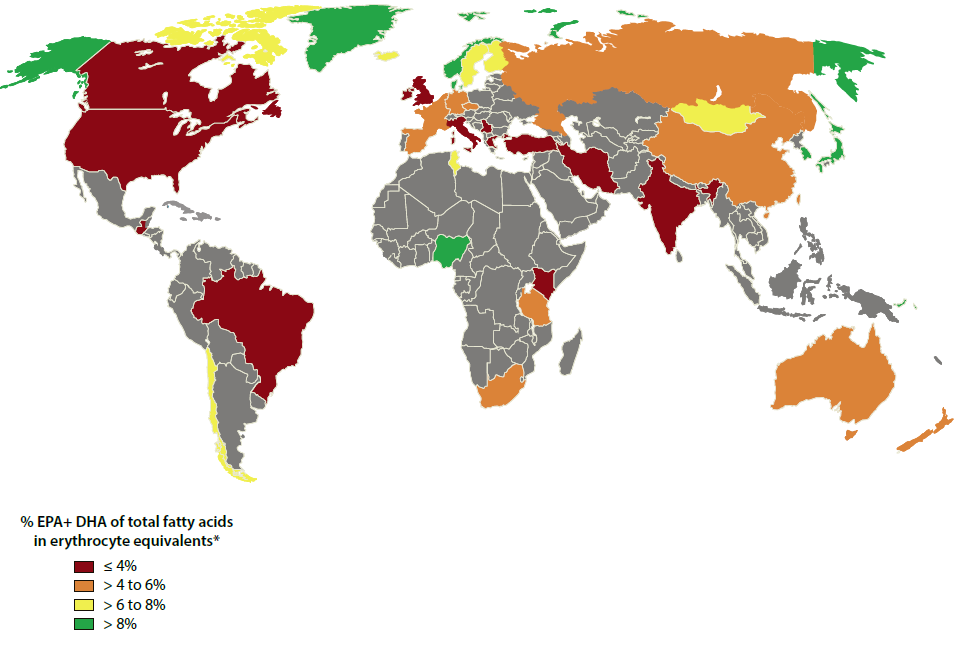
January 27, 2017 — Research reports continue to show the importance of the long-chain omega-3 fatty acids, eicosapentaenoic acid (EPA) and docosahexaenoic acid (DHA) to heart health. The problem is that many people are in the low-intake range of both EPA and DHA and are at increased risk for many chronic diseases including heart disease. A recent meta-analysis points out the strength of the evidence concerning heart disease. A research group at the Department of Epidemiology of the EpidStat Institute in Ann Arbor, MI published their results in the Proceedings of the Mayo Clinic (1). They found that subgroup analyses of data from Randomized Controlled Clinical Trials (RCT) indicated a statistically significant Coronary Heart Disease (CHD) risk reduction with EPA plus DHA provision among higher-risk populations, including participants with elevated triglyceride levels. The summary relative risk estimate (SRRE) was 0.84 which indicates a 16 percent reduced risk. The reduced risk was 14 percent (SRRE=0.86) in those with elevated low-density lipoprotein cholesterol (LDL). Meta-analysis of data from prospective cohort studies resulted in a statistically significant SRRE of 0.82 for higher intakes of EPA plus DHA and risk of any CHD event.

The researchers concluded, “Our comprehensive meta-analysis of data from RCTs and prospective cohort studies supports this recommendation. Although not statistically significant, a 6% reduced risk of any CHD event was observed among RCTs, a finding supported by a statistically significant 18% reduced risk of CHD among the prospective cohort studies. From a clinical perspective, our results indicate that EPA+DHA may be associated with reducing CHD risk to a greater extent in populations with elevated triglyceride levels or LDL cholesterol, which are risk factors that impact a significant portion of the general adult population in the United States.”


.

In 2012, I had the honor and privilege of co-authoring “The Missing Wellness Factors – EPA and DHA” with Professor Jørn Dyerberg, M.D., DMSc., the discoverer of the vital health benefits of fish oil EPA and DHA (2). Dr. Jørn Dyerberg went on five expeditions to the remote Greenland Inuits in the Arctic Circle. As we stated in Chapter Six, “(T)he take-home message of this book is that adequate amounts of the omega-3s, eicosapentaenoic acid (EPA) and docosahexaenoic acid (DHA) are needed for optimal health. Unfortunately, through the past fifty years, the amounts of EPA and DHA have decreased considerably and at an ever-increasing pace.”

Last year, an interesting study confirmed that many people worldwide may not be getting optimal levels of the EPA and DHA (3). Professor Manfred Eggersdorfer, whom we have chatted with in this column before, was close to that study and is familiar with the study and its implications.

Read the full story at Whole Foods Magazine

Recent Headlines

  • Scientists did not recommend a 54 percent cut to the menhaden TAC
  • Broad coalition promotes Senate aquaculture bill
  • Chesapeake Bay region leaders approve revised agreement, commit to cleanup through 2040
  • ALASKA: Contamination safeguards of transboundary mining questioned
  • Federal government decides it won’t list American eel as species at risk
  • US Congress holds hearing on sea lion removals and salmon predation
  • MASSACHUSETTS: Seventeen months on, Vineyard Wind blade break investigation isn’t done
  • Sea lions keep gorging on endangered salmon despite 2018 law

Most Popular Topics

Alaska Aquaculture ASMFC Atlantic States Marine Fisheries Commission BOEM California China Climate change Coronavirus COVID-19 Donald Trump groundfish Gulf of Maine Gulf of Mexico Illegal fishing IUU fishing Lobster Maine Massachusetts Mid-Atlantic National Marine Fisheries Service National Oceanic and Atmospheric Administration NEFMC New Bedford New England New England Fishery Management Council New Jersey New York NMFS NOAA NOAA Fisheries North Atlantic right whales North Carolina North Pacific offshore energy Offshore wind Pacific right whales Salmon South Atlantic Virginia Western Pacific Whales wind energy Wind Farms

Daily Updates & Alerts

Enter your email address to receive daily updates and alerts:
  • This field is for validation purposes and should be left unchanged.
Tweets by @savingseafood

Copyright © 2025 Saving Seafood · WordPress Web Design by Jessee Productions