Saving Seafood

  • Home
  • News
    • Alerts
    • Conservation & Environment
    • Council Actions
    • Economic Impact
    • Enforcement
    • International & Trade
    • Law
    • Management & Regulation
    • Regulations
    • Nutrition
    • Opinion
    • Other News
    • Safety
    • Science
    • State and Local
  • News by Region
    • New England
    • Mid-Atlantic
    • South Atlantic
    • Gulf of Mexico
    • Pacific
    • North Pacific
    • Western Pacific
  • About
    • Contact Us
    • Fishing Terms Glossary

WPRFMC 2019 Public Meetings Notice & Agenda Summaries

May 28, 2019 — The following was released by the Western Pacific Regional Fishery Management Council:

The Western Pacific Regional Fishery Management Council will hold the following meetings on offshore fisheries
management of Hawai’i, American Samoa, Guam, Commonwealth of the Northern Mariana Islands (CNMI) and Pacific Remote Island Areas. Unless otherwise noted, the meeting will be held at the Council office, 1164 Bishop St., Suite 1400, Honolulu. For more information and complete agendas, go to www.wpcouncil.org, email info.wpcouncil@noaa.gov, fax (808) 522-8226 or call (808) 522-8220.

Mariana Archipelago Fishery Ecosystem Plan (FEP)-Guam Advisory Panel (AP)
Guam Division of Aquatics and Wildlife Resources Conference Room, 163 Dairy Road, Mangilao, Guam
June 6 (Th) 6 p.m. to 7:30 p.m.
Major agenda items: Territorial bigeye action item; AP Plans; Guam fishery issues.

American Samoa (AS) Archipelago FEP AP
Native American Samoa Advisory Council Building, Pava’iai’i Village, Tutuila, AS
June 12 (W) 5:30 p.m. to 7:30 p.m.
Major agenda items: Territorial bigeye action item; AP Plans; AS fishery issues.

Mariana Archipelago FEP-CNMI AP
Micronesian Environmental Services Conference Room, Garapan, Saipan
June 13 (Th) 6 p.m. to 8 p.m.
Major agenda items: Territorial bigeye action item; AP Plans; CNMI fishery issues.

132nd Scientific and Statistical Committee
June 18-20 (T-Th) 8:30 a.m. to 5 p.m.
Major agenda items: Setting the Acceptable Biological Catch for the main Hawaiian islands (MHI) Kona crab; Territory bigeye tuna catch/allocation limits.

Hawai’i Archipelago FEP AP
June 20 (Th) 9 a.m. to 12 p.m.
Major agenda items: MHI Kona Crab ACL; AP Plans; Hawai’i fishery issues.

Fishery Data Collection and Research Committee (FDCRC)
June 24 (M) 8:30 a.m. to 12 p.m.
Major agenda items: Regulations for mandatory license and reporting; Data collection improvement updates; Pacific insular fisheries monitoring and assessment planning summit; FDCRC strategic plan and Marine Recreational Information Program regional implementation plan updates.

Executive, Budget and Legislative Standing Committee
June 24 (M) 9 a.m. to 11 a.m.
Major agenda items: Financial and administrative matters; Council standard operating policies and procedures; Council family changes.
Note: A 9:30-10 a.m. litigation briefing will be closed to the public.

Pelagic and International Standing Committee
June 24 (M) 1 p.m. to 3 p.m.
Major agenda items: Managing loggerhead and leatherback sea turtle interactions in the Hawaii-based shallow-set longline fishery; Territory bigeye tuna catch/allocation limits.

178th Council Meeting
Laniakea YWCA, Fuller Hall, 1040 Richards Street, Honolulu, HI
June 25-27 (T-Th) 8:30 a.m. to 5 p.m.
Major agenda items: Options for specifying ACLs for the MHI Kona crab; Hawai’i FEP amendment to precious coral Essential Fish Habitat; Managing loggerhead and leatherback sea turtle interactions in the Hawai’i-based shallow-set longline fishery; Territory bigeye tuna catch/allocation limits.

Fishers Forum – Fishing in the Future: Emerging Technologies in Fisheries
Ala Moana Hotel, 410 Atkinson Dr, Honolulu, HI
June 25 (T) 6 p.m. to 9 p.m.

Fishermen Identify Projects to Improve Fisheries Development in the U.S. Pacific Islands

March 20, 2019 — SEAFOOD NEWS — Projects to develop fisheries topped the list of needs identified by fishermen from Hawai’i, American Samoa, Guam and the Commonwealth of the Northern Mariana Islands during their March 15 and 16 meeting in Honolulu. The group, which constitutes the Advisory Panel of the Western Pacific Regional Fishery Management Council, also highlighted the importance of fishing to the communities of each of the island areas.

Advisory panel members said the social and economic value of the local and regional fisheries also needs to better communicated.

“The Council welcomes the ideas and contributions of the Advisory Panel,” Council Chair Archie Soliai said in a press release. “This is a challenging time for fisheries, and the AP has a lot of work to do.”

The Council will consider the AP recommendations when it meets this weaek at the YWCA Fuller Hall in Honolulu.

Some of the suggested projects and activities from the AP include:

  • fishery demonstration projects;
  • expanded use of technology to collect fishery data;
  • characterization of existing fisheries in Hawai’i; and
  • improved fishing opportunities in Guam and the CNMI through improved fish aggregation devices, fishery access and reduction of shark depredation.

AP members include representatives from diverse fisheries, such as spearfish, longline, bottomfish, charter boat, subsistence and the fishery media. The AP is mandated by the Magnuson-Stevens Fishery Conservation and Management Act, the Council said in the release.

This story originally appeared on SeafoodNews.com, a subscription site. It is reprinted with permission.

Fishery Council Announces Recommendations for Hawaiʻi Fisheries

November 5, 2018 — After a four-day meeting last week, the Western Pacific Regional Fishery Management Council announced their recommendations for nearshore fisheries in Hawai’i and Guam. Under the Magnuson-Stevens Fishery Conservation and Management Act of 1976, the council has authority over fisheries throughout Hawai’i, American Samoa, Guam, the Commonwealth of the Northern Mariana Islands (CNMI), and the US Pacific Remote Islands.

During the meeting, the Council prepared an amendment to the Hawai’i Fishery Ecosystem Plan (FEP) to revise the precious corals essential fish habitat (EFH) document. The council specifically recommended revising existing seabeds and designating new seabeds as EFH for deepwater precious corals. The council also decided that the geographic extent and habitat characteristics for shallow-water precious corals should be updated.

The council recommended that the National Marine Fisheries Service (NMFS) set the MHI non-Deep 7 bottomfish ACL at 127,205 pounds and MHI deep-water shrimp ACL at 250,773 pounds for fishing years 2019-2021. The council also recommended that the NMFS set the MHI Kona crab ACL at 3,500 pounds for fishing year 2019.

For precious corals, the council recommended that the ACLs for 2019-2021 be set to 5,512 pounds for ‘Au’au Channel black coral, 2,205 pounds for Makapu’u Bed pink coral, 55 for Makapu’u Bed bamboo, 489 pounds for 180 Fathom Bank pink coral, 123 pounds for 180 Fathom Bank bamboo coral, 979 pounds for Brooks Bank pink coral, 245 pounds for Brooks Bank bamboo coral, 148 pounds for Ka’ena Point Bed pink coral, 37 pounds for Ka’ena Point Bed bamboo coral, 148 pounds for Keahole Bed pink coral, 37 pounds for Keahole Bed bamboo coral, and 2,205 pounds for precious coral in MHI exploratory area.

Read the full story at Maui Now

Bipartisan bill addresses human trafficking impact on global seafood trade

September 20, 2018 — Guam’s delegate to Congress filed a bill this week that would amend an existing law that targets human trafficking to address the seafood industry’s role.

U.S. Delegate Madeline Bordallo, a Democrat, explained in a release that she offered the legislation because the country needs to eliminate human rights abuses worldwide and that American fishermen should not have to compete against imported seafood caught using slave or forced labor. Bordallo’s cosponsors include U.S. Delegate Aumua Amata (R-American Samoa), U.S. Representative Suzanne Bonamici (D-Oregon) and U.S. Representative Raul Grijalva (D-Arizona).

H.R. 6834, if passed, would bring on the Secretary of Commerce, who oversees NOAA Fisheries, as part of the President’s Interagency Task Force to Monitor and Combat Trafficking in Persons. The panel, which currently includes nearly 20 federal agencies, is responsible for coordinating the government’s actions to combat trafficking.

Bordallo’s bill also comes three months after the State Department’s human trafficking report found fisheries in more than 40 countries benefit from forced labor.

Currently, the Trade Facilitation and Trade Enforcement Act, passed in February 2016, prohibits the United States from accepting imported goods made or processed by forced labor. Officials from U.S. Customs and Border Protection said the law, in its first two years, helped stop 15 shipments of Chinese seafood that were processed by North Korean laborers.

Read the full story at Seafood Source

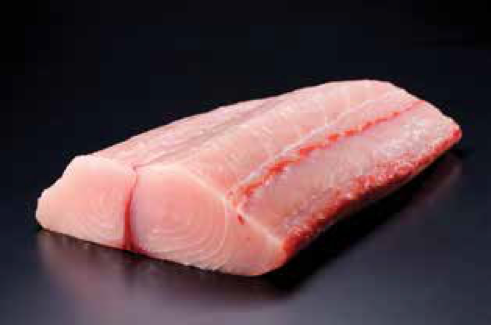
Western Pacific Regional Fishery Management Council: US Billfish is Sustainable, Provides Fresh Seafood and Local Revenue

August 2, 2018 — The following was released by the Western Pacific Regional Fishery Management Council:

The Western Pacific Regional Fishery Management Council is disappointed that America’s seafood consumers may soon be deprived of sustainably harvested domestic marlin products should President Trump sign legislation to prohibit interstate commerce of billfish (not including swordfish) landed in Hawaii, American Samoa, Guam and the Commonwealth of the Northern Mariana Islands. The bill, introduced by U.S. Rep. Darren Soto’s (D-Fla.), passed the House on June 26 and the Senate on July 30 and is now headed to the president.

“It is upsetting, in this era of tackling illegal, unreported and unregulated (IUU) fishing and the $12 billion US seafood trade deficit, that highly monitored US Pacific Island fishing and seafood communities may suffer hardship should this legislation become law,” notes Kitty M. Simonds, executive director of the Western Pacific Regional Fishery Management Council.

Under current law, billfish caught by U.S. vessels that are landed in Hawaii or other U.S. Pacific Islands may be sold to markets on the U.S. mainland. More than 550,000 pounds of American-caught billfish landed in the U.S. Pacific Islands are annually marketed in the continental United States. The billfish is worth approximately $830,000 in 2017 dockside value. When the dockside value is expanded through wholesale and retail markets, the estimated annual value is approximately $2.5 million.

The commercial harvest of Atlantic billfish has been prohibited in the United States since 1988 because several Atlantic billfish species are overfished and/or subject to overfishing (e.g., blue marlin, white marlin and East Atlantic sailfish). By contrast, Pacific and Western Pacific billfish populations are not overfished nor subject to overfishing, with the exception of striped marlin, due to international fishing. A Billfish Certificate of Eligibility (COE) is required to accompany billfish to any dealer or processor who subsequently receives or possesses the billfish. The COE documents the vessel, homeport, port of offloading and date of offloading and ensures the fish is not from the Atlantic or foreign fisheries.

Chris Oliver, NOAA Assistant Administrator for Fisheries, in December 2017, said he has “full confidence in these existing management processes to sustainably manage billfish populations.”

Congresswomen Colleen Hanabusa (D-Hawaii), Madeleine Z. Bordallo (D-Guam) and Aumua Amata Coleman Radewagen (R-American Samoa), in an Additional Views statement on H.R. 4528, said the legislation “will negatively impact the livelihoods of fishermen in Hawaii, Guam and the Pacific Insular Areas by closing off the only off-island market for U.S.-caught billfish.” Acknowledging that several Atlantic billfish species are subject to overfishing, the Congresswomen said, “We support needed-conservation efforts in the Atlantic, but do not believe that Pacific fisheries need to be targeted in order to achieve these goals.”

Secretary of Commerce Wilbur Ross, in a June 5, 2018, letter to the Western Pacific Regional Fishery Management Council, said “we believe the legislation would not advance the conservation of billfish significantly, and would block a small amount of sustainably harvested domestic product from entering commerce on the U.S. mainland.”

NMFS estimates that the United States imports more than 80 percent of the seafood consumed in the nation (www.fishwatch.gov/sustainable-seafood/the-global-picture). According to NMFS data, the United States imported more than 6 billion pounds of seafood valued at more than $21.5 billion in 2017, which is more imported seafood than at any point in the nation’s history.

For more information, go to www.wpcouncil.org/billfish.

Serving Blue Martin Tempura at the Western Pacific Regional Fishery Management Council’s booth during the 2003 NOAA Fish Fry are (i-r) Council Executive Director Kitty Simonds, Secretary of Commerce Donald Evans, NOAA Administrator Conrad C. Lautenbacher, and Honolulu Chef Russel Siu.

Western Pacific Region Issues Status of the Fisheries 2017

August 2, 2018 — SEAFOOD NEWS — The 2017 annual reports on fisheries in Hawaii and the U.S. Pacific Islands are now available. Some three dozen reports provide data and trends about last year’s fishery participation, catch rates, landings and other fishery performance factors. Each report also describes ecological components that may impact fishery outcomes, such as protected species interactions, climate and oceanographic conditions and socioeconomic factors. Pacific

A summary of the Western Pacific Region Status of the Fisheries 2017 is available here.

The summary includes descriptions of the fleets, from small sailing vessels to the modern tuna seiners. For instance, here is a description of the American Samoa tuna longline fleet: “The American Samoa longline fleet includes nine vessels greater than 70 feet,  five vessels between 50 and 70 feet and one vessel less than 40 feet in length. All but three of the vessels are owned by the families of Samoan women, who manage the vessels.”

The summary also includes all the regulatory actions taken by the Council in 2017, in chronological order.

The Western Pacific Regional Fishery Management Council ensures that fisheries are sustainable and marine resources are soundly stewarded seaward of the state waters of Hawai‘i, American Samoa, Guam, the Commonwealth of the Northern Mariana Islands (CNMI) and the Pacific Remote Island Areas (PRIA).

To monitor the fisheries, the Council publishes annual reports for the five fishery ecosystem plans (FEPs) that the Council has developed, monitored and amended. The complete annual reports are available here.

Annual reports are produced for each of five fishery ecosystem plans (FEPs) that have been developed, monitored and amended by the Western Pacific Regional Fishery Management Council. They include the Pelagic FEP, the Pacific Remote Island Areas FEP and FEPs for the Hawai’i Archipelago, American Samoa Archipelago and Mariana (Guam and the Commonwealth of the Northern Mariana Islands) Archipelago.

Except for Hancock seamount armorhead and Western and Central North Pacific striped marlin, none of the fisheries within the Western Pacific Regional Fishery Management Council’s jurisdiction are overfished. The armorhead was over fished by Japanese and Soviet fleets prior to the establishment of the Council and has been under a moratorium since 1986. The striped marlin is over fished due to international  fishing.

This story originally appeared on SeafoodNews.com, a subscription site. It is reprinted with permission.

Blown Deadlines Weaken Hawaii’s Voice On Federal Fishery Council

June 28, 2017 — Hawaii will soon have less influence in setting national policies that affect everything from commercial fishing to endangered species in nearly 1.5 million square miles of the Pacific Ocean.

Gov. David Ige’s administration twice missed deadlines to submit to federal officials a list of names to fill two at-large terms that expire in August on the Western Pacific Regional Fishery Management Council.

The seats have historically been held by Hawaii residents. Instead, they will be filled from the lists provided by the governors of American Samoa and the Northern Mariana Islands. Guam, the other U.S. territory represented on the council, did not nominate anyone.

Environmentalists see it as a missed opportunity for Ige to rebalance the council, which has long weighed heavier on the side of the commercial fishing industry than conservation. Others view it as a blown chance for Hawaii’s longline tuna fishermen to maintain their grip on the council’s direction.

Read the full story at the Honolulu Civil Beat

Feds to Reopen Papahanaumokuakea to Fishing?

March 27, 2017 — The following was released by the Western Pacific Regional Management Council: 

The Western Pacific Regional Fishery Management Council concluded its three-day meeting in Honolulu with a suite of recommendations, many of which are focused on keeping U.S. fishing grounds open to sustainably managed U.S. fisheries.

The council includes the local fishery department directors from Hawaii, American Samoa, Guam and the CNMI, fishing experts appointed by the Governors and federal agencies involved in fishing-related activities.

Marine national monuments, national marine sanctuaries, other marine protected area designations and Department of Defense training are among the uses that are increasingly closing off fishing grounds in U.S. waters.

Council Chair Edwin A. Ebisui Jr. clarified that council communications to the administration about impacts of marine national monuments on fisheries are not lobbying.

Some environmental activists recently made misleading statements about this in regards to a letter to President Trump prepared on March 1, 2017, by the Council Coordination Committee or CCC. The CCC includes the chairs of the nation’s eight regional fishery management councils. The letter details the impact of designations of Marine National Monuments under the Antiquities Act in the Atlantic and Pacific Oceans and was submitted to the president after conferring with the NOAA Office of General Counsel.

Read the full story at The Hawai’i Free Press 

Western Pacific Council to Tackle Management in Papahanaumokuakea Marine National Monument

March 23, 2017 — SEAFOOD NEWS — At this week’s Western Pacific Regional Fishery Management Council in Honolulu, members are developing new fishing rules for the marine national monument that was expanded last year and decided which species will be under federal management as components of the area’s ecosystem.

The Presidential proclamation under the Antiquities Act that expanded the Papahanaumokuakea Marine National Monument calls for closing offshore commercial fisheries from 50 to 200 miles around the NWHI, an area twice the size of Texas. The Council includes the local fishery department directors from Hawai’i, American Samoa, Guam and the Commonwealth of the Northern Mariana Islands (CNMI), fishing experts appointed by the Governors and federal agencies involved in fishing-related activities.  The meeting runs through tomorrow and is open to the public.

The Presidential proclamation under the Antiquities Act that expanded the Papahanaumokuakea Marine National Monument calls for closing offshore commercial fisheries from 50 to 200 miles around the NWHI, an area twice the size of Texas.

The Hawai’i-based longline fleet is expected to redirect its fishing efforts to the high seas (beyond 200 miles from shore) or into the allowable longline fishing area 50 to 200 miles offshore around the main Hawaiian Islands. The Hawai’i longline fleet, which catches bigeye tuna and swordfish, is banned from 0 to 50 miles throughout Hawai’i.

While the Presidential proclamation bans commercial fishing around the NWHI, it allows regulated non-commercial and Native Hawaiian subsistence fishing.

This week the Council is considering the results of public scoping meetings that were conducted throughout Hawai’i in December as well as the recommendations of its advisory bodies.

The Council’s Scientific and Statistical Committee (SSC), which met March 7 to 9 in Honolulu, recommends that existing data, such as data from the former sport-fishing operation at Midway Atoll in the NWHI and the Hawaii tuna tagging project, be explored.

The SSC also recommends that potential impact on protected species be considered as fishing effort is redistributed.

The Council advisory bodies jointly support the removal of fishing provisions in the NWHI as well as other marine monuments in the region: Rose Atoll (American Samoa), Marianas Trench (CNMI) and Pacific Remote Islands (the US atoll and island possessions of Johnston, Palmyra, Wake, Baker, Howland, Jarvis and Kingman Reef). The group recommends that the Council continue to express its concerns to the new Administration regarding the impacts to fisheries from the monument designations and their expansions as well from military closures and other marine protected areas in the region.

In addition to management of the monument, the Council will determine which of the thousands of marine species in the region will be managed using annual catch limits as targeted fish species,  and which will be managed using other tools (for example, minimum sizes and seasonal closures) as ecosystem component species. The Council may endorse the SSC recommendation to form an expert working group to ensure the final listings take into account species of social, cultural, economic, biological and ecological importance.

As part of the Council meeting, a Fishers Forum on Using Fishers Knowledge to Inform Fisheries Management will be held 6 to 9 p.m. on March 22 at the Ala Moana Hotel, Hibiscus Ballroom. The  event includes informational booths, panel presentations and public discussion.

This story originally appeared on Seafoodnews.com, a subscription site. It is reprinted with permission.

A Ship, a Crew and a $7 Billion Fishery

January 3, 2017 — The sea and sky are dark. One fades into the other. The bright deck lights of a foreign fishing boat are the only horizon reference. Roughly 70-feet in length, at two miles away, the boat appears as a dot. “Set LE Phase 1,” rings out over the 1MC, the ship’s on board intercom system.

I’m aboard the mighty warship Sequoia, a 225-foot seagoing buoy tender homeported in Apra Harbor, Guam – America’s westernmost territory. Out in the Philippine Sea, standing on the buoy deck I can feel the ship roll gently under my feet as we transit toward the fishing boat.

It’s 2000 hours, the sun has long since set, but I can still feel residual heat from the metal decks and bulkheads of the ship radiate up at me. The moist sea air wraps around me in a wet bear hug, and I can feel my body armor secured over my t-shirt cling to me. Droplets of sweat escape from my hairline under my helmet. We’ve been over the plan, briefed the evolution, attempted to hail the vessel master in Mandarin and English, done our risk analysis to assess complexity and overall safety, and now it’s time to go.

The sound of the water is interrupted by the unmistakable mechanical hums and chirps of outboard engines. The cutter’s small boat, piloted by a boatswain’s mate, comes alongside the buoy deck prepared to take us aboard and transport us to the fishing boat.

One by one the boarding team goes over the side: four Coast Guard members and an Australian Fisheries Management Authority officer; Lydia Woodhouse. The ship is running nearly dark. A faint red glow can be seen on the bridge. The running lights of the small boat wink at me red and green. It’s my turn. Senior Chief Petty Officer Ryan Petty, who runs the deck force, stands next to the Jacob’s ladder. A flashlight in his hand with a red lens lights the flat orange rungs of the ladder as they knock against the black hull and leads to the water and the small boat more than 10 feet below.

I step gingerly onto a bitt on Sequoia’s deck just below the gunwale, adjacent to where the ladder is secured. I heave myself over the side and onto the ladder, a vice-like grip on the top of the gunwale. “Snaps, over the side!” calls Petty into his radio up to the bridge. The small boat rises and falls with the swell beneath my feet. Nearly to the bottom, the boat drops just as I let go of the ladder. The hand of a boat crewman and engineer, Petty Officer 2nd Class Scott Peterson, grabs the loop of my backpack. “Snaps in the boat,” calls Petty.

As I move to the side and take a seat on the sponson, I hear: “Semper Fi over the side. Semper Fi in the boat.” Lance Cpl. Brian Martin, our Mandarin Chinese speaking linguist, takes a seat next to me in his Marine Corps fatigues, bright orange lifejacket and helmet. With our team assembled, we depart from Sequoia and head toward the light on the horizon.

Read the full story at the Maritime Executive

  • « Previous Page
  • 1
  • …
  • 5
  • 6
  • 7
  • 8
  • 9
  • Next Page »

Recent Headlines

  • Scientists did not recommend a 54 percent cut to the menhaden TAC
  • Broad coalition promotes Senate aquaculture bill
  • Chesapeake Bay region leaders approve revised agreement, commit to cleanup through 2040
  • ALASKA: Contamination safeguards of transboundary mining questioned
  • Federal government decides it won’t list American eel as species at risk
  • US Congress holds hearing on sea lion removals and salmon predation
  • MASSACHUSETTS: Seventeen months on, Vineyard Wind blade break investigation isn’t done
  • Sea lions keep gorging on endangered salmon despite 2018 law

Most Popular Topics

Alaska Aquaculture ASMFC Atlantic States Marine Fisheries Commission BOEM California China Climate change Coronavirus COVID-19 Donald Trump groundfish Gulf of Maine Gulf of Mexico Illegal fishing IUU fishing Lobster Maine Massachusetts Mid-Atlantic National Marine Fisheries Service National Oceanic and Atmospheric Administration NEFMC New Bedford New England New England Fishery Management Council New Jersey New York NMFS NOAA NOAA Fisheries North Atlantic right whales North Carolina North Pacific offshore energy Offshore wind Pacific right whales Salmon South Atlantic Virginia Western Pacific Whales wind energy Wind Farms

Daily Updates & Alerts

Enter your email address to receive daily updates and alerts:
  • This field is for validation purposes and should be left unchanged.
Tweets by @savingseafood

Copyright © 2025 Saving Seafood · WordPress Web Design by Jessee Productions