Saving Seafood

  • Home
  • News
    • Alerts
    • Conservation & Environment
    • Council Actions
    • Economic Impact
    • Enforcement
    • International & Trade
    • Law
    • Management & Regulation
    • Regulations
    • Nutrition
    • Opinion
    • Other News
    • Safety
    • Science
    • State and Local
  • News by Region
    • New England
    • Mid-Atlantic
    • South Atlantic
    • Gulf of Mexico
    • Pacific
    • North Pacific
    • Western Pacific
  • About
    • Contact Us
    • Fishing Terms Glossary

Your Poke Addiction Won’t Drive Tuna Extinct

June 22, 2018 — The hotel where I stayed in London last week has a restaurant that specializes in poke, the Hawaiian dish featuring chunks of raw fish atop of a bed of rice and vegetables. A couple of blocks away, in the restaurant arcade under the new Bloomberg building, I encountered a branch of Ahi Poke, a five-location London chain.

I first ate poke in Los Angeles in the summer of 2015, as it took Southern California by storm. Not long afterward, it conquered New York. By late 2016, Nation’s Restaurant News was proclaiming that “poke is sweeping the nation.” Now it appears to be sweeping yet another nation.

And so, as I consumed an Oahu bowl at Ahi Poke one day last week, I started wondering whether there are enough fish in the sea to survive this globalization of poke. I am not the first to wonder this. LA Weekly ran an April Fools’ spoof last year headlined “L.A. Poke Joints Shutter as Ocean Officially Runs Out of Fish.” Hawaii-based journalist Jennifer Fiedler took a more serious look in an extensively reported 2016 article for New York magazine’s Grub Street site, although she wasn’t able to answer the question definitively. I won’t be able to answer it definitively, either, but I can at least take a couple more steps in that direction, plus share some cool charts.

The main fish of concern here is the yellowfin tuna (scientific name: Thunnus albacares), which is almost certainly what was in my Oahu bowl. Poke restaurants outside of Hawaii also serve a lot of raw salmon, but the overwhelming majority of commercially available salmon is farmed, and while there are environmental concerns about some salmon-farming practices, we do not seem to be in any danger of running out of the fishies.

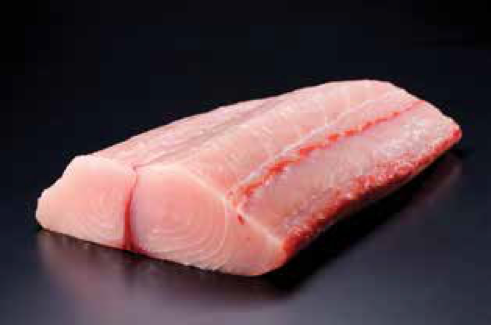
The quintessential poke fish, though, is ahi tuna, and it’s all wild-caught. In Hawaii, ahi originally meant bigeye tuna (Thunnus obesus), but yellowfin now gets the name, too. With the global yellowfin catch almost four times bigger than the bigeye catch, and the price lower, the ahi you eat in your poke is generally going to be yellowfin.

Read the full story at Bloomberg

HAWAII: Federal money coming for ocean management

June 18, 2018 — The U.S. Senate Appropriations Committee this week passed the Commerce, Science, and Justice Appropriations Bill for fiscal year 2019.

U.S. Sen. Brian Schatz (D-Hawaii) worked to include $1 million to preserve Papahanaumokuakea Marine National Monument, more than $36 million to improve tsunami warnings, and nearly $30 million to protect coral reefs in Hawaii and across the country.

“We were successful at including more federal funding to help us manage Papahanaumokuakea and protect our coral reefs,” said Schatz, a member of the Appropriations Committee. “This bill also funds our tsunami warning system so that we can strengthen tsunami forecasting and better protect Hawaii’s coastal communities.”

Key funding in the Commerce, Science, and Justice Appropriations Bill sought by Schatz includes:

  • $1 million for Papahanaumokuakea Marine National Monument. The bill authorizes NOAA to make a competitive grant of up to $1 million for research and management activities in Papahanaumokuakea. The funding is subject to a 100 percent non-federal match, and will bring new resources to keep our Hawaiian archipelago healthy and productive.
  • $31.6 million for the NOAA Tsunami Program. The program provides funding to coastal states for preparedness activities such as inundation mapping, disaster planning, and tsunami education. Despite deep cuts proposed by President Trump, Senator Schatz helped protect funding for this critical program.

Read the full story at The Garden Island

HAWAII: Sleuthing leads to new findings about opah

June 8, 2018 — The fish buyer noticed something different about the large, colorful, disc-shaped opah waiting to be sold at the auction house in Honolulu. Among the differences: One fish had a bigger eye than the other.

His curiosity set in motion DNA testing and more sleuthing that led to the identification of three new species of opah — a peculiar deep-diving fish recently found to be the first fully warmblooded fish.

“The more we looked, the more differences we could pull out,” said Karen Underkoffler, lead author of a recently published paper in the peer-reviewed journal Zootaxa that describes the anatomical characteristics of the different species of opah, including one marked by its big eyes and a purple tongue.

In all, the team of scientists with National Oceanic and Atmospheric Administration Fisheries identified five distinct species of opah, revealing that there isn’t a single global species. Three are newly identified, one was already named and researchers better identified another that had been previously described.

Read the full story from the Associated Press at The Honolulu Star Advertiser

Hawaii: Whales entangled in debris in Hawaii get help from team of drones

June 1, 2018 — Federal rescue teams in Hawaii are now using small DJI drones to help free humpback whales caught in tangles of debris.

The National Oceanic and Atmospheric Administration Hawaiian Islands Humpback Whale National Marine Sanctuary has partnered with Oceans Unmanned of California to use drone technology to assist with whale entanglement response efforts off of Maui.

Oceans Unmanned, a nonprofit founded by former NOAA sanctuary manager Matt Pickett in California, released a video Wednesday offering more details on the program.

Read the full story at the Honolulu Star Advertiser


Hawaii Longline Swordfish Fishery Closed for Rest of Year; Industry Helped Negotiate Closure

May 15, 2018 — SEAFOOD NEWS — In the ups and downs of the Hawaiian swordfish fishery, the recent May 8 closure for the rest of the year was no surprise to the industry. Longliners worked with the National Marine Fisheries Service and plaintiffs of a recent lawsuit to comply with a court order.

The Turtle Island Restoration Network, Center for Biological Diversity and Earthjustice originally sued the Department of Commerce over a 2012 biological opinion that allowed the shallow set longline fishery to take a certain number of loggerhead and leatherback sea turtles every year. The U.S. District Court of Hawaii ruled in NMFS’ favor, so the ENGOs appealed. The U.S. Ninth Circuit Court of Appeals issued a split decision on Dec. 27, 2017, affirming the BiOp regarding leatherback sea turtles, but not for loggerhead turtles. The Hawaii Longline Association, which filed as interveners, were party to the settlement negotiations with the plaintiffs and NMFS, which were outlined in a May 4, 2018 agreement and court order. The result for 2018 was closure for the rest of the year.

While ENGOs are cheering the outcome as a victory for sea turtles, it’s somewhat of a pyrrhic victory and does more to promote an agenda for the plaintiffs rather than have any actual effect this year.

“The National Marine Fisheries Service, which is supposed to be protecting our wildlife, has instead been illegally helping the longliners push sea turtles to the brink of extinction,” Earthjustice attorney Paul Achitoff said in a press release. “We won’t allow it.”

The main swordfish season usually takes place in the winter, with most landings occurring by the end of March. This year was an anomaly, Hawaii Longline Association President Sean Martin said, in that the fishery reached its annual limit of turtle interactions in January, so the fleet was already done with swordfish for the year.

“We’re on the tail end of what would be the prime season anyway,” Martin said.

The fishery will open again on Jan. 1, 2019, no matter what, Martin said. Since the court vacated the 2012 biological opinion, NMFS is working on a new one. The agency could come back with a new incidental take statement for next year’s fishing season. Or, if the BiOp and corresponding take statement are not finished by Jan. 1, the fishery will open under an incidental take allowance approved by an earlier BiOp that allowed roughly half the number of turtle interactions as the 2012 BiOp.

Federal officials note the loggerhead turtles already show signs of recovery due to a history of better management measures, such as circle hooks and using mackerel for bait — squid bait is prohibited –has proven immensely effective worldwide. Most turtles caught in the fishery are released alive.

Those measures and more, implemented in the early 2000s, reduced sea turtle interactions in the fishery by 93 percent, the Council said. Observer coverage is 100 percent; all vessel owners and operators annually attend mandatory protected species workshops; all longline vessels are required to carry specified tools to safely remove hooks and lines from the turtles and to follow safe handling, resuscitation and release procedures; vessels are monitored through a mandatory satellite-based vessel monitoring system; and longline closed areas from 0 to 50 nautical miles of the main and Northwestern Hawaiian Islands have existed since the early 1990s.

“The record of 99 percent live releases, only two mortalities in 24 years and increasing loggerhead abundance over the past two decades underscore the management success of the Hawaii shallow-set longline fishery,” Council Executive Director Kitty M. Simonds said in a press release.

Martin said most of the 30 or so longline vessels will instead turn to the deep-set longline fishery for the remainder of the year, targeting tunas.

This story originally appeared in Seafood News, it is republished here with permission.


Hawaii swordfish industry shut down to protect endangered turtles

May 11, 2018 — A federal court order to protect endangered loggerhead sea turtles has forced the National Marine Fisheries Service to immediately close the shallow-set longline fishery in Hawaii for the rest of the year.

A 2012 lawsuit filed by the Turtle Island Restoration Network and the Center for Biological Diversity, represented by the nonprofit law firm Earthjustice, was rejected in a Hawaii district court but they eventually won a split decision on appeal in December.

The parties reached an agreement Friday to settle the case. It included an immediate shutdown of the shallow-set longline fishery, which targets swordfish. NMFS implemented the closure Thursday.   

“The National Marine Fisheries Service, which is supposed to be protecting our wildlife, has instead been illegally helping the longliners push sea turtles to the brink of extinction,” Earthjustice attorney Paul Achitoff said in a news release.

Read the full story at the Honolulu Civil Beat


Senators Feinstein, Harris introduce bill to ban drift nets in California

April 30, 2018 — A bipartisan bill to ban controversial drift net fishing off California’s coast was introduced Thursday by Democratic California Sens. Dianne Feinstein and Kamala Harris, along with West Virginia Republican Sen. Shelley Moore Capito.

The nets, which can be more than a mile long, are intended to catch swordfish but end up trapping dolphins, sea lions and a host of other marine life, many of which die.

“The use of drift nets to target swordfish harms too many endangered or protected marine animals and should be phased out,” Feinstein said in an emailed statement. “It’s unacceptable that a single California fishery that uses this type of drift net is killing more dolphins and porpoises than the rest of the West Coast combined.”

Large mesh drift nets are already banned in the Atlantic Ocean and Gulf of Mexico, as well as off the coasts of Washington, Oregon, Alaska and Hawaii, according to Feinstein. Additionally, the United States is a signatory to international agreements that ban large drift nets in international waters.

Read the full story at the Orange County Register


Hawaii: Longliners codify ethics in push-back against human rights allegations

April 9, 2018 — Stung by lingering allegations of human trafficking and forced labor, the Hawaii fishing industry has developed a formal code of conduct, crew handbook and model employee contract aimed at protecting the workers aboard its fleet of more than 140 vessels.

“It makes the most amount of sense that we give the public a certain degree of confidence that none of this is happening in our industry,” said Khang Dang, owner of 22 fishing boats and a member of the Hawaii Longline Association board of directors.

The documents — available in five languages and distributed to fishermen in the harbor last week — are designed to let the largely foreign ranks of contract fishing crew members clearly understand their rights, benefits and grievance procedures while they are working in Hawaii.

The Hawaii Longline Association initiated the effort following a September 2016 Associated Press investigation that brought national attention to allegations of forced labor, human trafficking, mistreatment and unsafe conditions.

The owners of the boats that make up the Pacific fishing fleet based in Honolulu were portrayed as taking advantage of a loophole in federal law to abuse foreign workers via inhumane working conditions, broken contracts and lousy pay.

The report prompted wholesale buyers and retailers to question whether the fish being sold was ethically sourced and led to an effort by state lawmakers to propose leveraging state fishing licenses to improve conditions in the industry.

Read the full story at the Honolulu Star Advertiser


Rise in reports of abandoned fishing nets washing up in Hawaii

April 3, 2018 — HONOLULU — Organizations are dealing with a surge in reports of abandoned fishing nets washing up along Hawaii’s coastlines.

The nets pose a entanglement threat to marine life and can also destroy coral reefs.

“A lot of the debris accumulation is due to our geographic location in the North Pacific,” said Mark Manuel, Pacific Islands Regional Coordinator for the NOAA Marine Debris Program. “We’re just prone to having high levels of debris accumulate on our shorelines and coral reef environments.”

POP Fishing & Marine maintains a drop-off bin for derelict nets at Honolulu Harbor’s Pier 38 as part of Hawaii’s Nets-to-Energy Program.

“In the past several months, there’s been a large uptick, a large volume of nets and debris washing up, probably due to ocean current conditions. We’ve never seen this much volume in such a short period of time,” said Neil Kanemoto of POP Fishing & Marine.

The marine debris is taken to a scrap metal recycling facility where it is chopped into small pieces. The fragments are then sent to the city’s H-POWER facility to be burned, producing steam that drives a turbine to generate electricity.

Last month, the Hawaii Wildlife Fund sent 11.6 tons of marine debris from the Big Island to Oahu in a Matson container. The non-profit is now working with its partners to start removing a massive pile of netting from Kamilo Beach.

Read the full story at KFVE


Rogue waves hit Hawaii fishing vessel that sank, owner says

March 28, 2018 — HONOLULU — The owner of a fishing vessel that sank off Hawaii over the weekend said Tuesday two massive rogue waves hit the boat, swamping it and forcing the crew to abandon ship.

One wave hit the back of the of the 61-foot (19-meter) fishing vessel, the Princess Hawaii, and another hit the side, said owner Loc Nguyen in a telephone interview with The Associated Press. The boat was hundreds of miles off the coast of Hawaii’s Big Island at the time.

“It was so big, they’ve never seen that before,” Nguyen said. There was “too much water on the top and it went down.”

Nguyen said the fishing crew had already set about 15 miles (24 kilometers) of line when the waves crashed, knocking five workers into the water. He said the captain, a federal observer and another crew member had been inside and were able to deploy the vessel’s life raft.

The eight people aboard were rescued by the vessel’s sister ship about 12 hours later. No injuries were reported.

Read the full story from the Associated Press at the NY Daily News


  • « Previous Page
  • 1
  • …
  • 43
  • 44
  • 45
  • 46
  • 47
  • …
  • 64
  • Next Page »

Recent Headlines

  • Council Proposes Catch Limits for Scallops and Some Groundfish Stocks
  • Pacific halibut catch declines as spawning biomass reaches lowest point in 40 years
  • Awaiting Supreme Court decision, more US seafood suppliers file tariff lawsuits
  • ALASKA: Alaska Natives’ fight for fishing rights finds an ally in Trump team
  • ALASKA: Without completed 2025 reports, federal fishery managers use last year’s data to set Alaska harvests
  • MASSACHUSETTS: Nantucket, Vineyard Wind agree to new transparency and emergency response measures
  • Federal shutdown disrupts quota-setting for pollock
  • OREGON: Crabbing season faces new delays

Most Popular Topics

Alaska Aquaculture ASMFC Atlantic States Marine Fisheries Commission BOEM California China Climate change Coronavirus COVID-19 Donald Trump groundfish Gulf of Maine Gulf of Mexico Illegal fishing IUU fishing Lobster Maine Massachusetts Mid-Atlantic National Marine Fisheries Service National Oceanic and Atmospheric Administration NEFMC New Bedford New England New England Fishery Management Council New Jersey New York NMFS NOAA NOAA Fisheries North Atlantic right whales North Carolina North Pacific offshore energy Offshore wind Pacific right whales Salmon South Atlantic Virginia Western Pacific Whales wind energy Wind Farms

Daily Updates & Alerts

Enter your email address to receive daily updates and alerts:
  • This field is for validation purposes and should be left unchanged.
Tweets by @savingseafood

Copyright © 2025 Saving Seafood · WordPress Web Design by Jessee Productions