Saving Seafood

  • Home
  • News
    • Alerts
    • Conservation & Environment
    • Council Actions
    • Economic Impact
    • Enforcement
    • International & Trade
    • Law
    • Management & Regulation
    • Regulations
    • Nutrition
    • Opinion
    • Other News
    • Safety
    • Science
    • State and Local
  • News by Region
    • New England
    • Mid-Atlantic
    • South Atlantic
    • Gulf of Mexico
    • Pacific
    • North Pacific
    • Western Pacific
  • About
    • Contact Us
    • Fishing Terms Glossary

Deepwater Sharks Are Threatened by Demand for Liver Oil

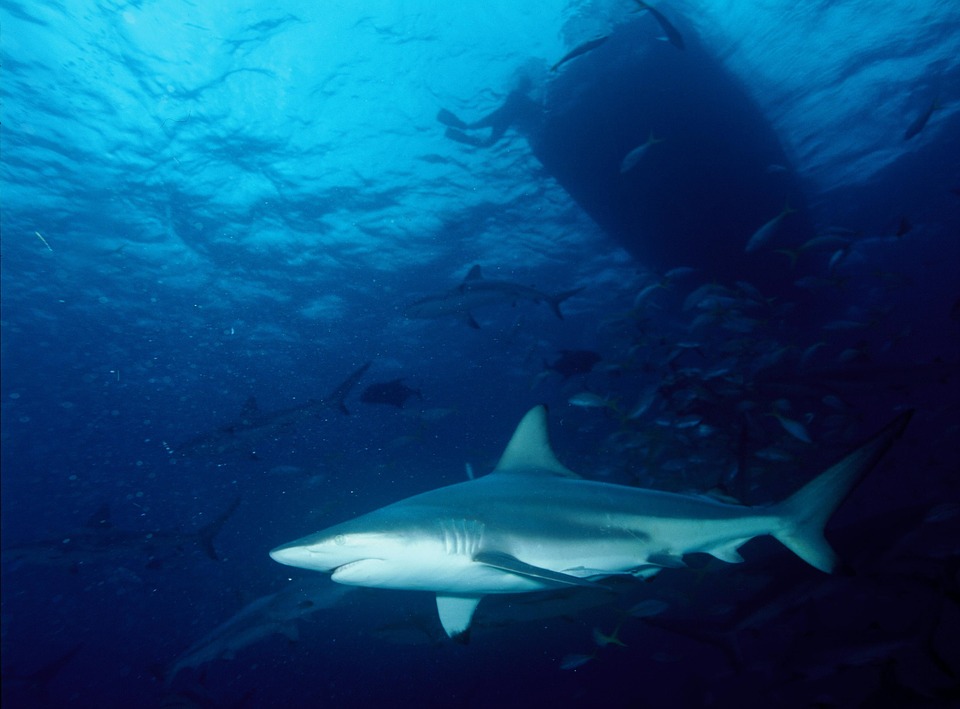
March 9, 2024 — The surging market for shark liver oil, found in products ranging from dietary supplements to cosmetics, is posing a major threat to deepwater shark species—those that dwell in the inky black waters at least 200 meters below the surface—which use adaptations such as bioluminescence to help them thrive.

Shark liver oil is used as a source of squalene, which is used in beauty products such as skin care items because it is an emollient and antioxidant. It can be found in dietary supplements, as well as in vaccines, where it helps stimulate the body’s immune response.

The rising demand for liver oil (along with meat) has driven shark fishing to the point where one in every seven known shark and ray species is threatened with extinction, according to a new study published on Thursday in Science. That’s a particular concern when it comes to species that frequent the depths because “about half of all sharks are considered deepwater species, and we are still finding new species of deepwater sharks all the time as we explore more of the deep ocean,” says the study’s lead author Brit Finucci, a fisheries scientist at New Zealand’s National Institute of Water and Atmospheric Research. Also of concern is the fact that these species “are very susceptible to overfishing because they have slow growth, late maturity and low fecundity—even more so than shallow water species. Some species take decades to mature and then give birth to only one or two pups every few years.”

Deepwater sharks, once considered too inaccessible to be of interest to fisheries, are becoming more of a target because they contain higher levels of liver oil and because easier-to-reach species are becoming scarce. “As coastal fisheries become depleted, fishing effort has moved further offshore and into deeper waters,” Finucci says. The new analysis found fisheries are already targeting one third of the 60 known threatened deep-sea shark and ray species, and half of the species whose liver oil is traded are threatened with extinction. Those numbers are likely an underestimate because many countries do not record and report their deepwater shark and ray catch of at the species level.
Read the full article at Scientific America

Agency gave bad data to senator trying to stop shark finning

October 27, 2017 — A federal agency said on Thursday that it made a mistake with a key piece of data it gave to U.S. Sen. Cory Booker as he was building a case to shut down America’s shark fin trade.

Booker, a New Jersey Democrat, has cited more than 500 incidents involving complaints of shark finning in the U.S., dating back to January 2010, as cause to support shutting down the trade. But the number is actually 85.

Booker reached out to the National Oceanic and Atmospheric Administration months ago to find out how often it investigates allegations of shark finning, an illegal practice in which a shark’s fins are removed and the shark is dumped back into the water, sometimes while it’s still alive.

An NOAA worker’s error involving a new case management system caused the mistake in the number of finning incident reports, said Casey Brennan, chief of staff for the NOAA’s Office of Law Enforcement. He said the number of reports that led to charges was 26.

Saving Seafood, a fishing industry trade group, asked the NOAA to clarify the figures about shark finning incidents after seeing conflicting data on the agency’s website.

“Shark finning is a reprehensible activity that has been outlawed in the U.S. and is opposed by participants in the sustainable U.S. shark fishery,” said Robert Vanasse, executive director of the group. “Members of our coalition do not believe there is any need for Booker’s bill.”

Read the full story from the Associated Press at the Washington Post

Commercial Fisherman Reviews Shark Fishing Research

October 12, 2017 — Meet Mark Twinam of St. Petersburg, Florida, who fishes from Madeira Beach for large coastal sharks such as hammerhead, lemon and bull sharks in the Gulf of Mexico. He’s part of a group of fishermen who help NOAA research sharks in exchange for landing and selling a small quota of sandbar sharks. Twinam fishes from his 40-foot single-engine boat, the Captain Tate, named for his son, who he proudly says is getting a doctorate in economics although he fished with Twinam as a boy. “I pretty much cured him of fishing. He decided schoolwork wasn’t so bad.”

How did you get into shark fishing?

I started fishing after high school, went grouper fishing, then fished with longlines for tuna and swordfish. There was a bycatch (unintentional catch) of sharks, and we thought we’d like to sell them. We caught some sharks off Tampa Bay in the 1980s and that was around the time the government was encouraging fishermen to go shark fishing. I’ve been doing it off and on ever since.

How is the shark fishing business these days?

Practically nonexistent. The fishing effort today is not even five percent of what it was in the 1980s. The quotas are strict, not many people participate although we’re filling the quota. Then there’s the research fishery. These are the only fishermen allowed to land sandbar sharks. I’m involved with the research. We take an observer on our boat; they count sharks, measure them, and collect other biological information. We get paid by selling the sharks we catch.

What are the major challenges in the shark fishing business?

The biggest challenge is the propaganda from environmentalists who say that everyone in the world is cutting the fins off and throwing the sharks back alive. This is not what we’re doing in the U.S. We follow the law, land sharks with fins attached, and sell both meat and fins. This year, we’ve had a tremendous challenge because environmentalists persuaded the California Legislature to ban the buying, selling and trading of shark fins. California was our biggest market for fins and a connection to the Hong Kong market. Now the price, if you can sell them, has dropped from $32 per pound to $14.

Read the full interview at the Fishing Wire

Shark Fin Ban Is Misguided, Would Undermine Sustainable U.S. Shark Fisheries, Say Experts

WASHINGTON (Saving Seafood) – September 14, 2017 – A ban on shark fin sales in the United States would undermine some of the planet’s most sustainable shark fisheries while harming global shark conservation efforts, according to two prominent shark scientists.

In a paper published this month in Marine Policy, Dr. David Shiffman, a Liber Ero Postdoctoral Research Fellow at Simon Fraser University in Vancouver, B.C., and Dr. Robert Hueter, Director of the Center for Shark Research at Mote Marine Laboratory in Sarasota, Fla., call proposed Congressional legislation banning the sale or purchase of shark fins in the United States “misguided.” Environmental group Oceana is pushing the legislation, known as the Shark Fin Trade Elimination Act.

In an interview with Saving Seafood, Dr. Shiffman said the legislation was “well-intentioned” but “overly simplistic.” By withdrawing from the global shark fin market, the United States would remove incentives for its trading partners to build sustainable shark fisheries, and would eliminate an important example of sustainable shark fisheries management, he said.

“We’re a relatively small percentage of the overall trade in shark fins, so banning the trade of shark fins within the U.S. will not have that much of a direct impact on shark mortality,” Dr. Shiffman told Saving Seafood. “But we’re a really high percentage of the sustainably caught, well-managed shark fishery. So removing us from the global marketplace for fins doesn’t help save that many sharks, but it removes this sustainable fishery from the marketplace as a template that can be copied.”

According to Dr. Shiffman, U.S. shark fisheries are built on a strong mix of “scientific research infrastructure” and “management and enforcement infrastructure,” which has helped make them some of the most sustainable in the world. His coauthor, Dr. Hueter, told Saving Seafood that enacting a shark fin ban would undermine decades of progress that went into building those sustainable fisheries.

“We have done a great job working together to rebuild the fish, and at least make the fisheries sustainable and profitable,” Dr. Hueter said. “And that is why this fin ban, in our opinion, is so misguided. Because after all these decades of work to get us to a great point with a bright future, this sort of ban would just cut the legs out from underneath the fishery. It would cause waste, put people out of business who are doing things right, and reward the folks in other nations who are not doing things well.”

Much of the public remains unaware of the sustainable status of most U.S. shark fisheries, a phenomenon the authors attribute to confusion over key issues related to shark conservation. In particular, many do not understand the difference between “shark finning” – the inhumane and illegal practice of removing a shark’s fins at sea – and sustainable landings of whole sharks required by U.S. law. Finning is “just this boogeyman of shark conservation activists,” Dr. Shiffman said. “People don’t understand what shark finning means in many cases.”

“We have sounded the alarm now for 20 years or more about this thing called finning to the point where we’ve gotten people so upset about it that they no longer listen to the subtle difference between finning and fishing,” Dr. Hueter said. “And they think that all sharks that are caught by commercial fishermen are finned animals.”

Should a total fin ban be enacted, rule-following U.S. fishermen would be economically harmed, the authors write in their paper, noting that nearly a quarter of the total value of shark meat sales comes from shark fins. Forcing fishermen to throw out fins from sustainably caught sharks would be wasteful, contradicting a United Nations plan of action to create “full use” in global shark fisheries, they write.

Instead of a fin ban, Dr. Shiffman and Dr. Hueter support policies focused on sustainable shark fisheries management. Dr. Hueter recommended five ways fishery managers could pursue this goal: increase penalties for those caught finning sharks, which Florida did earlier this year; stop imports of shark products from countries that don’t practice sustainable shark fishing; incentivize the domestic industry to process shark fins within the U.S. and provide for the domestic demand; closely monitor U.S. shark populations and support strict measures for sustainability; and increase public education about the problems facing global shark populations.

“Banning is always the easiest thing,” Dr. Hueter said. “Making the fishery so it’s regulated and sustainable and smart, that’s hard. But we shouldn’t be choosing things based on what sounds good or what feels good. We should be doing things based on what works.”

There is broad support in the scientific community for sustainable shark fisheries. In a recent survey of over 100 members of scientific research societies focusing on sharks and rays, Dr. Shiffman and Dr. Neil Hammerschlag, a marine ecologist at the University of Miami, found that 90 percent preferred sustainable management to a total ban on the sale of shark products. Dr. Shiffman believes that sustainable fisheries can go hand in hand with shark conservation.

“I am glad to see that the best available data, over and over again, is showing that we can have healthy shark populations while still having sustainable, well-managed fisheries that employ fishermen and provide protein to the global marketplace,” said Dr. Shiffman, who also writes for the marine science blog Southern Fried Science and frequently comments on shark conservation issues on Twitter. “We don’t need to choose between the environment and jobs in this case if we do it correctly.”

Recent Headlines

  • Scientists did not recommend a 54 percent cut to the menhaden TAC
  • Broad coalition promotes Senate aquaculture bill
  • Chesapeake Bay region leaders approve revised agreement, commit to cleanup through 2040
  • ALASKA: Contamination safeguards of transboundary mining questioned
  • Federal government decides it won’t list American eel as species at risk
  • US Congress holds hearing on sea lion removals and salmon predation
  • MASSACHUSETTS: Seventeen months on, Vineyard Wind blade break investigation isn’t done
  • Sea lions keep gorging on endangered salmon despite 2018 law

Most Popular Topics

Alaska Aquaculture ASMFC Atlantic States Marine Fisheries Commission BOEM California China Climate change Coronavirus COVID-19 Donald Trump groundfish Gulf of Maine Gulf of Mexico Illegal fishing IUU fishing Lobster Maine Massachusetts Mid-Atlantic National Marine Fisheries Service National Oceanic and Atmospheric Administration NEFMC New Bedford New England New England Fishery Management Council New Jersey New York NMFS NOAA NOAA Fisheries North Atlantic right whales North Carolina North Pacific offshore energy Offshore wind Pacific right whales Salmon South Atlantic Virginia Western Pacific Whales wind energy Wind Farms

Daily Updates & Alerts

Enter your email address to receive daily updates and alerts:
  • This field is for validation purposes and should be left unchanged.
Tweets by @savingseafood

Copyright © 2025 Saving Seafood · WordPress Web Design by Jessee Productions