Saving Seafood

  • Home
  • News
    • Alerts
    • Conservation & Environment
    • Council Actions
    • Economic Impact
    • Enforcement
    • International & Trade
    • Law
    • Management & Regulation
    • Regulations
    • Nutrition
    • Opinion
    • Other News
    • Safety
    • Science
    • State and Local
  • News by Region
    • New England
    • Mid-Atlantic
    • South Atlantic
    • Gulf of Mexico
    • Pacific
    • North Pacific
    • Western Pacific
  • About
    • Contact Us
    • Fishing Terms Glossary

Decades-long study ties omega-3s from seafood to healthier aging

October 25, 2018 — A study of over 2,500 adults between 1992 and 2015 has found that omega-3 polyunsaturated fatty acids present in seafood reduce the risk of unhealthy aging.

The study, published in BMJ, started with adults at an average age of 74 in 1992 and examined the levels of four different omega-3s – eicosapentaenoic acid (EPA), docosahexaenoic acid (DHA), docosapentaenoic acid (DPA), and alpha linolenic acid (ALA) – present in their body. Over the course of the study, participants were surveyed regularly, and in three periods – 1992-1993, 1998-1999, and 2005-2006 – had the omega-3s present in their blood measured.

The study found, after correcting for other factors such as age, sex, and race, that adults with higher levels of EPA and DPA had a better chance of healthy aging. Participants with the highest level of omega-3s present had an 18 percent lower risk of unhealthy aging. Participants with the highest levels of EPA and DPA, the omega-3s commonly found in seafood, had the best results: Those with high levels of EPA had a 24 percent lower risk of unhealthy aging, and those with DPA had an 18 percent lower risk of unhealthy aging.

“We found that older adults who had higher levels of omega 3 from seafood were more likely to live longer and healthier lives,” lead study author Heidi Lai of the Friedman School of Nutrition Science and Policy at Tufts University in Boston told Reuters. “These findings support current national dietary guidelines to consume more seafood.”

The study also found that levels of DHA from seafood and ALA from plants did not seem to have an impact on whether the participant would age healthily or not.

“Docosahexaenoic acid from seafood and alpha-linolenic acid from plants were not associated with a lower likelihood of unhealthy ageing,” states the report.

Read the full story at Seafood Source

Omega-3s in Fish Oils Tied to Healthy Aging

October 19, 2018 — Higher blood levels of omega-3 fatty acids, the fats found in fish, are linked to a healthier old age, according to a new study.

Researchers tracked 2,622 adults, average age 74 and healthy at the start of the study, from 1992 to 2015, looking to see if they continued to live without chronic diseases and without mental or physical problems.

The investigators measured blood levels of four common types of omega-3s: EPA and DHA, found in seafood; ALA, derived from plants; and DPA, which the body produces in small amounts.

After adjusting for many medical, dietary and lifestyle factors, they found that compared with people in the lowest one-fifth for omega-3 levels, those in the highest one-fifth had an 18 percent lower risk of unhealthy aging. The study appeared in BMJ.

Considered separately, EPA and DPA were associated with lowered risk of unhealthy aging, but DHA and ALA were not.

Read the full story at The New York Times

Fish Oil Drug May Reduce Heart Attack and Stroke Risks for Some

September 26, 2018 — Cardiologists may one day have a new tool to help prevent heart attacks and strokes in some high-risk patients: a prescription drug that contains large doses of EPA, an omega-3 fatty acid contained in fish oil.

A large clinical trial found that the drug, called Vascepa, sharply reduced the rate of cardiovascular events in people with a history of heart disease or Type 2 diabetes, according to early results that were announced on Monday.

The findings were particularly relevant for people with high triglycerides, a type of fat in the blood that has been linked to an increased risk of heart disease. The new trial, called Reduce-IT, focused on people whose cholesterol levels were well controlled with statins but whose triglyceride levels remained very high. Many cardiovascular experts were doubtful that adding fish oil on top of statins would produce much if any benefit because a number of smaller and less rigorous studies over the years had failed.

But the new trial showed that statin-treated adults with elevated triglycerides who were prescribed high doses of the purified EPA had a 25 percent reduction in their relative risk of heart attacks, strokes and other cardiac events compared to a control group of patients who received placebo.

Read the full story at The New York Times

Fish Oil May Protect the Youngest Hearts

June 8, 2018 — Omega-3 fatty acids — good fats found in fish — can boost the heart health of adults, but a new study suggests that babies might also stand to benefit from them.

In the study from Australia, infants were given a daily fish oil supplement or a placebo from birth to 6 months. When they were 5 years old, researchers found that the children who had been given fish oil had smaller waists than the youngsters who were given a placebo. A larger waist circumference is a known risk factor for heart disease, according to the American Heart Association.

The researchers also found that boys given fish oil supplements in infancy had less circulating insulin in their bodies and less resistance to insulin when they were 5, though the study could only show an association between the two. Insulin is a hormone that carries sugars from the foods you eat into your cells to be used as fuel. Insulin resistance and higher levels of insulin play a role in the development of type 2 diabetes.

“It seems that using fish oil could help decrease waist circumference, which by itself, is a major cardiometabolic risk factor. But we can’t say for sure yet whether this will last,” said pediatric endocrinologist Dr. Siham Accacha. She was not involved in the study, but reviewed its findings.

“I’m also not sure why the insulin findings were only in boys. At age 5, there are no pubertal hormones, but obviously there was something there,” said Accacha, director of the pediatric diabetes program at NYU Winthrop Hospital in Mineola, N.Y.

Read the full story at U.S. News

Sam’s Club Awarded Ocean Champion Award for Certified Sustainable Omega 3 Supplements

Photo Caption: Accepting the award on behalf of Jill Turner-Mitchael is David Badeen, Vice President HealthCare for Sam’s Club. Shown Left to Right – Sam’s Club President and Chief Executive Officer, John Furner; Sam’s Club Executive Vice President and Chief Merchandising Officer, Ashley Buchanan; Sam’s Club VP Health Care, David Badeen; Marine Stewardship Council U.S. Program Director, Eric Critchlow.

October 20, 2017 — The following was released by the Marine Stewardship Council:

The Marine Stewardship Council today awarded Sam’s Club and the Health and Wellness Team the US Ocean Champion award for their dedication to providing certified sustainable supplements to their customers. Under the leadership of Jill Turner-Mitchael, Senior Vice President of Consumables and Health & Wellness, 100% of Sam’s Club private label Member’s Mark fish and krill oil supplement products are traceable to a MSC-certified sustainable fishery.

“I am honored to be presenting Jill and her team with this award on behalf of the Marine Stewardship Council,” said Eric Critchlow, MSC Program Director, USA. “Jill’s leadership in sourcing certified sustainable supplements and allowing the consumer to choose between certified and non-certified is bold and, most importantly, demonstrates to consumers that they can make healthy choices for themselves and the ocean.”

By educating consumers about the importance of sustainably sourced products at point-of-purchase, Sam’s Club is driving measurable change of empowering millions of Americans to choose supplements that support healthy oceans and thriving communities.

“At Sam’s Club we know our members care about having access to quality products at a great value that are healthy choices for themselves as well as the environment,” said Jill Turner-Mitchael, Senior Vice President Consumables and Health & Wellness. “Our team works very closely with our suppliers to source the best product from the best merchants and think this is a great example of how everyone wins when we do just that.”

Only seafood products that carry the blue MSC ecolabel can be traced back through the supply chain to sustainable fisheries, ensuring complete traceability to a sustainable source. To achieve MSC certification, fisheries must meet 28 performance indicators for sustainability across three principles: sustainable fish stocks, minimizing environmental impacts, and effective management. The most common MSC certified sources of Omega-3s include cod, hake, hoki, krill, pollock, salmon and sardine.

Covering more than 70% of the planet’s surface, oceans supply the oxygen we breathe and are vital to human health and well-being. As a leader in the sustainable supplements sector, Sam’s Club is contributing to the long-term sustainability of ocean environments.

15 Health Benefits of Eating Fish, According to Science

September 1, 2017 — Scientists consider fish as one of the most nutritious foods on the planet. Health experts recommend that individuals include fish into their diets as regularly as possible. This is because fish is packed with protein, vitamin D, important minerals such as selenium and iodine, as well as omega-3 fatty acids.

In fact, scientists and health experts maintain that fish is the number one source of the omega-3 fatty acids. In addition, scientific research shows that fish is one of the best dietary sources of vitamin D (1). Thus, consumption of fish can markedly improve rates of vitamin D deficiency, as well as ensure that people are getting enough omega-3 into their bodies.

This article will look at 15 scientifically proven health benefits of consuming fish. In addition, the article will present five delicious and healthy fish recipes that readers can make for themselves, their families, and friends.

1. Fish supports the health of bones and teeth

Fish is one of the best sources of vitamin D, and studies have shown that a deficiency in this nutrient results in low mineral density in the bones, as well as osteopenia, and osteoporosis (2).

Read the full list at Jen Reviews

Fatty acids lower your risk of heart disease. Without fish, you’re missing out.

August 17, 2017 — Are you getting enough omega-3s? These vital fats are beneficial for heart, brain and eye health, but it’s not just the amount that matters. The type of omega-3s in your diet could determine the health benefits you’re getting — especially if you don’t eat fish.

Long-chain omega-3 fatty acids called EPA (eicosapentaenoic acid) and DHA (docosahexaenoic acid) are found in marine sources such as fatty fish and fish oils. Another type of omega-3s is ALA (alpha-linolenic acid), which is found in plant sources such as flax seeds, canola, chia and walnuts.

Most Americans aren’t getting enough EPA and DHA. That’s of concern because there is strong evidence that these omega-3s reduce triglyceride levels to help lower the risk for heart disease or heart attack. There is some evidence that these healthy fats may also reduce blood pressure and improve blood vessel function. And those are just some of the heart-health benefits. The evidence for these benefits in ALA isn’t as strong.

Penny Kris-Etherton, distinguished professor of nutrition at Pennsylvania State University, points out that, “We really haven’t seen evidence for benefits of plant omega-3s on cognition or in preventing stroke.”

Bruce Holub, professor at The University of Guelph adds, “EPA and DHA are shown to be quite effective at lowering triglyceride levels in the blood, while equal amounts of ALA had no effect.”

Getting enough DHA is especially important for pregnant women because it’s essential for healthy development of a baby’s brain and eyes.

Read the full story at the Washington Post

Eat more seafood for your health, right? Actually, it’s not that simple.

May 20, 2017 — The Dietary Guidelines for Americans strongly suggest that adults eat two servings of seafood, or a total of eight ounces, per week. Fish and shellfish are an important source of protein, vitamins and minerals, and they are low in saturated fat. But seafood’s claim to fame is its omega-3 fatty acids, including docosahexaenoic acid (DHA) and eicosapentaenoic acid (EPA), which are beneficial to health.

Omega-3s are today’s darling of the nutrition world. Many observational studies have indeed shown them to help alleviate a range of conditions including high blood pressure, stroke, certain cancers, asthma, Type 2 diabetes and Alzheimer’s disease. However, there isn’t complete scientific agreement on the health benefits of omega-3s, especially when considering the lack of strong evidence from randomized clinical trials, which are the gold standard for research.

So what exactly is the evidence that seafood is good for your health?

The strongest evidence exists for a cardiovascular health benefit, and from consuming seafood (not just fish oil), which is significant because heart disease is the leading cause of death in the United States.

One of the things I research is Americans’ meat and protein consumption. Though many of us are concerned about getting enough protein, most Americans actually get more than enough protein.

Rather, the problem is that most of us don’t include enough variety of protein sources in our diet. We eat a lot of poultry and red meat but not as much seafood, nuts, beans, peas and seeds. For seafood in particular, consumption is estimated at about 2.7 ounces of seafood a week per person, well below the recommended eight ounces.

So the solution might seem simple: Increase public-health messaging along the lines of “Seafood is healthy. Eat more of it.” But it’s a bit more complicated than that.

Read the full story at the Washington Post

Consumption of Omega-3s and Health Consequences

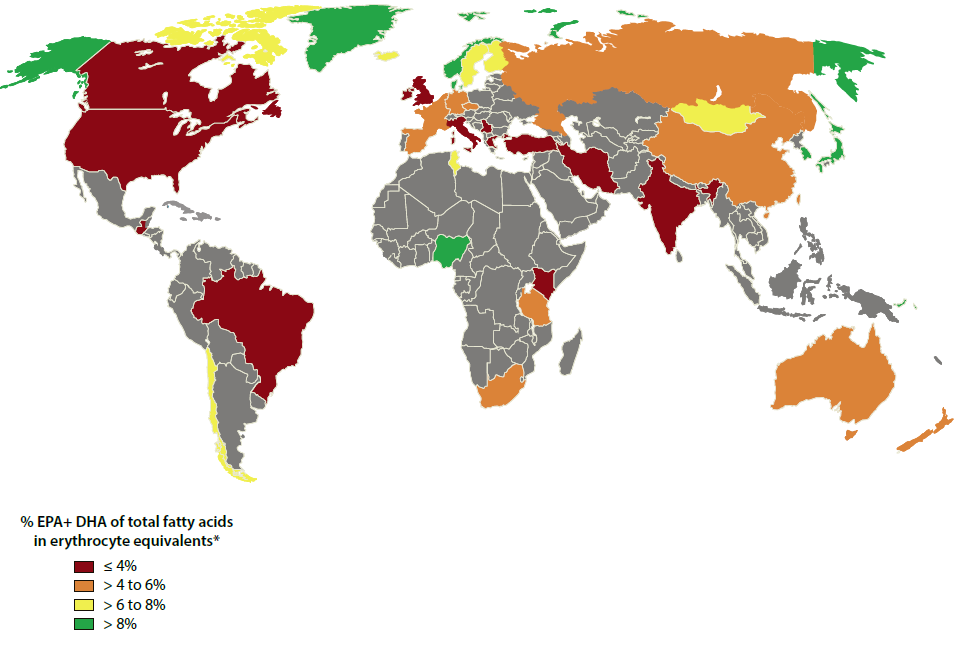
January 27, 2017 — Research reports continue to show the importance of the long-chain omega-3 fatty acids, eicosapentaenoic acid (EPA) and docosahexaenoic acid (DHA) to heart health. The problem is that many people are in the low-intake range of both EPA and DHA and are at increased risk for many chronic diseases including heart disease. A recent meta-analysis points out the strength of the evidence concerning heart disease. A research group at the Department of Epidemiology of the EpidStat Institute in Ann Arbor, MI published their results in the Proceedings of the Mayo Clinic (1). They found that subgroup analyses of data from Randomized Controlled Clinical Trials (RCT) indicated a statistically significant Coronary Heart Disease (CHD) risk reduction with EPA plus DHA provision among higher-risk populations, including participants with elevated triglyceride levels. The summary relative risk estimate (SRRE) was 0.84 which indicates a 16 percent reduced risk. The reduced risk was 14 percent (SRRE=0.86) in those with elevated low-density lipoprotein cholesterol (LDL). Meta-analysis of data from prospective cohort studies resulted in a statistically significant SRRE of 0.82 for higher intakes of EPA plus DHA and risk of any CHD event.

The researchers concluded, “Our comprehensive meta-analysis of data from RCTs and prospective cohort studies supports this recommendation. Although not statistically significant, a 6% reduced risk of any CHD event was observed among RCTs, a finding supported by a statistically significant 18% reduced risk of CHD among the prospective cohort studies. From a clinical perspective, our results indicate that EPA+DHA may be associated with reducing CHD risk to a greater extent in populations with elevated triglyceride levels or LDL cholesterol, which are risk factors that impact a significant portion of the general adult population in the United States.”


.

In 2012, I had the honor and privilege of co-authoring “The Missing Wellness Factors – EPA and DHA” with Professor Jørn Dyerberg, M.D., DMSc., the discoverer of the vital health benefits of fish oil EPA and DHA (2). Dr. Jørn Dyerberg went on five expeditions to the remote Greenland Inuits in the Arctic Circle. As we stated in Chapter Six, “(T)he take-home message of this book is that adequate amounts of the omega-3s, eicosapentaenoic acid (EPA) and docosahexaenoic acid (DHA) are needed for optimal health. Unfortunately, through the past fifty years, the amounts of EPA and DHA have decreased considerably and at an ever-increasing pace.”

Last year, an interesting study confirmed that many people worldwide may not be getting optimal levels of the EPA and DHA (3). Professor Manfred Eggersdorfer, whom we have chatted with in this column before, was close to that study and is familiar with the study and its implications.

Read the full story at Whole Foods Magazine

Danish Study Links Fish Oil During Pregnancy With Lower Asthma Risk In Kids

December 29, 2016 — Studies of fish oil and health are like studies about coffee — there’s plenty of contradictory information out there.

With that in mind, here’s the latest turn: A Danish study finds that women who took fish oil supplements during pregnancy reduced the risk of asthma in their children.

“I would say that the finding that the effect was there was maybe not the surprise, because there have been indications,” says the study’s lead researcher, Dr. Hans Bisgaard, of the University of Copenhagen. “But the magnitude was very surprising to us.”

Bisgaard is a pediatrician and runs a privately funded research enterprise called the Copenhagen Prospective Studies on Asthma in Childhood. He is not the first person to study whether fish oil supplements during pregnancy can affect asthma, but his study was large and carefully designed.

Researchers gave 2.4 grams of either fish oil capsules or olive oil capsules to more than 700 pregnant women during the third trimester of pregnancy. (Nobody knew which capsules contained the fish oil.)

They then monitored the health of the children for at least five years. And it turns out that 17 percent of the children in the fish oil group had developed persistent wheezing or asthma by the age of 5, compared with 24 percent of children in the group that got olive oil. That’s about a 30 percent reduction in cases of asthma or wheezing. (Because the Danish study included “persistent wheezing,” it’s not possible to compare these rates with asthma rates in the U.S.)

Bisgaard and his colleagues report their findings in Thursday’s New England Journal of Medicine. He says by far the biggest benefit seemed to be among babies born to women who initially had low blood levels of the lipids found in fish oil.

Read the full story at NPR

  • « Previous Page
  • 1
  • 2
  • 3
  • 4
  • Next Page »

Recent Headlines

  • Scientists did not recommend a 54 percent cut to the menhaden TAC
  • Broad coalition promotes Senate aquaculture bill
  • Chesapeake Bay region leaders approve revised agreement, commit to cleanup through 2040
  • ALASKA: Contamination safeguards of transboundary mining questioned
  • Federal government decides it won’t list American eel as species at risk
  • US Congress holds hearing on sea lion removals and salmon predation
  • MASSACHUSETTS: Seventeen months on, Vineyard Wind blade break investigation isn’t done
  • Sea lions keep gorging on endangered salmon despite 2018 law

Most Popular Topics

Alaska Aquaculture ASMFC Atlantic States Marine Fisheries Commission BOEM California China Climate change Coronavirus COVID-19 Donald Trump groundfish Gulf of Maine Gulf of Mexico Illegal fishing IUU fishing Lobster Maine Massachusetts Mid-Atlantic National Marine Fisheries Service National Oceanic and Atmospheric Administration NEFMC New Bedford New England New England Fishery Management Council New Jersey New York NMFS NOAA NOAA Fisheries North Atlantic right whales North Carolina North Pacific offshore energy Offshore wind Pacific right whales Salmon South Atlantic Virginia Western Pacific Whales wind energy Wind Farms

Daily Updates & Alerts

Enter your email address to receive daily updates and alerts:
  • This field is for validation purposes and should be left unchanged.
Tweets by @savingseafood

Copyright © 2025 Saving Seafood · WordPress Web Design by Jessee Productions