Saving Seafood

  • Home
  • News
    • Alerts
    • Conservation & Environment
    • Council Actions
    • Economic Impact
    • Enforcement
    • International & Trade
    • Law
    • Management & Regulation
    • Regulations
    • Nutrition
    • Opinion
    • Other News
    • Safety
    • Science
    • State and Local
  • News by Region
    • New England
    • Mid-Atlantic
    • South Atlantic
    • Gulf of Mexico
    • Pacific
    • North Pacific
    • Western Pacific
  • About
    • Contact Us
    • Fishing Terms Glossary

Marine Monument Economics: The Atlantic Red Crab Fishery

August 15, 2017 (Saving Seafood) — A July 25, 2017, article published by the Center for American Progress [“Big Oil Could Benefit Most from Review of Northeast Canyons and Seamounts Monument” by Michael Conathan and Avery Siciliano] made the accusation that “commercial fishing interests have spouted inflated numbers about what the economic impact of the [Northeast Canyons and Seamounts Marine National] monument designation would be.”

Accordingly, today, Saving Seafood begins a series on “Marine Monument Economics.” In the coming weeks, we will publish commentrom the fishing industry submitted to Interior Secretary Ryan Zinke and Commerce Secretary Wilbur Ross. We start with the Atlantic Red Crab fishery. Red crab is recommended by both the Monterrey Bay Aquarium’s Seafood Watch and the New England Aquarium.

Today’s comments were submitted to Secretary Zinke by Mr. Michael Carroll. Mr. Carroll is a fishery economist specializing in seafood markets and economic impacts. He is both a Statistical and Scientific Committee member and an Advisory Panel member to the Deep Sea Red Crab Fishery governed under the New England Fishery Management Council. Mr. Carroll is founder and CEO of BackTracker Inc. and VP of Fisheries and Aquaculture Vertex, both in Boston. From 2008-2012, he was the business development manager of the New England Aquarium. He is lead author of “An Analysis of the Impacts of the Deepwater Horizon Oil Spill on the Gulf of Mexico Seafood Industry” published in March 2016 by the Bureau of Ocean Energy Management. Mr. Carroll holds a bachelor’s degree in business and economics from Saint Michael’s College, and a master’s degree in environmental and natural resource economics from the University of Rhode Island.

Mr. Carroll observes that in the Atlantic red crab fishery, there “has never been any indication that overfishing has occurred or even that the stock has declined.” And that a review of the current academic literature indicates that the actual market economic values produced by the fishery have been understated, while the types of non-market values ascribed to elements of the ecosystem such as deep-sea corals, have not been included in calculating the value of the fishery.

In his comments he observes that, “An Economic Impact (or cost to the fishery) … if done properly this figure will represent value lost throughout the entire supply chain (vessel to consumer) as well as other associated losses incurred by shore side infrastructure, such as fuel, bait, ice, marine service, etc.”  But to date, the publicly-available data from NOAA “has only presented impact figures in vessel landing dollars, which is approximately understating impacts by seven times the true economic damages to the economy.”

He urges the secretary to “consider only the facts that can be demonstrated through sound peer reviewed science and proven quantifiable economic valuation methods.”

Today is the last day to submit comments to inform NOAA’s review of the Northeast Canyons and Seamounts Marine National Monument. If you have not already submitted comments, Saving Seafood encourages you to do so here.

Mr. Carroll’s comments are below:

Dear Secretary Zinke,

My name is Mike Carroll. I am a fishery economist that specializes in seafood markets and economic impacts. I am both a Statistical and Scientific Committee member and an AP member to the Deep Sea Red Crab Fishery governed under the New England Fishery Management Council. We met in Boston on June 16 at the fishery industry meeting you had at Legal Seafood.

I have deep concerns in regards to the lack of valid economic impact evidence supporting the closure of the Northeast Canyons and Seamounts to protect deep sea coral and other sea life, in effect creating economic hardship on various fisheries in the North-East Region. Specifically, I am commenting to note that the magnitude of potential impacts associated with this action on the Deep Sea Red Crab fishery are concerning and not based on peer reviewed economic valuation science.

For anyone reading my comments that are not familiar with economic impacts and economic valuation methods I will summarize some key points to remember when making decisions. For more information on this topic you can refer to the NOAA website or for more detailed input on deep sea coral please go here.

An Economic Impact (or cost to the fishery) is basically the effect of an event, policy change, in this case closure of a fishery area, on the associated economy. This is often stated in a stagnant figure that represents a yearly impact value to the business; if done properly this figure will represent value lost throughout the entire supply chain (vessel to consumer) as well as other associated losses incurred by shore side infrastructure, such as fuel, bait, ice, marine service etc… If any, NOAA has only presented cursory impact figures in vessel landing dollars, which is approximately understating impacts by 7 times the true economic damages to the economy. These figures can vary by fishery depending on the level of value added to the product as it travels down the supply chain but 7x is a good bell weather figure for now until NOAA provides us with the real figures. The important piece to note is these are real tangible values of loss to fisherman and our shore side community that are very measurable.

Often there is confusion by fishery managers about how to interpret economic impacts. All too often they think the decision should be made based on the relative impact to the industry but in reality, the decision should be made according to the net economic value the policy change will provide. Economic value is based on a basic calculation of how much benefit does the policy decision generate vs how much does the policy decision cost or the Economic Impact to the industry, therefore simply stated:

Economic Value = Benefit (value of corals) – Cost (value lost is the fishery or Economic Impact)

If the policy change produces a net positive economic value, then it should be perceived as good for our nation as a whole, whereas if it is negative, not good for our nation as a whole.

Now let’s look at how we value the benefit of the deep-sea coral. In the literature, there is mention of market values and values to the ecosystem which could someday be measurable but as it is today neither of these values are relevant to economic value or should be referenced without peer reviewed research that shows relative quantitative figures. True market values for corals are basically irrelevant considering it is not legal to harvest and sell corals for any purpose. The ecosystem value is something we all want to understand more about but arguably no true linkages have been proven where we can estimate the economic value they represent. Current studies indicate that deep sea coral is considered “Facultative Habitat” and not “Essential Fish Habitat,” therefore the absence of this habitat does not result in extinction of the species in question.

There has been considerable mention of market values, such as the value associated with people viewing deep sea coral on the Discovery Channel, and the revenue generated from this represents a true market value for preservation of the coral. Well, I agree completely, that is a true market value but what about the market value associated with the preservation of the fisherman. How much money do you think the Deadliest Catch or other commercial fishing shows on the Discovery Channel generate? I am not sure, but it definitely generates more than deep sea coral viewing shows. If this value is being represented on one side of the value equation (coral value) why is it not represented on the other side (fishery value)?

The value or benefits associated with deep sea coral for all intents and purposes are considered non-market values which are calculated based on value derived by people’s desire for them to exist. Non-market values are soft values based on what people say they are willing to pay or prefer given a set of choices. These values are often criticized because they frequently overstate true values of what people will actually pay in a real market environment. The use of the term existence value, which you see throughout the literature presented, often refers to these non-market valuation methods which may be useful to determine people’s preference but is grossly inadequate in determining value.

Everyone you met in Boston on June 16 cares about setting up a certain level of protections for these deep-sea corals. I would even go to the extent that we may be able to come to mutual agreement on certain zones that would optimize protection of coral while causing minimal impact to the fishery. As a US regulator, I would urge you to consider only the facts that can be demonstrated through sound peer reviewed science and proven quantifiable economic valuation methods. The impacts of these offshore closures on the deep sea red crab fishery and other offshore fisheries are substantially greater than benefits generated by the coral conservation measure being carried out. Even if you were to consider down the road that there could be increased ecosystem values, a decision to close this area to the deep sea red crab fishery is not a fair and equitable decision. It makes no reasonable sense to implement measures that would create impacts that would affect such a large portion of this fishery. This is a small fishery that has been harvested responsibly and made every effort to participate in discussions and share information. It is an exceptional fishery in the United States in that it is very environmentally sound and has gone through the MSC certification process. I would argue if these National Monument protections must go into place for political or legal reasons, regardless of the unsubstantiated economic valuation equation, the deep sea red crab fishery should be exempt from this rule based on sheer economic hardship.

Best Regards,
Michael Carroll

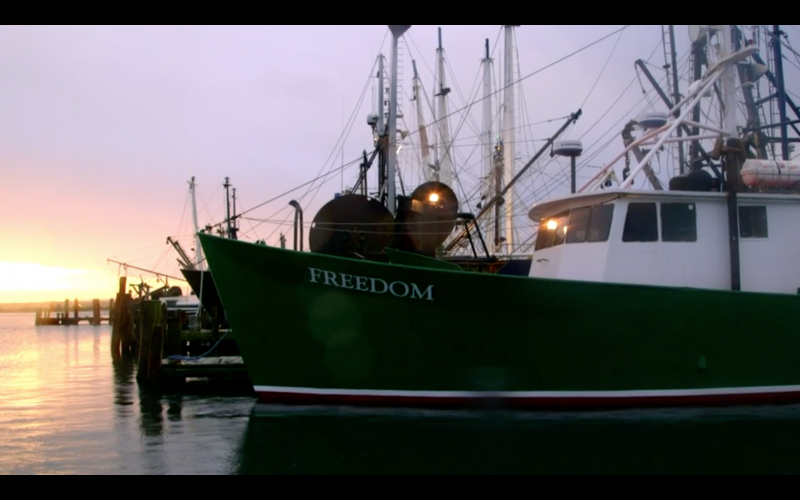
BBC: Meet the fishermen beached by Obama

August 14, 2017 — Today, the BBC published a short video by journalist Charlie Northcott in which several fishermen discuss how they have been impacted by the designation of the Northeast Canyons and Seamounts Marine National Monument. The monument, located off the coast of New England, was created by President Obama in the fall of 2016 using executive authority under the Antiquities Act. NOAA is currently reviewing the monument as part of President Trump’s order to review all national monuments created since 1996.

Tomorrow is the last day to submit comments to inform this review. If you have not already submitted comments, Saving Seafood encourages you to do so here.

Watch the video at BBC News

Read about the monument designation at the Boston Globe

Read about Interior Secretary Ryan Zinke’s recent meeting with New England fishermen at the Boston Globe

Review renews debate over first Atlantic marine national monument

August 7, 2017 — BOSTON — During his eight years in office, former President Obama protected more than 550 million acres of public land and water as national monuments under the 1906 Antiquities Act. Unlike creating a national park, which requires an act of Congress, a president can declare a national monument to protect “objects of historic or scientific interest” with a proclamation.

Critics of the monument say President Obama overstepped the powers set forth by the Antiquities Act and did not provide enough opportunity for public comment. In April, President Donald Trump signed an executive order asking his Secretary of the Interior, Ryan Zinke, to conduct a review of 27 monuments created since 1996. The purpose of the review is to determine if these monument areas qualify under the terms of the act and to address concerns from the community.

Two days later, Trump signed another executive order outlining his “America-First Offshore Energy Strategy.” The plan demonstrates Trump’s vision for the exploration and production of energy on federal lands and waters to decrease America’s dependence on foreign energy.

Fishing industry’s concerns

Captain Fred Penney, a lobsterman out of Boston Harbor, believes that the monument will hurt the future of fishing in New England because the new restrictions were implemented without much input from the fishermen themselves.

“To have no regulations and have it be a free-for-all, that’s completely unacceptable, I understand that,” he said. “I wouldn’t want to see that. But what they’re doing now doesn’t seem to be it.”

Many in the industry felt fishing in the area should have been regulated under the Magnuson- Stevens Fisheries Conservation and Management Act, which created eight regional fishery management councils to maintain sustainable fisheries and habitats in the U.S.

The councils are divided up by region, including the New England, Mid-Atlantic and South- Atlantic councils on the East Coast. Each council sets regulations for certain fisheries such as limiting catch size, issuing permits and monitoring fishing equipment.

Fishermen argue the council’s lengthy public process is more transparent than a proclamation from the president and allows for more input from the community.

Jon Williams of the Atlantic Red Crab Company said the fishermen were not given much notice about meetings and the scope of the monument. He argued the area was thriving under the council’s management before the monument designation.

“We’d been in there for 40 years and if it’s… pristine now, after our presence for 40 years, why is there an emergency for the president to use an act to protect this thing?” Williams said. “Why not give it to the council and let the council do its job?”

Before the Obama administration announced the monument, the New England Fishery Management Council was working on a coral amendment that would protect deep sea corals, one of the goals of the monument. The South and Mid Atlantic Councils passed similar regulations years earlier.


Read the full story at The Groundtruth Project

Trump Administration Decision Signals Possible Shift In Fishing Regulations

August 1, 2017 — When it comes to regulatory issues, the fishing industry often finds itself facing off against environmentalists. And some recent moves by the Trump administration seem to be leaning more in the direction of siding with fishermen.

The Atlantic States Marine Fisheries Commission (ASMFC), the regulatory body that sets the rules for the fishing industry, is meeting this week, and one of the topics of conversation is a recent decision regarding fishing in New Jersey.

The ASMFC said the population of summer flounder – also known as fluke –has been declining since 2010 and is at serious risk. So the commission reduced limits on how much could be caught. New Jersey came up with alternative plan which the state asserted would protect the fish, while still allowing more fishing. But the fisheries commission rejected the New Jersey plan, saying too many fish would be caught, and that it would be bad for the population.

Ordinarily, the federal government listens to the commission’s recommendations. But last week, the U.S. Department of Commerce rejected its recommendation, allowing New Jersey to go ahead with its plan. The ASMFC says this is the first time since passage of the Atlantic Coastal Fisheries Cooperative Management Act in 1993 and the Atlantic Striped Bass Conservation Act in 1984 that the secretary of commerce rejected a noncompliance recommendation by the commission.

“I do think it’s healthy for the administration to not simply rubber stamp everything that is done by these commissions, but rather have an actual role in it,” said Bob Vanasse, executive director of an industry group called Saving Seafood. “And I do think that elections matter,” he said.

Vanasse said this is an example of Trump administration listening to the fishing industry.

“I think there’s definitely been a shift in how the commercial fishing industry, how their issues are being addressed by this administration,” he said. “And I think, frankly, it’s a mistake to think it’s some kind of right-wing, Trump administration, erroneous action. I think it’s actually, overall, positive.”

Vanasse said another example of that positive impact is the federal review that’s happening now of national monuments, including Northeast Canyons and Seamounts Marine National Monument, which is about 130 miles off the coast of Cape Cod. The Obama administration designated it an offshore monument near the end of his presidency, closing it off to a lot of fishermen.

Vanasse said the Trump administration’s review of that monument designation is an example of something that’s being handled responsibly by people who have careers in this area — not just political appointees.

Read and listen to the full story at WGBH

Group votes to protect some Atlantic corals, balk on others

June 22, 2017 — A federal panel voted on Thursday to offer new protections to some deep-sea corals in the Atlantic Ocean but held off on protecting others so it can get more information first.

The New England Fishery Management Council proposals focus on corals in two key fishing areas — the Gulf of Maine and south of Georges Bank off the Massachusetts coast — and have been the subject of debate among environmentalists and fishing groups for months.

“The goal is to protect as much coral as you can while minimizing impact on various industries that are fishing near the corals,” said John Bullard, a regional administrator for the National Marine Fisheries Service and a member of the fishery council.

The proposals to protect the corals would need to be approved by the federal Department of Commerce.

New England’s corals grow in areas such as along underwater canyons and seamounts and provide habitat for marine life including sea turtles and fish. President Barack Obama protected one area last year as the Northeast Canyons and Seamounts Marine National Monument.

Read the full story from the Associated Press at the San Francisco Chronicle

Review of Northeast marine monument underway as Interior Secretary Ryan Zinke visits Boston

June 20, 2017 — Secretary of the Interior Ryan Zinke completed a trip to the U.S. Northeast as part of a review of recently created U.S. national monuments, including the controversial Northeast Canyons and Seamounts Marine National Monument.

Zinke is in the process of reviewing all national monuments designated in the past 21 years as part of an executive order signed by President Donald Trump in April.

“Right now, I’m in the information collection stage, so everything is on the table,” Zinke told the Boston Globe during his visit.

On Friday, 16 June, Zinke met with representatives of the commercial fishing industry affected by former president Barack Obama’s designation of the 4,000-square-mile marine monument located more than 100 miles off the coast of Cape Cod, in September 2016. The designation immediately outlawed most commercial fishing in the monument, with the exception of lobster and crab fishing, which will be phased out over the next six years.

Meghan Lapp of Seafreeze, Ltd., which previously fished for squid, mackerel, and butterfish in the area where the monument now exists, told Zinke her company had already lost hundreds of thousands of dollars, according to the Globe. She, as well as Beth Casoni, the executive director of the Massachusetts Lobstermen’s Association, and others present at the meeting, said there was a lack of communication by the federal government in making the designation that had hurt their businesses.

“No one person should have the authority to sign Americans out of work,” Casoni said, according to the Globe.

The fishermen present were hoping to persuade Zinke to shrink or eliminate the monument, and Zink appeared sympathetic, the newspaper reported.

“When your area of access continues to be reduced and reduced … it just makes us noncompetitive,” Zinke said. “The president’s priority is jobs, and we need to make it clear that we have a long-term approach to make sure that fishing fleets are healthy.”

Read the full story at Seafood Source

Concerns aired about marine monument

June 21, 2017 — Editor’s Note:

Fishing groups have widely criticized the Obama Administration’s marine monument designation process as opaque, and argued that administration officials did not adequately address concerns raised. Conversely, in this Cape Cod Times article, Priscilla Brooks, Vice President and Director of Ocean Conservation at the Conservation Law Foundation, claimed that the Obama administration adequately took fishermen’s concerns into account before designating the Northeast Canyons and Seamounts Marine National Monument.

Ms. Brooks said this was evidenced by the administration’s decision to reduce the size of the monument by 60 percent from the original proposal.

However, there was never an official Atlantic marine monument proposal from the Obama administration. Fishermen, elected officials, regulators, and concerned shoreside businesses were not apprised of the specifics of the Obama Administration’s monument plan until the final shape of it was shared just days and hours before it was announced.

The environmental community, including the Conservation Law Foundation, provided a proposal to the Administration, which officials referred to at times in meetings, but always with the caveat that the environmentalist proposal was not an official Administration proposal. At no time before the announcement was imminent did the commercial fishing community have any idea of what action the Administration might take.

It is possible that Ms. Brooks was stating that the monument eventually proposed by the Obama Administration was reduced by 60 percent from the plan that CLF and other environmental groups proposed. Commercial fishermen were apprehensive about the relationship between the Administration and the environmental community with due cause, since in 2015 environmental activists attempted to push a monument designation through the Administration in secret before the Our Ocean conference in Chile.

Ms. Brooks also claimed that “there was a robust public process.”

In the lead-up to the 2016 monument designation, there was one public meeting in Rhode Island where fishermen were allowed just 2 minutes to talk.

There were a number of subsequent meetings in fishing ports, and in the White House complex. But those who attended those meeting largely felt their views were being ignored. In fact, many of them participated in the recent meeting with new Secretary of the Interior Ryan Zinke.

In July 2016, Eric Reid, General Manager at Seafreeze, who participated in both regional and White House meetings wrote, “No one in the Obama administration’s Council on Environmental Quality has put forward an actual, concrete proposal of what an Atlantic monument might look like.” He added, “The uncertain and opaque nature of the process that has so far surrounded the potential marine monument has left fishermen with no idea as to what areas and which fisheries will be affected, nor which activities will be prohibited.”

BOSTON — Fishing groups from around New England met with Interior Secretary Ryan Zinke on Friday to air complaints about former President Barack Obama’s designation of the Northeast Canyons and Seamounts Marine National Monument last year.

The monument, the first marine national monument in U.S. Atlantic waters, protects about 4,000 square miles of ocean 150 miles southeast of Cape Cod.

Fishermen say the protected area in which fishing is prohibited hurts their business and places an undue burden on an already heavily regulated industry. But scientists say the area, which is home to hundreds of species of marine life and fragile coral, is an important natural resource that must be protected.

In his proclamation creating the marine monument, Obama prohibited fossil fuel or mineral exploration, all commercial fishing, and other activities that could disturb the sea floor. Scientific research is allowed with a permit. Commercial red crab and lobster fishermen have to phase out their operations within the monument area over the next seven years.

During their meeting with Zinke at Legal Sea Foods on Boston Harbor, fishermen and industry representatives asked the secretary to consider dissolving the monument or changing the regulations within its boundaries and complained about the way it was originally designated.

“As an American, this brought me to tears at my desk,” said Beth Casoni, executive director of the Massachusetts Lobstermen’s Association. “No one should have the power to sign people out of work.”

Some commercial fishermen said they felt the former administration did not take their concerns into account before designating the monument.

“Even though we were allowed minimal — and that’s an understatement — input, we received mostly lip service,” said Eric Reid, general manager of Seafreeze Shoreside in Narragansett, Rhode Island. “Small businesses like me that need stability to grow their business and invest in America are at risk. We can make America and commercial fishing great again.”

But Priscilla Brooks, vice president and director of ocean conservation at the Conservation Law Foundation, said the former administration did take fishermen’s concerns into account. Obama reduced the size of the original proposed monument by 60 percent and allowed lobster and crab fishermen a seven-year grace period to continue fishing there.

“There was a robust public process,” she said.

Read the full story at the Cape Cod Times

SEAN HORGAN: Interior Secretary visits, talks lobsters, monuments

June 18, 2017 — It certainly was a happening time in Boston this past weekend, what with the Sail Boston 2017 spectacle out in the harbor and beyond, as well as Dead & Company doing two nights at Fenway Park, Father’s Day and the royal visit by new Interior Secretary Ryan Zinke on Friday.

The visit by Zinke, who was on a four-day New England jaunt that included a tour of the Katahdin Woods and Waters National Monument in Maine, merely ratcheted up the already incendiary debate over the means used to designate the monuments and the value of the monuments themselves.

The Obama administration earlier removed Cashes Ledge, which sits about 80 miles off of Gloucester, from consideration as a possible site for the new national marine monument, so the local debate now centers on the Northeast Canyons and Seamounts Marine National Monument.

The monument, which encompasses roughly 4,900 square miles in an area south of Cape Cod, was designated last year by the Obama administration through the use of the Antiquities Act.

Now the Trump administration is reviewing all of the national monument designations since 1996 that cover more than 100,000 acres with an eye toward potentially reversing some or all.

On Friday, Zinke met with U.S Fish and Wildlife Service officials and officials from the New England Aquarium about marine wildlife around the monument. He then held a listening session with lobstermen and fishermen about the impact of the monument designation on their industry.

Meanwhile, a coalition of environmental groups held a rally at the Statehouse supporting the monument designations and urging the current administration to retain the protected areas.

This has evolved into an absolute zero-sum game and the divisions in this debate seem almost insurmountable. It’s hard to imagine anyone on either side willing to drop their swords in the name of compromise. They’re just too dug in.

Read the full opinion piece at the Gloucester Times

Interior secretary visits Mass. to review marine monument

June 19, 2017 — Editor’s Note: At the request of the Department of the Interior, Saving Seafood’s National Coalition for Fishing Communities helped facilitate a meeting between Interior Secretary Ryan Zinke and over 20 representatives of the commercial fishing industry. The meeting also included staff members from the offices of Senators Elizabeth Warren (D-MA), Ed Markey (D-MA), and Sheldon Whitehouse (D-RI):

Capping off a four-day New England tour, US Secretary of the Interior Ryan Zinke visited Boston Friday to meet with local scientists and fishermen in his review of the East Coast’s only — and highly controversial — marine monument.

The Northeast Canyons and Seamounts Marine National Monument, located approximately 130 miles off the coast of Cape Cod, covers more than 4,000 square miles. It includes three underwater canyons and four seamounts — mountains rising from the ocean floor —housing dozens of deep-sea corals and several species of endangered whales.

Former president Barack Obama proclaimed the area the country’s first marine national monument in the Atlantic Ocean in September 2016. The Antiquities Act, signed into law in 1906 by national parks champion Theodore Roosevelt, grants presidents unilateral authority to establish national monuments on federal land.

But now, under President Trump, the fate of the underwater zone is in doubt.

Trump signed an executive order in April directing Zinke to review all national monuments designated over the past 21 years, calling the practice of using executive authority to designate such monuments an “abusive practice.”

Zinke met with scientists from the New England Aquarium and the Massachusetts marine monument’s superintendent from the US Fish and Wildlife Service in the morning, before heading to a roundtable with local fishermen.

“Right now, I’m in the information collection stage, so everything is on the table,” Zinke said.

Read the full story at the Boston Globe

Interior secretary set to visit Boston as enviros launch marine monument campaign

June 16, 2017 — When Interior Secretary Ryan Zinke visits the Boston area on Friday, environmentalists plan to greet him by rallying for the preservation of national monuments that are under review by the Trump administration.

The former Montana congressman has an 11 a.m. press event at a Legal Sea Foods location, according to his office. The Bay State visit could also afford the interior secretary a chance to meet with the state’s top Republican, Gov. Charlie Baker, although nothing has been announced.

The fishing industry opposed President Barack Obama’s 2016 designation of the Northeast Canyons and Seamounts Marine National Monument on a roughly 4,900 square-mile area south of Cape Cod. The Obama administration had earlier removed Cashes Ledge, which sits about 80 miles off of Gloucester, from consideration as a possible site for the new national marine monument.

State Energy and Environmental Affairs Secretary Matt Beaton told the News Service in May that he hopes there will be modifications to the Seamounts monument, which restricts fishing in the area about 150 miles off the coast of Cape Cod, but did not specify his preferences.

Environmentalists worry the review ordered by President Donald Trump in April could be a precursor to rolling back restrictions on natural lands and waters.

According to a Zinke press aide, the secretary on Friday will meet with a U.S. Fish and Wildlife Service officials and officials from the New England Aquarium about marine wildlife around the monument. The secretary will then attend a roundtable meeting with lobstermen and fishermen about the impact of the monument designation on their industry.

Read the full story at the Gloucester Times

  • « Previous Page
  • 1
  • …
  • 11
  • 12
  • 13
  • 14
  • 15
  • …
  • 18
  • Next Page »

Recent Headlines

  • How EPA challenged Maryland offshore wind project
  • MASSACHUSETTS: Sunken Gloucester fishing boat: Will the Lily Jean and its crew ever be recovered?
  • US lawmakers ask government to provide financial aid for shellfish sector
  • FLORIDA: Florida’s space industry is confronting very earthly worries
  • Feds appeal ruling that voided Trump’s Day One anti-wind memo
  • Legal tug-of-war over wind energy in Mass. continues with Trump admin challenge
  • MASSACHUSSETTS: Authorities are using deep-sea tech to try to find the sunken fishing boat off Massachusetts
  • Starfish, moon snails and squid: Researchers work to give scallop boats new purpose

Most Popular Topics

Alaska Aquaculture ASMFC Atlantic States Marine Fisheries Commission BOEM California China Climate change Coronavirus COVID-19 Donald Trump groundfish Gulf of Maine Gulf of Mexico Illegal fishing IUU fishing Lobster Maine Massachusetts Mid-Atlantic National Marine Fisheries Service National Oceanic and Atmospheric Administration NEFMC New Bedford New England New England Fishery Management Council New Jersey New York NMFS NOAA NOAA Fisheries North Atlantic right whales North Carolina North Pacific offshore energy Offshore wind Pacific right whales Salmon South Atlantic Virginia Western Pacific Whales wind energy Wind Farms

Daily Updates & Alerts

Enter your email address to receive daily updates and alerts:
  • This field is for validation purposes and should be left unchanged.
Tweets by @savingseafood

Copyright © 2026 Saving Seafood · WordPress Web Design by Jessee Productions