Saving Seafood

  • Home
  • News
    • Alerts
    • Conservation & Environment
    • Council Actions
    • Economic Impact
    • Enforcement
    • International & Trade
    • Law
    • Management & Regulation
    • Regulations
    • Nutrition
    • Opinion
    • Other News
    • Safety
    • Science
    • State and Local
  • News by Region
    • New England
    • Mid-Atlantic
    • South Atlantic
    • Gulf of Mexico
    • Pacific
    • North Pacific
    • Western Pacific
  • About
    • Contact Us
    • Fishing Terms Glossary

NOAA asks for help locating stranded sea turtles

August 30, 2021 — Federal ocean managers are asking beachgoers in New England and elsewhere to keep an eye out for stranded turtles.

The National Oceanic and Atmospheric Administration’s Greater Atlantic Regional Fisheries Office said several species of sea turtle will still be in the area for a few months. Healthy sea turtles normally should not be out of the water in the region, the office said.

The office asked anyone who sees a turtle on the beach to report it. Species that could be spotted include loggerhead, leatherback, green and Kemp’s ridley sea turtles, the office said.

Read the full story at the Associated Press

Stakeholder Engagement Meeting for American Plaice Stock Assessment

August 30, 2021 — The following was released by NOAA Fisheries:

Improving Assessments for American Plaice

The American Plaice Working Group will be hosting a stakeholder engagement meeting in Gloucester, MA, on Friday, September 24th, from 10 AM – 1 PM.  You can also participate through Webex. This meeting link will be sent to your email upon registration.

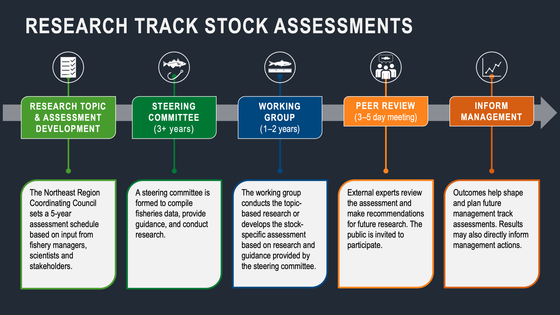
The meeting will begin with a presentation on the American plaice Research Track Assessment process with a focus on fishery data, survey data, and a review of previous stock assessments. An open discussion will follow with time for questions and comments on the fishery and survey data, research track process including methods and timeline, or any other input or questions. The working group is specifically interested in getting on the water experience from stakeholders.

If you would like to register for the stakeholder meeting (either virtual or in-person) please RSVP here no later than Thursday, September 23rd.

Fisheries Stock Assessments Research Track

NOAA Asks for Help Locating Stranded Sea Turtles in New England

August 30, 2021 — Federal ocean managers are asking beachgoers in New England and elsewhere to keep an eye out for stranded turtles.

The National Oceanic and Atmospheric Administration’s Greater Atlantic Regional Fisheries Office said several species of sea turtle will still be in the area for a few months. Healthy sea turtles normally should not be out of the water in the region, the office said.

The office asked anyone who sees a turtle on the beach to report it. Species that could be spotted include loggerhead, leatherback, green and Kemp’s ridley sea turtles, the office said.

Read the full story from the Associated Press at NBC Boston

HAWAII: Non-profit receives funding to reduce marine debris, protect sea turtles, seabirds, and monk seals

August 27, 2021 — Hawaii Sea Grant and Hawaii Marine Animal Response (HMAR), the largest Hawaii- based marine species response and conservation non-profit organization has announced it received a $50k funding.

The funding from NOAA Sea Grant and the NOAA Marine Debris Program is to address the devastating impacts of marine debris in the coastal environment, one of the leading causes of injury and death for sea turtles, seabirds, and Hawaiian monk seals.

“We are pleased to partner with NOAA Sea Grant to provide support for projects that will help stop trash and fishing gear at their source,” stated NOAA Marine Debris Program Director Nancy Wallace.

The funding announced Thursday is one of six new, creative projects to tackle marine debris challenges across the country awarded to Sea Grant programs in Hawai‘i, Florida, Georgia, Illinois-Indiana, Puerto Rico, and Wisconsin

Read the full story at KITV

Right Whale Use of Southern New England Wind Energy Areas Increasing

August 27, 2021 — Southern New England habitat is important to the North Atlantic right whale. With offshore wind energy development planned in the region, working with stakeholders to minimize potential impacts on right whales and other protected species is crucial.

Right whales are increasing their use of southern New England waters, including regions slated for offshore wind energy development, according to aerial survey data collected during the last decade. Offshore wind energy installations are proposed in waters off the south coasts of Massachusetts and Rhode Island. Understanding and minimizing the potential impacts from construction noise, increased vessel traffic, and habitat alteration will be crucial to protecting and conserving this endangered species. This research supports the Administration’s goal of deploying offshore wind while protecting biodiversity and promoting ocean co-use.

The study was published July 29 in Endangered Species Research. Marine mammal researchers from NOAA Fisheries and colleagues at the New England Aquarium and the Center for Coastal Studies examined aerial survey data collected between 2011–2015 and 2017–2019. The data was collected in offshore waters including the Massachusetts and Rhode Island Wind Energy Area. The data from these two time periods were used to quantify right whale distribution, residency, demographics, and movements in the region.

“We found that right whale use of the region increased during the last decade, and since 2017 whales have been sighted there nearly every month, with large aggregations occurring during the winter and spring,” said Tim Cole, lead of the whale aerial survey team at the Northeast Fisheries Science Center and a co-author of the study.

Read the full story at Eco Magazine

NOAA Fisheries Names Kim Damon-Randall to Lead the Office of Protected Resources

August 27, 2021 — The following was released by NOAA Fisheries:

Today, NOAA Fisheries announced Ms. Kim Damon-Randall as the director of the Office of Protected Resources. She will assume her new duties on August 29. Ms. Damon-Randall began her career with NOAA in 2001, serving in a series of positions at the Greater Atlantic Regional Office. Her roles have included heading the Endangered Species Branch and Assistant Regional Administrator for Protected Resources. Most recently, she has served as GARFO’s Deputy Regional Administrator. She succeeds Ms. Donna Wieting who retired in March.

“Kim is a great choice for this position,” said NOAA Fisheries’ Assistant Administrator Janet Coit. “She has the right skills and experience to drive us forward in the conservation, recovery, and management of protected marine species, one of our core mission areas at NOAA Fisheries.”

In her new role, Ms. Damon-Randall will head the agency’s Office of Protected Resources, which focuses on:

  • Endangered Species Conservation and Recovery—Responsible for the conservation, protection, and recovery of more than 150 endangered and threatened marine species under the Endangered Species Act
  • Marine Mammal Conservation and Management—Responsible for the conservation, management, and protection of whales, dolphins, porpoises, seals, and sea lions under the Marine Mammal Protection Act
  • Sea Turtle Conservation and Management—Leads the conservation and recovery of sea turtles in the marine environment for NOAA
  • Marine Life Health and Stranding Response—Responsible for coordinating networks of professional, authorized individuals and organizations to respond to reports of sick, injured, entangled, or dead marine animals
  • Permitting and Authorizations—Issues permits and authorizations for important activities that are compliant with the ESA and the MMPA
  • Consultations with Federal Agencies under the ESA—Conducts federal agency consultations on activities that may affect endangered and threatened species or their habitats are required under section 7 of the ESA
  • Funding and Grant Support—Manages several grant programs that fund projects that assist us with the agency’s mission, including Species Recovery Grants (to states and tribes) and the John H. Prescott Marine Mammal Rescue Assistance Grant Program

Ms. Damon-Randall has extensive experience in the conservation, recovery, and management of protected species. She has worked on issues ranging from responding to petitions to list species under the Endangered Species Act to designating critical habitat. She has coordinated focused outreach efforts to raise awareness about threats to endangered species through initiatives such as the International Year of the Salmon and Species in the Spotlight campaigns.

“Kim has already helped us grapple with some of the most difficult species recovery issues the agency faces on a regional level, including North Atlantic right whale and Atlantic salmon. That experience will serve her well in her new job,” said NOAA Fisheries’ Deputy Assistant Administrator for Regulatory Programs, Sam Rauch.

In her previous roles at the agency, she has managed budgets and worked to streamline the agency’s response to consultations under the Endangered Species Act. She is the Federal Commissioner and Head of the United States Delegation to the North Atlantic Salmon Conservation Organization. She is currently serving as the organization’s vice president.

“Serving as the Director of the Office of Protected Resources is my dream job. Protected species conservation and recovery has always been near and dear to my heart, and I am very much looking forward to working with the incredibly dedicated and talented staff in the office on the important issues and challenges facing species in the United States,” said Damon-Randall.

Before joining the agency in 2001, Ms. Damon-Randall worked on marine conservation and outreach at the Norwalk Maritime Aquarium and J.L. Scott Marine Education Center.

She has a Bachelor’s degree in biology and a Master’s degree in Marine Affairs, both from the University of Rhode Island.

Ms. Damon-Randall is originally from Deep River, Connecticut. As a child, she used to visit the Mystic Aquarium in Mystic, Connecticut, on a regular basis. She actually met her idol—the Shark Lady herself, Dr. Eugenie Clark—when she did a presentation on sharks at the Aquarium. Kim is married and has two children: her son is a U.S. Marine and her daughter is a freshman at Suffolk University in Boston.

NOAA Fisheries Announces Illex Squid Directed Fishery Closure

August 26, 2021 — The following was released by NOAA Fisheries:

Effective August 30

NOAA Fisheries is closing the directed Illex fishery in federal waters through the end of the fishing year, December 31, 2021.

Effective at 0001 hour on August 30, 2021, vessels are prohibited from fishing for or landing more than 10,000 lb of Illex squid per trip in or from federal waters through December 31, 2021. Vessels may not land Illex squid more than once per calendar day.

Landings information analyzed by NOAA Fisheries projects the Illex squid fishery will meet 94 percent of the annual quota for the 2021 fishing year on August 30,2021.

If you have started a trip prior to August 30, 2021, you may offload and sell more than 10,000 lb of Illex squid from that trip, as long as the vessel entered port before 0001 hr on August 30, 2021.

For more information, please read the notice as filed in the Federal Register, and our permit holder bulletin.

Read the full release here

‘No easy answers’ WHOI building project designed for sea-level rise

August 26, 2021 — The Woods Hole Oceanographic Institution is one of the leading organizations focused on ocean research, exploration and education. Its vessels roam the world’s oceans, their researchers explore the deepest oceanic canyons and the shallows of a salt marsh.

For an institution that has experienced, researched and documented the impacts of climate change on the ocean, it follows that when it contemplated building a new $100 million dock and waterfront support facilities, WHOI would incorporate sea-level rise into their planning.

“This is critical infrastructure to what we do,” said Rob Munier, WHOI vice president for marine facilities and operations. “Others can contemplate alternatives, including retreat (from the waterfront), but we have to be there. It’s part of our ability to do our mission.”

Read the full story at the Cape Cod Times

Six Ways Fishermen Keep Shark Fishing Sustainable

August 26, 2021 — The following was released by NOAA Fisheries:

U.S. shark fisheries are among the most sustainably managed commercial and recreational fisheries in the world. Here are six things fishermen do to help help us maintain a sustainable shark fishery:

1. Have the Proper Permits

Fishermen need a federal fishing permit to fish for sharks. These permits, issued by NOAA Fisheries, help us communicate and enforce regulations and monitor how many sharks are caught.

2. Follow Bag and Size Limits

Commercial fishermen follow annual catch limits, gear restrictions, closed areas, and retention limits when fishing for sharks. The recreational shark fishery also has bag and size limits. These limits maintain the sustainability of the shark fishery by controlling the harvest. Minimum size limits protect many juvenile sharks from harvest and ensure they have the opportunity to mature and reproduce.

3. Use Circle Hooks

Fishermen use circle hooks when using their rod and reel or longline fishing gear to catch sharks. Circle hooks increase the chance of hooking a shark in the jaw instead of the gut. This reduces injury to the shark’s internal organs and increases their chance of survival when released. A shark that is hooked in the jaw is easier and safer to dehook. The only exception to using circle hooks is when recreational anglers are fishing with artificial lures or flies.

4. Fins Attached

Fishermen land sharks with their fins still attached. This prevents the cruel and wasteful practice of finning, which has been banned in the United States since 2000. Only sharks landed under the strict and sustainable commercial restrictions mentioned above may have their fins removed and sold after landing.

5. Identify Shark Species 

Commercial fishermen that use longline or gillnet gear are required to attend Handling and Release workshops where they learn which species they can keep and how to release those that are prohibited (including learning about the best ways to release sea turtles and marine mammals). Recreational fishermen are also trained in Catch and Release Best Practices so they know how to handle and safely release sharks. There are more than 20 prohibited shark species in the Atlantic and Gulf of Mexico. If a fisherman accidentally hooks a prohibited species, they release them in a manner that enhances survival. Both commercial and recreational fishermen use shark identification guides to help identify which sharks they are catching

6. Report Catch

Fishermen report their catch through various programs, including:

  • Commercial fishing logbooks
  • Electronic reporting technologies
  • Recreational fishing surveys of catch

Commercial landings are also reported through dealer reports.

Collecting information on catch and landings helps assure the sustainability of the shark fishery. The data from these programs are essential to support stock assessments that determine how much harvest a fishery can support and whether current harvest levels are within sustainable limits.

Feds eye new rules to protect right whales from fishing gear

August 26, 2021 — Federal ocean regulators are considering new rules to protect endangered North Atlantic right whales from fishing gear.

The whales number only about 360 and are vulnerable to entanglement in the gear. Most of the government’s efforts to protect them has focused on regulating gear used to harvest lobsters and Jonah crabs.

The National Oceanic and Atmospheric Administration said it is working on a new phase of rules that will focus on other fisheries, including those that use gillnets and those that use traps and pots. Lobster and crab gear in the primary threat to the whales, but they are also vulnerable to gear used to harvest fish, conch and other valuable species, said Allison Ferreira, a spokeswoman for the agency.

Read the full story at the Associated Press

  • « Previous Page
  • 1
  • 2
  • 3
  • 4
  • …
  • 259
  • Next Page »

Recent Headlines

  • New analysis: No, scientists didn’t “recommend” a 54% menhaden cut
  • The Wild Fish Conservancy’s never-ending lawsuits
  • Delaware judge pauses US Wind appeal in wake of new law
  • Wild Fish Conservancy and The Conservation Angler sue over Columbia River hatcheries
  • NOAA Fisheries Re-Opens Comment Period on Restoring American Seafood Competitiveness
  • BOEM to consider revoking New England Wind 1 approval
  • Tool Uses NASA Data to Take Temperature of Rivers from Space
  • ALASKA: Terry Haines/Kodiak Daily Mirror: Report cards for sablefish and cod stocks

Most Popular Topics

Alaska Aquaculture ASMFC Atlantic States Marine Fisheries Commission BOEM California China Climate change Coronavirus COVID-19 Donald Trump groundfish Gulf of Maine Gulf of Mexico Illegal fishing IUU fishing Lobster Maine Massachusetts Mid-Atlantic National Marine Fisheries Service National Oceanic and Atmospheric Administration NEFMC New Bedford New England New England Fishery Management Council New Jersey New York NMFS NOAA NOAA Fisheries North Atlantic right whales North Carolina North Pacific offshore energy Offshore wind Pacific right whales Salmon South Atlantic Virginia Western Pacific Whales wind energy Wind Farms

Daily Updates & Alerts

Enter your email address to receive daily updates and alerts:
  • This field is for validation purposes and should be left unchanged.
Tweets by @savingseafood

Copyright © 2025 Saving Seafood · WordPress Web Design by Jessee Productions