Saving Seafood

  • Home
  • News
    • Alerts
    • Conservation & Environment
    • Council Actions
    • Economic Impact
    • Enforcement
    • International & Trade
    • Law
    • Management & Regulation
    • Regulations
    • Nutrition
    • Opinion
    • Other News
    • Safety
    • Science
    • State and Local
  • News by Region
    • New England
    • Mid-Atlantic
    • South Atlantic
    • Gulf of Mexico
    • Pacific
    • North Pacific
    • Western Pacific
  • About
    • Contact Us
    • Fishing Terms Glossary

Consumption of Omega-3s and Health Consequences

January 27, 2017 — Research reports continue to show the importance of the long-chain omega-3 fatty acids, eicosapentaenoic acid (EPA) and docosahexaenoic acid (DHA) to heart health. The problem is that many people are in the low-intake range of both EPA and DHA and are at increased risk for many chronic diseases including heart disease. A recent meta-analysis points out the strength of the evidence concerning heart disease. A research group at the Department of Epidemiology of the EpidStat Institute in Ann Arbor, MI published their results in the Proceedings of the Mayo Clinic (1). They found that subgroup analyses of data from Randomized Controlled Clinical Trials (RCT) indicated a statistically significant Coronary Heart Disease (CHD) risk reduction with EPA plus DHA provision among higher-risk populations, including participants with elevated triglyceride levels. The summary relative risk estimate (SRRE) was 0.84 which indicates a 16 percent reduced risk. The reduced risk was 14 percent (SRRE=0.86) in those with elevated low-density lipoprotein cholesterol (LDL). Meta-analysis of data from prospective cohort studies resulted in a statistically significant SRRE of 0.82 for higher intakes of EPA plus DHA and risk of any CHD event.

The researchers concluded, “Our comprehensive meta-analysis of data from RCTs and prospective cohort studies supports this recommendation. Although not statistically significant, a 6% reduced risk of any CHD event was observed among RCTs, a finding supported by a statistically significant 18% reduced risk of CHD among the prospective cohort studies. From a clinical perspective, our results indicate that EPA+DHA may be associated with reducing CHD risk to a greater extent in populations with elevated triglyceride levels or LDL cholesterol, which are risk factors that impact a significant portion of the general adult population in the United States.”
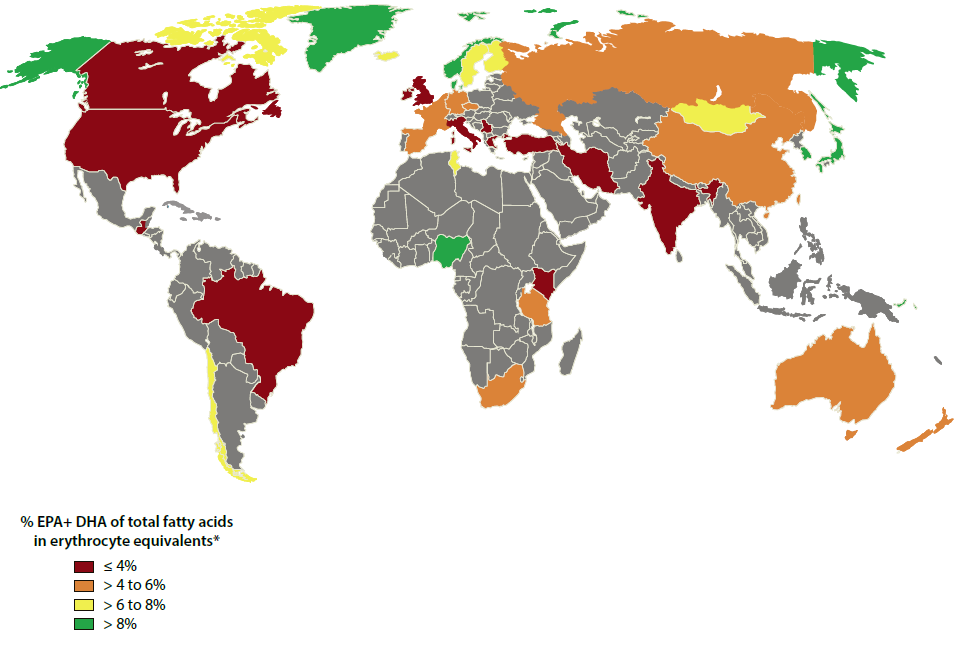

.

In 2012, I had the honor and privilege of co-authoring “The Missing Wellness Factors – EPA and DHA” with Professor Jørn Dyerberg, M.D., DMSc., the discoverer of the vital health benefits of fish oil EPA and DHA (2). Dr. Jørn Dyerberg went on five expeditions to the remote Greenland Inuits in the Arctic Circle. As we stated in Chapter Six, “(T)he take-home message of this book is that adequate amounts of the omega-3s, eicosapentaenoic acid (EPA) and docosahexaenoic acid (DHA) are needed for optimal health. Unfortunately, through the past fifty years, the amounts of EPA and DHA have decreased considerably and at an ever-increasing pace.”

Last year, an interesting study confirmed that many people worldwide may not be getting optimal levels of the EPA and DHA (3). Professor Manfred Eggersdorfer, whom we have chatted with in this column before, was close to that study and is familiar with the study and its implications.

Read the full story at Whole Foods Magazine

Eat fish, lower your risk of deadly heart attack

June 28, 2016 — NEW YORK — Fish used to be called “brain food”, but it may be heart food instead.

Omega-3 polyunsaturated fatty acids, when obtained through foods in the diet, appear to reduce the risk of fatal heart attack, death due to coronary artery disease (CAD), and sudden cardiac death by about 10 percent, according to new research.

The study, published in JAMA Internal Medicine, looked at the three forms of these fatty acids: α-linolenic acid (ALA), docosapentaenoic acid (DPA), and docosahexaenoic acid (DHA), which have all shown beneficial effects on things like blood pressure and oxygen demand by heart muscle cells.

Some may reduce the likelihood of the dangerous heart rhythms during a period of reduced blood flow to heart muscle cells (what happens during heart attacks).

Researchers at Stanford and Tufts University studied data on 45,637 patients from more than 15 countries who had not had previous coronary artery disease.

Read the full story at WTOP

Recent Headlines

  • Scientists did not recommend a 54 percent cut to the menhaden TAC
  • Broad coalition promotes Senate aquaculture bill
  • Chesapeake Bay region leaders approve revised agreement, commit to cleanup through 2040
  • ALASKA: Contamination safeguards of transboundary mining questioned
  • Federal government decides it won’t list American eel as species at risk
  • US Congress holds hearing on sea lion removals and salmon predation
  • MASSACHUSETTS: Seventeen months on, Vineyard Wind blade break investigation isn’t done
  • Sea lions keep gorging on endangered salmon despite 2018 law

Most Popular Topics

Alaska Aquaculture ASMFC Atlantic States Marine Fisheries Commission BOEM California China Climate change Coronavirus COVID-19 Donald Trump groundfish Gulf of Maine Gulf of Mexico Illegal fishing IUU fishing Lobster Maine Massachusetts Mid-Atlantic National Marine Fisheries Service National Oceanic and Atmospheric Administration NEFMC New Bedford New England New England Fishery Management Council New Jersey New York NMFS NOAA NOAA Fisheries North Atlantic right whales North Carolina North Pacific offshore energy Offshore wind Pacific right whales Salmon South Atlantic Virginia Western Pacific Whales wind energy Wind Farms

Daily Updates & Alerts

Enter your email address to receive daily updates and alerts:
  • This field is for validation purposes and should be left unchanged.
Tweets by @savingseafood

Copyright © 2025 Saving Seafood · WordPress Web Design by Jessee Productions