Saving Seafood

  • Home
  • News
    • Alerts
    • Conservation & Environment
    • Council Actions
    • Economic Impact
    • Enforcement
    • International & Trade
    • Law
    • Management & Regulation
    • Regulations
    • Nutrition
    • Opinion
    • Other News
    • Safety
    • Science
    • State and Local
  • News by Region
    • New England
    • Mid-Atlantic
    • South Atlantic
    • Gulf of Mexico
    • Pacific
    • North Pacific
    • Western Pacific
  • About
    • Contact Us
    • Fishing Terms Glossary

Fisherman lands ‘Obama fish’ lookalike

August 16, 2017 — Todd Goodell didn’t know what he’d hauled up. Offshore at Hydrographer Canyon aboard the Kingfisher, he opted for some deep drop fishing before pressing his hunt for tuna again. With a dual-hook sea bass rig weighted with sash weights and baited with squid, he’d pulled up familiar fish: cod, pollock, tilefish, redfish, and conger eels from 700 feet down.

But the hot yellow, orange, and pink coloration of a foot-long fish that eventually came aboard wasn’t something the veteran commercial fisherman had seen before in New England. It looked tropical, he said, and he treated it with caution, alert for hidden, potentially venomous spines.
Read the full story at the Martha’s Vineyard Times

BBC: Meet the fishermen beached by Obama

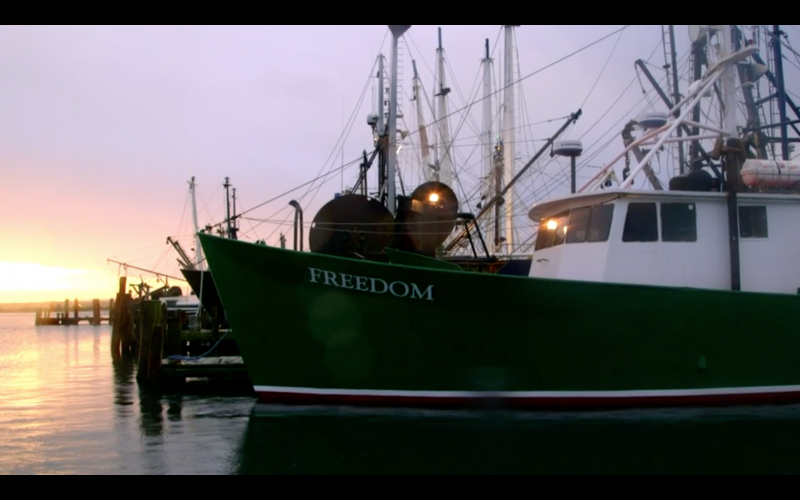
August 14, 2017 — Today, the BBC published a short video by journalist Charlie Northcott in which several fishermen discuss how they have been impacted by the designation of the Northeast Canyons and Seamounts Marine National Monument. The monument, located off the coast of New England, was created by President Obama in the fall of 2016 using executive authority under the Antiquities Act. NOAA is currently reviewing the monument as part of President Trump’s order to review all national monuments created since 1996.

Tomorrow is the last day to submit comments to inform this review. If you have not already submitted comments, Saving Seafood encourages you to do so here.

Watch the video at BBC News

Read about the monument designation at the Boston Globe

Read about Interior Secretary Ryan Zinke’s recent meeting with New England fishermen at the Boston Globe

Have the Tides Turned Against Offshore Drilling?

Low oil prices and local resistance have stalled plans to drill off the southeastern coast, for now.

August 11, 2017 — Last month, in one of the North Carolina’s most popular beach towns, North Carolina Gov. Roy Cooper announced his opposition to offshore drilling.

“It’s clear that opening North Carolina’s coast to oil and gas exploration and drilling would bring unacceptable risks to our economy, our environment and our coastal communities – and for little potential gain,” Cooper said from Atlantic Beach, North Carolina. “As governor, I’m here to speak out and take action against it. I can sum it up in four words: not off our coast.”

When oil drilling off the southeast coast was proposed by President Barack Obama in 2015, Cooper’s press conference may have stood apart from the bipartisan consensus that supported the idea.

But now, two years later, the Democratic governor’s stance is less noteworthy. More than 125 municipalities along the coast have formally opposed drilling or seismic testing, and just one coastal governor in the Southeast still supports it.

What changed? Not local opinion, says Sierra Weaver, an attorney at the Southern Environmental Law Center.

“The local communities have always been against offshore drilling, it’s really a matter of them getting educated about what’s at stake,” Weaver says. “What has shifted is interest at the state level or the political level.”

Read the full story at U.S. News & World Report

NOAA rejects bid to list tuna as endangered

August 9, 2017 — The Trump administration on Tuesday chose not to list the Pacific bluefin tuna as an endangered species, rejecting a petition by the largest global conservation group that the U.S. is a member of, with France, South Korea, Australia, and several other countries.

The Commerce Department’s National Marine Fisheries Service announced the decision after a 12-month review of the request that started under the Obama administration.

In response, environmentalists are organizing an international boycott of sushi restaurants, decrying what they say is the startling reversal of the agency’s original intent to list the tuna under the Obama administration.

The agency said that it looked at all factors affecting the bluefin tuna’s habitat, and based “on the best scientific and commercial data available … and after taking into account efforts being made to protect the species, we have determined that listing of the Pacific bluefin tuna is not warranted,” the agency said in a notice published in the Federal Register.

The International Union for Conservation of Nature had petitioned the U.S. government to list the tuna after assessing “the status of Pacific bluefin tuna and categorized the species as ‘vulnerable’ in 2014, meaning that the species was considered to be facing a high risk of extinction in the wild,” the notice read.

Read the full story at the Washington Examiner

Offshore drilling backers, opponents ready for North Carolina battle

August 8, 2017 — RALEIGH, N.C. — Federal regulators again want to hear what North Carolinians think about allowing oil and gas drilling off the state’s coast.

Last year, former President Barack Obama’s administration adopted a five-year energy plan that excluded drilling off the East Coast. But President Donald Trump has said he wants to see more offshore energy development, so his administration has tossed aside the 2016 plan and is starting over.

As part of that process, a public hearing was held Monday night in Wilmington, and others are set for Morehead City on Wednesday and Manteo on Thursday.

Gov. Roy Cooper said last month that he’s opposed to opening the coast to offshore exploration and drilling, saying he doesn’t think the risk to the state’s coastal tourism and commercial fishing industries of a major oil spill are worth the limited revenue North Carolina would receive from the move.

Read the full story at WRAL

Review renews debate over first Atlantic marine national monument

August 7, 2017 — BOSTON — During his eight years in office, former President Obama protected more than 550 million acres of public land and water as national monuments under the 1906 Antiquities Act. Unlike creating a national park, which requires an act of Congress, a president can declare a national monument to protect “objects of historic or scientific interest” with a proclamation.

Critics of the monument say President Obama overstepped the powers set forth by the Antiquities Act and did not provide enough opportunity for public comment. In April, President Donald Trump signed an executive order asking his Secretary of the Interior, Ryan Zinke, to conduct a review of 27 monuments created since 1996. The purpose of the review is to determine if these monument areas qualify under the terms of the act and to address concerns from the community.

Two days later, Trump signed another executive order outlining his “America-First Offshore Energy Strategy.” The plan demonstrates Trump’s vision for the exploration and production of energy on federal lands and waters to decrease America’s dependence on foreign energy.

Fishing industry’s concerns

Captain Fred Penney, a lobsterman out of Boston Harbor, believes that the monument will hurt the future of fishing in New England because the new restrictions were implemented without much input from the fishermen themselves.

“To have no regulations and have it be a free-for-all, that’s completely unacceptable, I understand that,” he said. “I wouldn’t want to see that. But what they’re doing now doesn’t seem to be it.”

Many in the industry felt fishing in the area should have been regulated under the Magnuson- Stevens Fisheries Conservation and Management Act, which created eight regional fishery management councils to maintain sustainable fisheries and habitats in the U.S.

The councils are divided up by region, including the New England, Mid-Atlantic and South- Atlantic councils on the East Coast. Each council sets regulations for certain fisheries such as limiting catch size, issuing permits and monitoring fishing equipment.

Fishermen argue the council’s lengthy public process is more transparent than a proclamation from the president and allows for more input from the community.

Jon Williams of the Atlantic Red Crab Company said the fishermen were not given much notice about meetings and the scope of the monument. He argued the area was thriving under the council’s management before the monument designation.

“We’d been in there for 40 years and if it’s… pristine now, after our presence for 40 years, why is there an emergency for the president to use an act to protect this thing?” Williams said. “Why not give it to the council and let the council do its job?”

Before the Obama administration announced the monument, the New England Fishery Management Council was working on a coral amendment that would protect deep sea corals, one of the goals of the monument. The South and Mid Atlantic Councils passed similar regulations years earlier.


Read the full story at The Groundtruth Project

Under Trump, recreational anglers feel tide turning in their favor on red snapper

August 7, 2017 — WASHINGTON — It’s getting easier to snap up red snapper.

The sought-after game fish has been at the center of a years-long debate between environmentalists who want to protect the iconic species while it continues to rebuild from overfishing and recreational anglers who contend years of economically crippling restrictions have paid off and it’s time to go fishing again.

After eight years of policies under President Obama that emphasized protection, there’s now a rising tide of momentum under the Trump administration to loosen restrictions in the federal waters off the Southeastern United States. Already:

• Commerce Secretary Wilbur Ross in June expanded the recreational fishing season for red snapper in the Gulf of Mexico from three to 42 days.

• Legislation has been reintroduced in the House and Senate to give more say over red snapper management to Gulf Coast states, which are seen as more sympathetic to recreational anglers’ interests. Such bills are likely to get a friendly reception if they reach the president’s desk.

• And next month, the agency overseeing fishing restrictions in the South Atlantic is expected to lift a years-long ban on red snapper in 2018.

All of that delights anglers who feel the Obama administration ignored their arguments that red snapper had rebounded so well they were literally “tripping over” fish.

“I feel a whole lot better today than I did a year ago,” said Jeff Angers, president of the Louisiana-based Center for Sportfishing Policy, which advocates for the recreational fishing industry.

Read the full story at USA Today

Feds extend comment period on seismic testing in the Atlantic

July 5, 2017 — The public is being given 15 more days to comment on applications by five companies to do seismic airgun surveys for oil and natural gas deposits in the Atlantic Ocean.

The National Marine Fisheries Service on Wednesday announced the extension of the comment period to July 21.

Five Houston-based survey companies are seeking “incidental harassment authorizations” that allow them to disturb or harm marine mammals during the course of their airgun surveys.

The applications had been denied by President Barack Obama’s administration, but were revived under President Donald Trump, who has said he favors oil and gas exploration along the Atlantic Coast.

Last week, Interior Secretary Ryan Zinke announced that federal officials have begun the process of developing a new five-year offshore oil and gas leasing program. Initial public comments on the 2019-2024 plan also are being taken.

Read the full story at The Virginian-Pilot

Group votes to protect some Atlantic corals, balk on others

June 22, 2017 — A federal panel voted on Thursday to offer new protections to some deep-sea corals in the Atlantic Ocean but held off on protecting others so it can get more information first.

The New England Fishery Management Council proposals focus on corals in two key fishing areas — the Gulf of Maine and south of Georges Bank off the Massachusetts coast — and have been the subject of debate among environmentalists and fishing groups for months.

“The goal is to protect as much coral as you can while minimizing impact on various industries that are fishing near the corals,” said John Bullard, a regional administrator for the National Marine Fisheries Service and a member of the fishery council.

The proposals to protect the corals would need to be approved by the federal Department of Commerce.

New England’s corals grow in areas such as along underwater canyons and seamounts and provide habitat for marine life including sea turtles and fish. President Barack Obama protected one area last year as the Northeast Canyons and Seamounts Marine National Monument.

Read the full story from the Associated Press at the San Francisco Chronicle

Concerns aired about marine monument

June 21, 2017 — Editor’s Note:

Fishing groups have widely criticized the Obama Administration’s marine monument designation process as opaque, and argued that administration officials did not adequately address concerns raised. Conversely, in this Cape Cod Times article, Priscilla Brooks, Vice President and Director of Ocean Conservation at the Conservation Law Foundation, claimed that the Obama administration adequately took fishermen’s concerns into account before designating the Northeast Canyons and Seamounts Marine National Monument.

Ms. Brooks said this was evidenced by the administration’s decision to reduce the size of the monument by 60 percent from the original proposal.

However, there was never an official Atlantic marine monument proposal from the Obama administration. Fishermen, elected officials, regulators, and concerned shoreside businesses were not apprised of the specifics of the Obama Administration’s monument plan until the final shape of it was shared just days and hours before it was announced.

The environmental community, including the Conservation Law Foundation, provided a proposal to the Administration, which officials referred to at times in meetings, but always with the caveat that the environmentalist proposal was not an official Administration proposal. At no time before the announcement was imminent did the commercial fishing community have any idea of what action the Administration might take.

It is possible that Ms. Brooks was stating that the monument eventually proposed by the Obama Administration was reduced by 60 percent from the plan that CLF and other environmental groups proposed. Commercial fishermen were apprehensive about the relationship between the Administration and the environmental community with due cause, since in 2015 environmental activists attempted to push a monument designation through the Administration in secret before the Our Ocean conference in Chile.

Ms. Brooks also claimed that “there was a robust public process.”

In the lead-up to the 2016 monument designation, there was one public meeting in Rhode Island where fishermen were allowed just 2 minutes to talk.

There were a number of subsequent meetings in fishing ports, and in the White House complex. But those who attended those meeting largely felt their views were being ignored. In fact, many of them participated in the recent meeting with new Secretary of the Interior Ryan Zinke.

In July 2016, Eric Reid, General Manager at Seafreeze, who participated in both regional and White House meetings wrote, “No one in the Obama administration’s Council on Environmental Quality has put forward an actual, concrete proposal of what an Atlantic monument might look like.” He added, “The uncertain and opaque nature of the process that has so far surrounded the potential marine monument has left fishermen with no idea as to what areas and which fisheries will be affected, nor which activities will be prohibited.”

BOSTON — Fishing groups from around New England met with Interior Secretary Ryan Zinke on Friday to air complaints about former President Barack Obama’s designation of the Northeast Canyons and Seamounts Marine National Monument last year.

The monument, the first marine national monument in U.S. Atlantic waters, protects about 4,000 square miles of ocean 150 miles southeast of Cape Cod.

Fishermen say the protected area in which fishing is prohibited hurts their business and places an undue burden on an already heavily regulated industry. But scientists say the area, which is home to hundreds of species of marine life and fragile coral, is an important natural resource that must be protected.

In his proclamation creating the marine monument, Obama prohibited fossil fuel or mineral exploration, all commercial fishing, and other activities that could disturb the sea floor. Scientific research is allowed with a permit. Commercial red crab and lobster fishermen have to phase out their operations within the monument area over the next seven years.

During their meeting with Zinke at Legal Sea Foods on Boston Harbor, fishermen and industry representatives asked the secretary to consider dissolving the monument or changing the regulations within its boundaries and complained about the way it was originally designated.

“As an American, this brought me to tears at my desk,” said Beth Casoni, executive director of the Massachusetts Lobstermen’s Association. “No one should have the power to sign people out of work.”

Some commercial fishermen said they felt the former administration did not take their concerns into account before designating the monument.

“Even though we were allowed minimal — and that’s an understatement — input, we received mostly lip service,” said Eric Reid, general manager of Seafreeze Shoreside in Narragansett, Rhode Island. “Small businesses like me that need stability to grow their business and invest in America are at risk. We can make America and commercial fishing great again.”

But Priscilla Brooks, vice president and director of ocean conservation at the Conservation Law Foundation, said the former administration did take fishermen’s concerns into account. Obama reduced the size of the original proposed monument by 60 percent and allowed lobster and crab fishermen a seven-year grace period to continue fishing there.

“There was a robust public process,” she said.

Read the full story at the Cape Cod Times

  • « Previous Page
  • 1
  • …
  • 7
  • 8
  • 9
  • 10
  • 11
  • …
  • 34
  • Next Page »

Recent Headlines

  • Scientists did not recommend a 54 percent cut to the menhaden TAC
  • Broad coalition promotes Senate aquaculture bill
  • Chesapeake Bay region leaders approve revised agreement, commit to cleanup through 2040
  • ALASKA: Contamination safeguards of transboundary mining questioned
  • Federal government decides it won’t list American eel as species at risk
  • US Congress holds hearing on sea lion removals and salmon predation
  • MASSACHUSETTS: Seventeen months on, Vineyard Wind blade break investigation isn’t done
  • Sea lions keep gorging on endangered salmon despite 2018 law

Most Popular Topics

Alaska Aquaculture ASMFC Atlantic States Marine Fisheries Commission BOEM California China Climate change Coronavirus COVID-19 Donald Trump groundfish Gulf of Maine Gulf of Mexico Illegal fishing IUU fishing Lobster Maine Massachusetts Mid-Atlantic National Marine Fisheries Service National Oceanic and Atmospheric Administration NEFMC New Bedford New England New England Fishery Management Council New Jersey New York NMFS NOAA NOAA Fisheries North Atlantic right whales North Carolina North Pacific offshore energy Offshore wind Pacific right whales Salmon South Atlantic Virginia Western Pacific Whales wind energy Wind Farms

Daily Updates & Alerts

Enter your email address to receive daily updates and alerts:
  • This field is for validation purposes and should be left unchanged.
Tweets by @savingseafood

Copyright © 2025 Saving Seafood · WordPress Web Design by Jessee Productions